BY JEMMA FOSTER
A GLOSSARY OF
AUTOMATIC
CREATIVE
TECHNIQUES
Automatism is a creative process that bypasses the conscious, rational mind, to engage the unconscious mind and, at times, access communication channels with other, more-than-human beings and spiritual dimensions.
- Automatic drawing — The hand travels across the page without a preselected motif. Figures may later be discerned within the lines, but the initiating gesture is deliberately unpremeditated.
- Automatic sand painting — Adhesive or wet paint is scattered with sand, allowing granular deposits to set the groundwork of the composition.
- Automatic writing — Words are set down rapidly, with minimal planning or revision, to interrupt the censorship of deliberate composition.
- Brûlage — Heat transforms photographic emulsion, blistering, melting or distorting a negative or print. Pioneered by Raoul Ubac.
- Bulletism / splashing — Pigment is propelled onto a support rather than placed deliberately with a brush. Force, trajectory and impact generate marks that may be read as images afterwards.
- Coulage — Molten material is poured and allowed to harden into an unforeseen sculptural configuration. Gravity, viscosity and cooling determine the final form, making chance visible as a three-dimensional event.
- Cubomania — A picture is cut into equally sized squares and reassembled to break its original spatial logic.
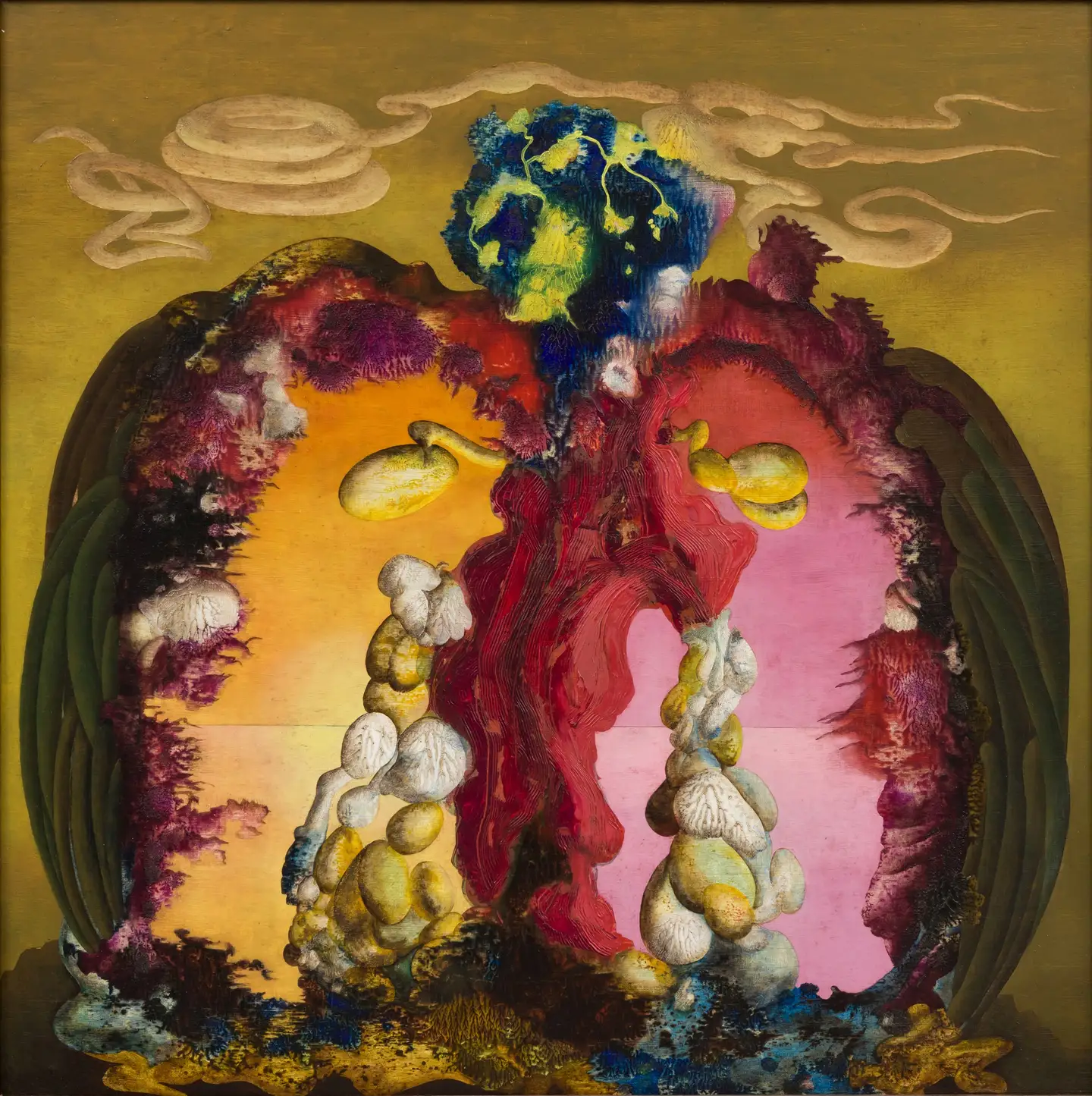
- Decalcomania — Wet pigment is pressed between two surfaces which are then drawn apart, producing branching, cellular or geological forms. Óscar Domínguez adapted the transfer method for Surrealism, which Ithell Colquhoun later developed.
- Double exposure / photomontage — Multiple exposures or photographic fragments are layered to make impossible composite images. In Surrealism, these methods were often deliberately composed, so they are related to rather than identical with automatism.
- Écrémage — Oil-based colour is floated on water and lifted or skimmed onto paper. The resulting patterns are directed by fluid movement and surface tension, creating organic forms without direct brushwork.
- Entoptic graphomania — Small blemishes or irregularities on paper are marked as points and connected with lines. The resulting geometry emerges from an accidental constellation rather than an ideal grid.
- Exquisite corpse / cadavre exquis — Participants contribute successive passages to a drawing or text while earlier sections are concealed. No participant has a complete view of the emerging work until it is unfolded.
- Found-object assemblage — A chance-discovered object is selected or combined with other objects to produce an unexpected correspondence.
- Frottage — A sheet of paper is placed over a textured surface and rubbed with pencil or charcoal. Its irregularities enter the image as marks that the artist can interpret or extend; wood, bark and leaves become active participants in the drawing.
- Fumage — Smoke from a flame creates accumulations of soot that produce forms that appear frozen, condensing into images from the air.
- Grattage — Wet paint is scraped from a canvas resting on textured materials, leaving incidental impressions and ruptures. Max Ernst used the procedure to discover woodlands, bodies and uncanny landscapes within the paint.
- Involuntary sculpture — The hands absently twist, fold or manipulate scraps of everyday material; the resulting form is recognised as a sculpture after the event.
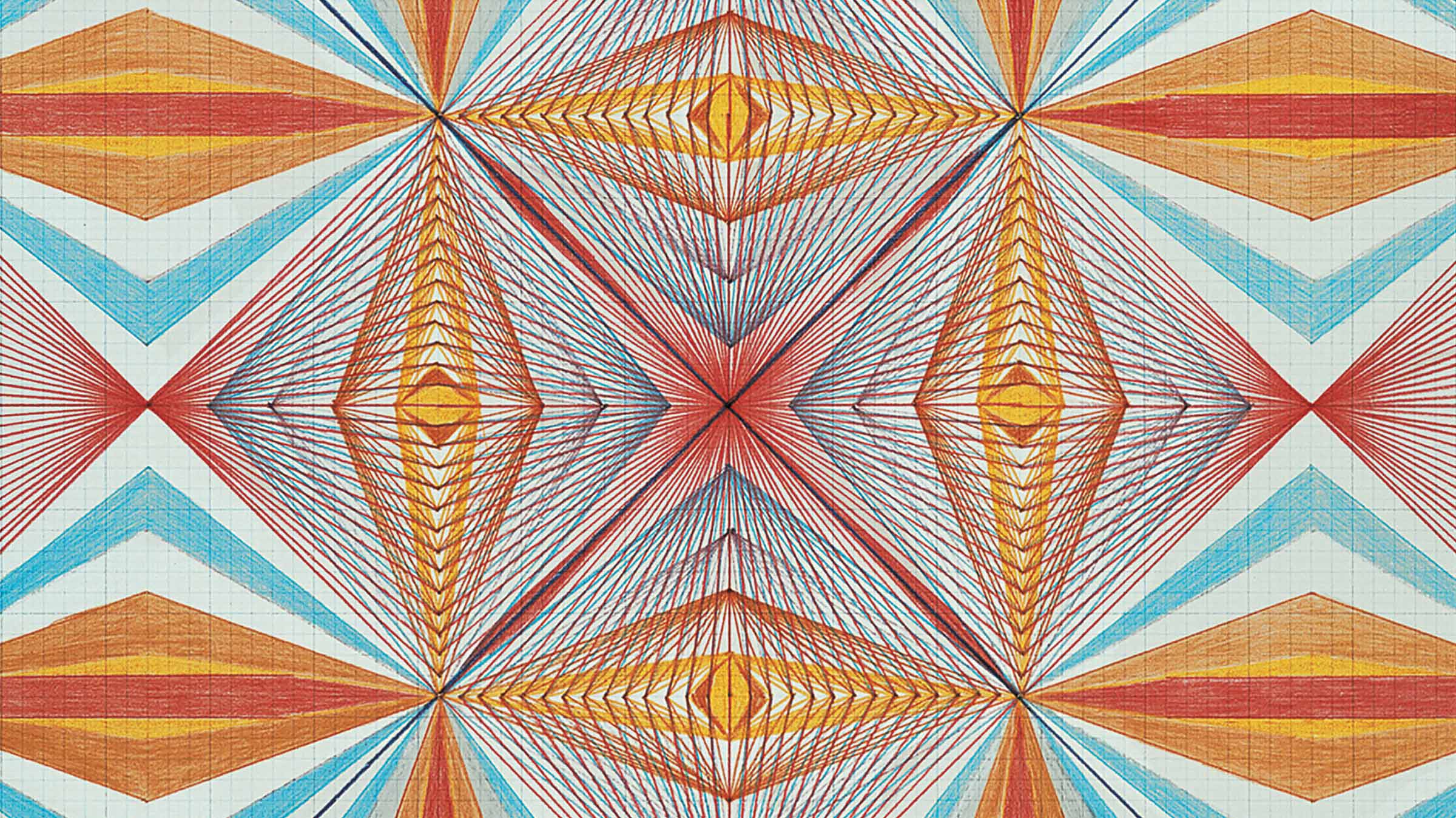
- Oscillation — A suspended container or pendulum releases paint while swinging over a surface, producing traces of pendular motion. Emma Kunz created large-scale geometric drawings on graph paper using a silver and jade pendulum.
- Parsemage — Popularised by Ithell Colquhoun, this technique uses powdered charcoal or chalk is scattered across the surface of water and collected on paper by brief contact. Unlike écrémage, the floating medium is dry powder.
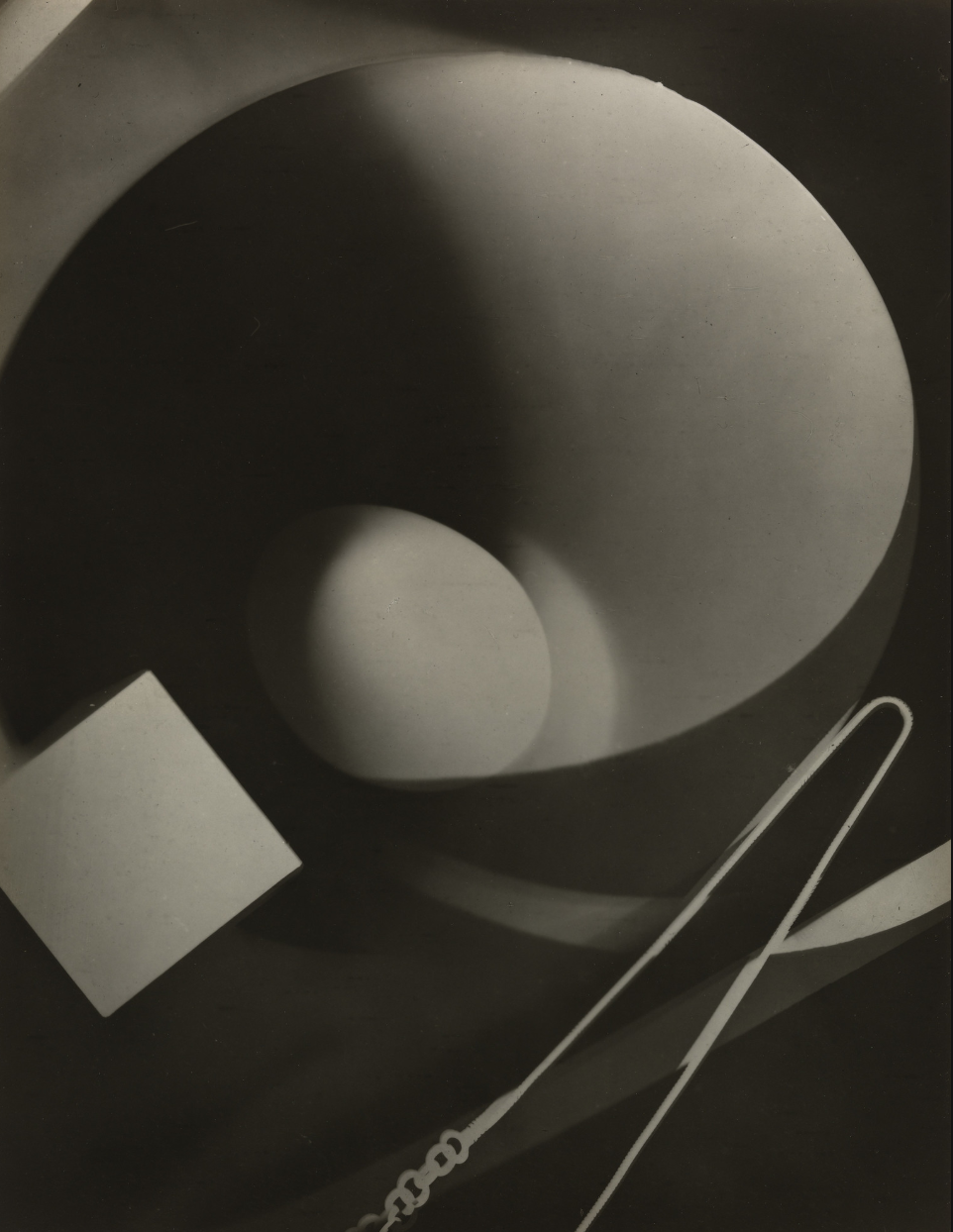
- Rayography / photograms — Objects are placed directly on photosensitive paper and exposed to light.
- Solarisation — During development, photographic material is briefly re-exposed to light, partially reversing tonal values and outlining forms. The result can be surprising, but the process is not automatically uncontrolled.
- Soufflage — A stream of air drives wet ink or pigment across a surface, dividing it into tendrils and branching forms.
- Stillomancy — An ink or paint stain is made by folding a sheet over wet pigment, creating a near-symmetrical blot.
- Superautomatism / surautomatism — Associated with Dolfi Trost and the Bucharest Surrealists, this radicalised automatism by seeking marks that resisted interpretation, not merely ones that yielded hidden images.
- Surrealist collage — Fragments of unrelated printed pictures are brought into impossible association.
- Vaporisation — A procedure associated with Dolfi Trost in which paint is dispersed while the artist is blindfolded or working without visual control.
IMAGE CREDITS
Ithell Colquhoun, Gorgon (1946). (Decalcomania)
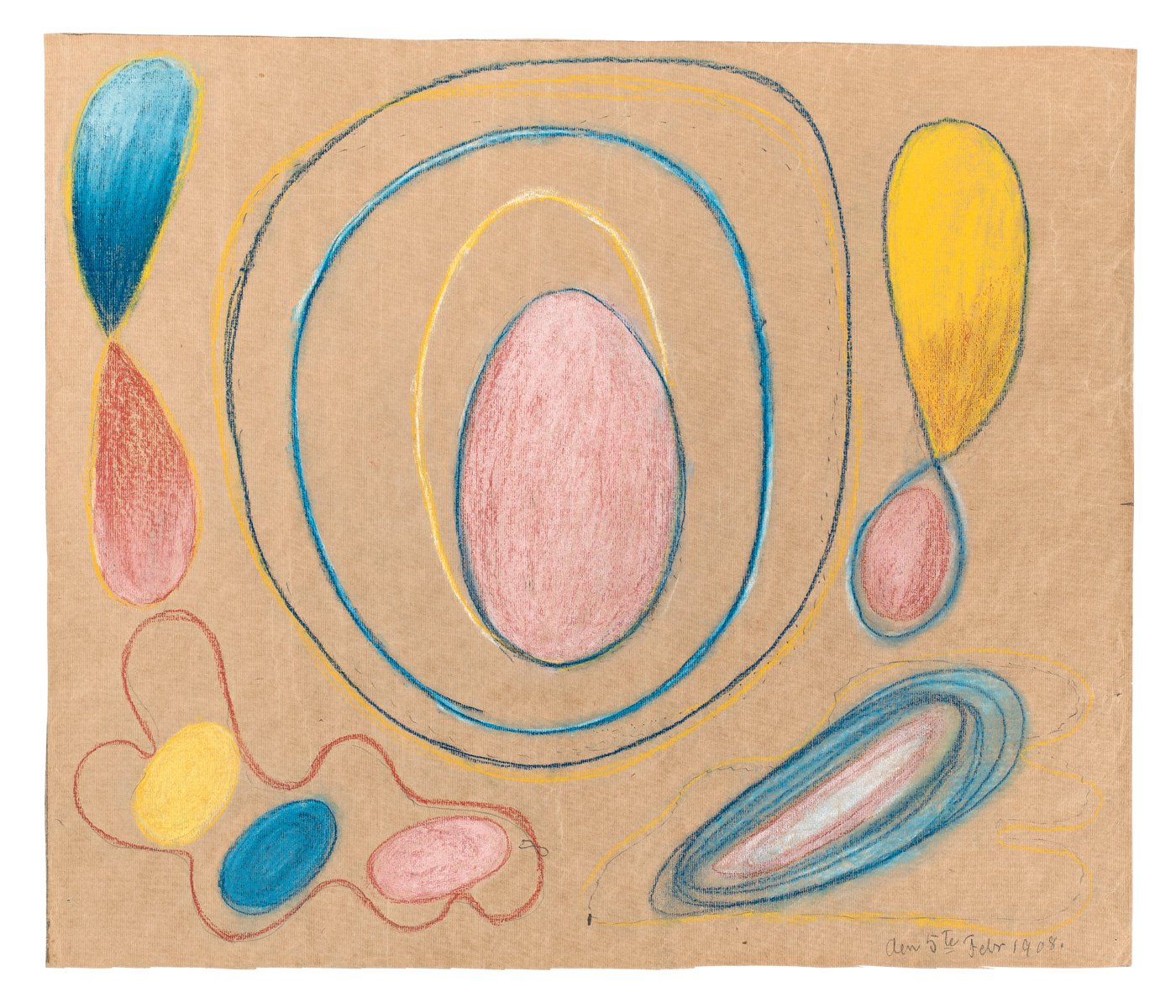
Hilma af Klint (The Five), Untitled. 1908 (Automated drawing)
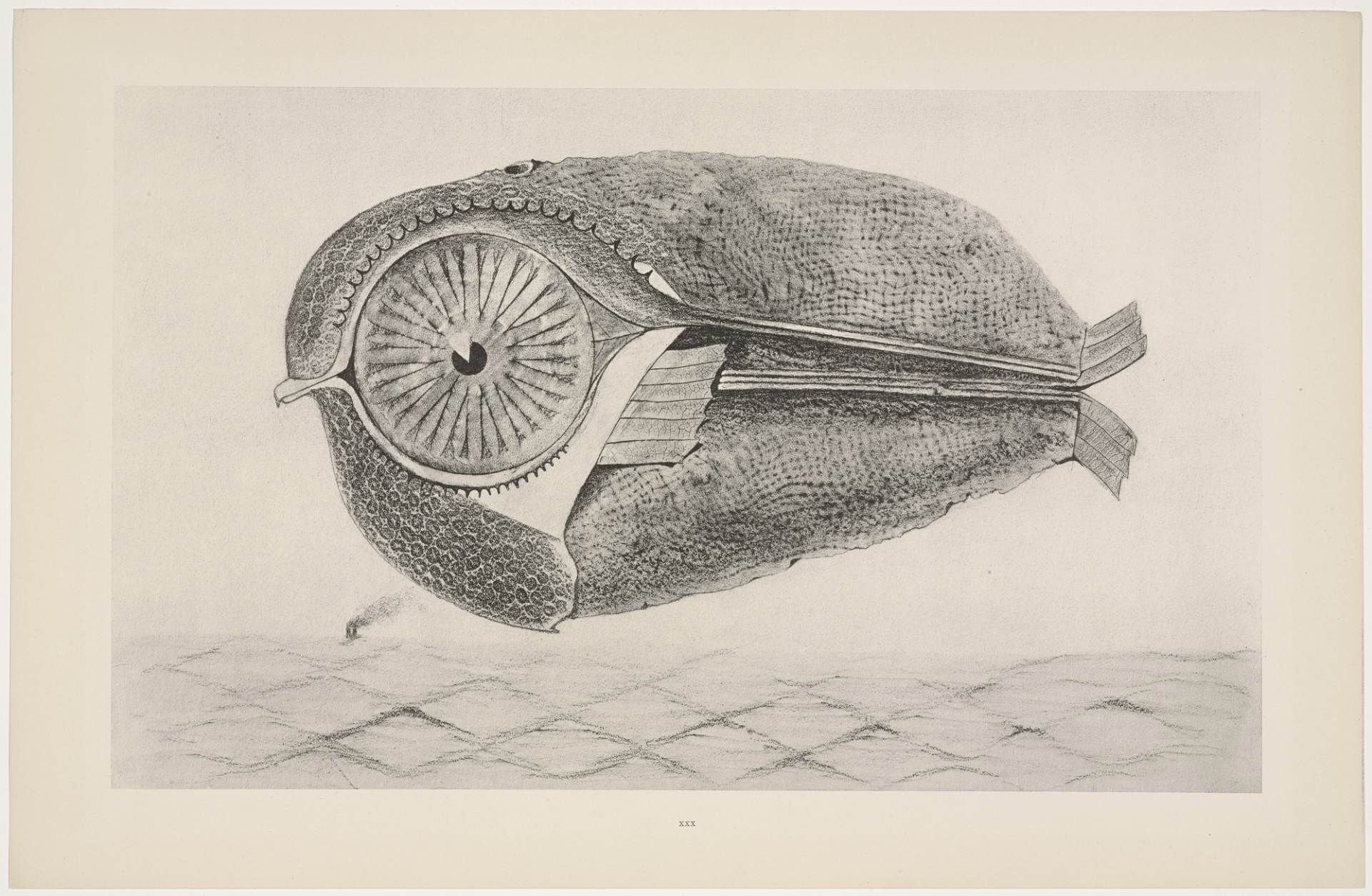
Max Ernst, The Fugitive (L'Évadé) from Natural History (Histoire Naturelle). c. 1925, published 1926 (Frottage)
Man Ray, Untitled (plate 1) from the album Champs Délicieux. 1922 (Rayography/photogram)
Emma Kunz, Work No 003. 1892-1963 (Pendulum drawing)
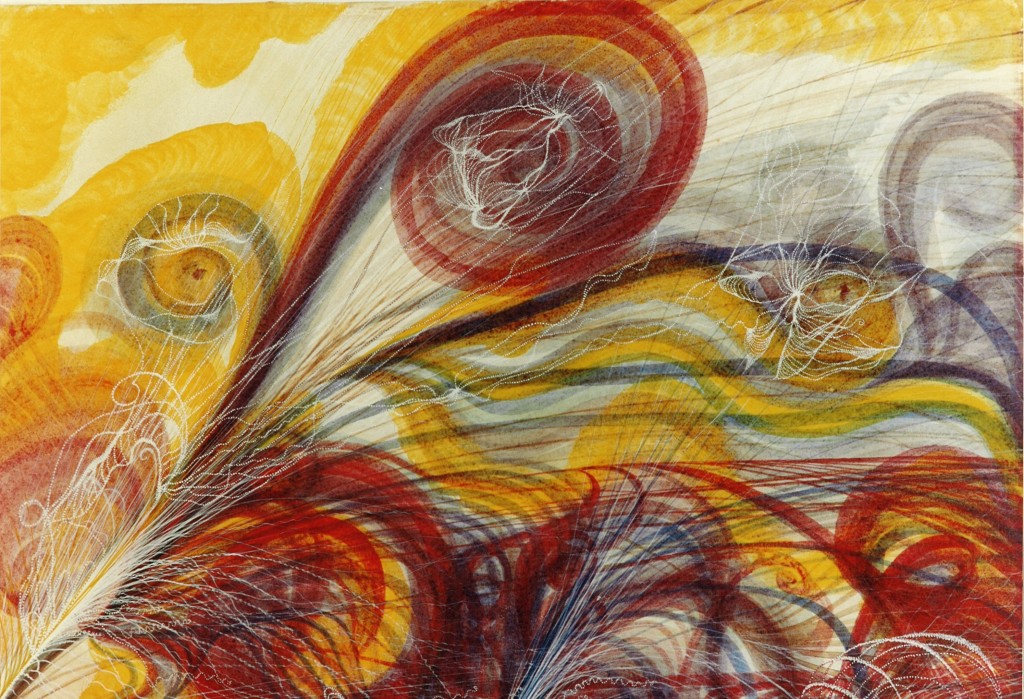
Georgiana Houghton, Eye of God. c.1962 (Channelled drawing)
Jemma Foster is an inter-disciplinary artist, writer and creative director. Her work researches human and more-than-human consciousness at the intersection of art and technology. With a background in plant and vibrational medicine, her practice draws from alchemy, geomancy and dreaming. She is founder and director of transmedia art collective and publishing house Wild Alchemy Lab, co-founder of award-winning creative studio Semantica, and the author of Sacred Geometry (Octopus, 2020), Wild Alchemy Lab: An Astro-botanical Remedy Deck (Laurence King, 2023), Wild Alchemy: An Astro-Botanical Guide to the Magic, Myth and Medicine of Plants (Laurence King, 2024)
BY JEMMA FOSTER
A GLOSSARY OF
AUTOMATIC
CREATIVE
TECHNIQUES
Automatism is a creative process that bypasses the conscious, rational mind, to engage the unconscious mind and, at times, access communication channels with other, more-than-human beings and spiritual dimensions.
- Automatic drawing — The hand travels across the page without a preselected motif. Figures may later be discerned within the lines, but the initiating gesture is deliberately unpremeditated.
- Automatic sand painting — Adhesive or wet paint is scattered with sand, allowing granular deposits to set the groundwork of the composition.
- Automatic writing — Words are set down rapidly, with minimal planning or revision, to interrupt the censorship of deliberate composition.
- Brûlage — Heat transforms photographic emulsion, blistering, melting or distorting a negative or print. Pioneered by Raoul Ubac.
- Bulletism / splashing — Pigment is propelled onto a support rather than placed deliberately with a brush. Force, trajectory and impact generate marks that may be read as images afterwards.
- Coulage — Molten material is poured and allowed to harden into an unforeseen sculptural configuration. Gravity, viscosity and cooling determine the final form, making chance visible as a three-dimensional event.
- Cubomania — A picture is cut into equally sized squares and reassembled to break its original spatial logic.
- Decalcomania — Wet pigment is pressed between two surfaces which are then drawn apart, producing branching, cellular or geological forms. Óscar Domínguez adapted the transfer method for Surrealism, which Ithell Colquhoun later developed.
- Double exposure / photomontage — Multiple exposures or photographic fragments are layered to make impossible composite images. In Surrealism, these methods were often deliberately composed, so they are related to rather than identical with automatism.
- Écrémage — Oil-based colour is floated on water and lifted or skimmed onto paper. The resulting patterns are directed by fluid movement and surface tension, creating organic forms without direct brushwork.
- Entoptic graphomania — Small blemishes or irregularities on paper are marked as points and connected with lines. The resulting geometry emerges from an accidental constellation rather than an ideal grid.
- Exquisite corpse / cadavre exquis — Participants contribute successive passages to a drawing or text while earlier sections are concealed. No participant has a complete view of the emerging work until it is unfolded.
- Found-object assemblage — A chance-discovered object is selected or combined with other objects to produce an unexpected correspondence.
- Frottage — A sheet of paper is placed over a textured surface and rubbed with pencil or charcoal. Its irregularities enter the image as marks that the artist can interpret or extend; wood, bark and leaves become active participants in the drawing.
- Fumage — Smoke from a flame creates accumulations of soot that produce forms that appear frozen, condensing into images from the air.
- Grattage — Wet paint is scraped from a canvas resting on textured materials, leaving incidental impressions and ruptures. Max Ernst used the procedure to discover woodlands, bodies and uncanny landscapes within the paint.
- Involuntary sculpture — The hands absently twist, fold or manipulate scraps of everyday material; the resulting form is recognised as a sculpture after the event.
- Oscillation — A suspended container or pendulum releases paint while swinging over a surface, producing traces of pendular motion. Emma Kunz created large-scale geometric drawings on graph paper using a silver and jade pendulum.
- Parsemage — Popularised by Ithell Colquhoun, this technique uses powdered charcoal or chalk is scattered across the surface of water and collected on paper by brief contact. Unlike écrémage, the floating medium is dry powder.
- Rayography / photograms — Objects are placed directly on photosensitive paper and exposed to light.
- Solarisation — During development, photographic material is briefly re-exposed to light, partially reversing tonal values and outlining forms. The result can be surprising, but the process is not automatically uncontrolled.
- Soufflage — A stream of air drives wet ink or pigment across a surface, dividing it into tendrils and branching forms.
- Stillomancy — An ink or paint stain is made by folding a sheet over wet pigment, creating a near-symmetrical blot.
- Superautomatism / surautomatism — Associated with Dolfi Trost and the Bucharest Surrealists, this radicalised automatism by seeking marks that resisted interpretation, not merely ones that yielded hidden images.
- Surrealist collage — Fragments of unrelated printed pictures are brought into impossible association.
- Vaporisation — A procedure associated with Dolfi Trost in which paint is dispersed while the artist is blindfolded or working without visual control.
IMAGE CREDITS
Ithell Colquhoun, Gorgon (1946). (Decalcomania)
Hilma af Klint (The Five), Untitled. 1908 (Automated drawing)
Max Ernst, The Fugitive (L'Évadé) from Natural History (Histoire Naturelle). c. 1925, published 1926 (Frottage)
Man Ray, Untitled (plate 1) from the album Champs Délicieux. 1922 (Rayography/photogram)
Emma Kunz, Work No 003. 1892-1963 (Pendulum drawing)
Georgiana Houghton, Eye of God. c.1962 (Channelled drawing)
A GLOSSARY OF
AUTOMATIC
CREATIVE
TECHNIQUES
Automatism is a creative process that bypasses the conscious, rational mind, to engage the unconscious mind and, at times, access communication channels with other, more-than-human beings and spiritual dimensions.
- Automatic drawing — The hand travels across the page without a preselected motif. Figures may later be discerned within the lines, but the initiating gesture is deliberately unpremeditated.
- Automatic sand painting — Adhesive or wet paint is scattered with sand, allowing granular deposits to set the groundwork of the composition.
- Automatic writing — Words are set down rapidly, with minimal planning or revision, to interrupt the censorship of deliberate composition.
- Brûlage — Heat transforms photographic emulsion, blistering, melting or distorting a negative or print. Pioneered by Raoul Ubac.
- Bulletism / splashing — Pigment is propelled onto a support rather than placed deliberately with a brush. Force, trajectory and impact generate marks that may be read as images afterwards.
- Coulage — Molten material is poured and allowed to harden into an unforeseen sculptural configuration. Gravity, viscosity and cooling determine the final form, making chance visible as a three-dimensional event.
- Cubomania — A picture is cut into equally sized squares and reassembled to break its original spatial logic.
- Decalcomania — Wet pigment is pressed between two surfaces which are then drawn apart, producing branching, cellular or geological forms. Óscar Domínguez adapted the transfer method for Surrealism, which Ithell Colquhoun later developed.
- Double exposure / photomontage — Multiple exposures or photographic fragments are layered to make impossible composite images. In Surrealism, these methods were often deliberately composed, so they are related to rather than identical with automatism.
- Écrémage — Oil-based colour is floated on water and lifted or skimmed onto paper. The resulting patterns are directed by fluid movement and surface tension, creating organic forms without direct brushwork.
- Entoptic graphomania — Small blemishes or irregularities on paper are marked as points and connected with lines. The resulting geometry emerges from an accidental constellation rather than an ideal grid.
- Exquisite corpse / cadavre exquis — Participants contribute successive passages to a drawing or text while earlier sections are concealed. No participant has a complete view of the emerging work until it is unfolded.
- Found-object assemblage — A chance-discovered object is selected or combined with other objects to produce an unexpected correspondence.
- Frottage — A sheet of paper is placed over a textured surface and rubbed with pencil or charcoal. Its irregularities enter the image as marks that the artist can interpret or extend; wood, bark and leaves become active participants in the drawing.
- Fumage — Smoke from a flame creates accumulations of soot that produce forms that appear frozen, condensing into images from the air.
- Grattage — Wet paint is scraped from a canvas resting on textured materials, leaving incidental impressions and ruptures. Max Ernst used the procedure to discover woodlands, bodies and uncanny landscapes within the paint.
- Involuntary sculpture — The hands absently twist, fold or manipulate scraps of everyday material; the resulting form is recognised as a sculpture after the event.
- Oscillation — A suspended container or pendulum releases paint while swinging over a surface, producing traces of pendular motion. Emma Kunz created large-scale geometric drawings on graph paper using a silver and jade pendulum.
- Parsemage — Popularised by Ithell Colquhoun, this technique uses powdered charcoal or chalk is scattered across the surface of water and collected on paper by brief contact. Unlike écrémage, the floating medium is dry powder.
- Rayography / photograms — Objects are placed directly on photosensitive paper and exposed to light.
- Solarisation — During development, photographic material is briefly re-exposed to light, partially reversing tonal values and outlining forms. The result can be surprising, but the process is not automatically uncontrolled.
- Soufflage — A stream of air drives wet ink or pigment across a surface, dividing it into tendrils and branching forms.
- Stillomancy — An ink or paint stain is made by folding a sheet over wet pigment, creating a near-symmetrical blot.
- Superautomatism / surautomatism — Associated with Dolfi Trost and the Bucharest Surrealists, this radicalised automatism by seeking marks that resisted interpretation, not merely ones that yielded hidden images.
- Surrealist collage — Fragments of unrelated printed pictures are brought into impossible association.
- Vaporisation — A procedure associated with Dolfi Trost in which paint is dispersed while the artist is blindfolded or working without visual control.
IMAGE CREDITS
Ithell Colquhoun, Gorgon (1946). (Decalcomania)
Hilma af Klint (The Five), Untitled. 1908 (Automated drawing)
Max Ernst, The Fugitive (L'Évadé) from Natural History (Histoire Naturelle). c. 1925, published 1926 (Frottage)
Man Ray, Untitled (plate 1) from the album Champs Délicieux. 1922 (Rayography/photogram)
Emma Kunz, Work No 003. 1892-1963 (Pendulum drawing)
Georgiana Houghton, Eye of God. c.1962 (Channelled drawing)
Jemma Foster is an inter-disciplinary artist, writer and creative director. Her work researches human and more-than-human consciousness at the intersection of art and technology. With a background in plant and vibrational medicine, her practice draws from alchemy, geomancy and dreaming. She is founder and director of transmedia art collective and publishing house Wild Alchemy Lab, co-founder of award-winning creative studio Semantica, and the author of Sacred Geometry (Octopus, 2020), Wild Alchemy Lab: An Astro-botanical Remedy Deck (Laurence King, 2023), Wild Alchemy: An Astro-Botanical Guide to the Magic, Myth and Medicine of Plants (Laurence King, 2024)