
BY JOHANNA BRUCKNER
The present research can be seen as an extension of my on-going inquiry into the links between AI, queer theory, ecology, and posthumanism. Embedded in the discourse around Large Language Models in AI, Quantum AI, Agential Realism and New Materialisms, this investigation aesthetically and analytically examines the complex relationship between climate change and artificial intelligence. Within this framework, I used my time in residence to understand how AI may be re-framed as embodied, affective, and entangled, broadening the public understanding of algorithmic power, bias, and climate entanglements.
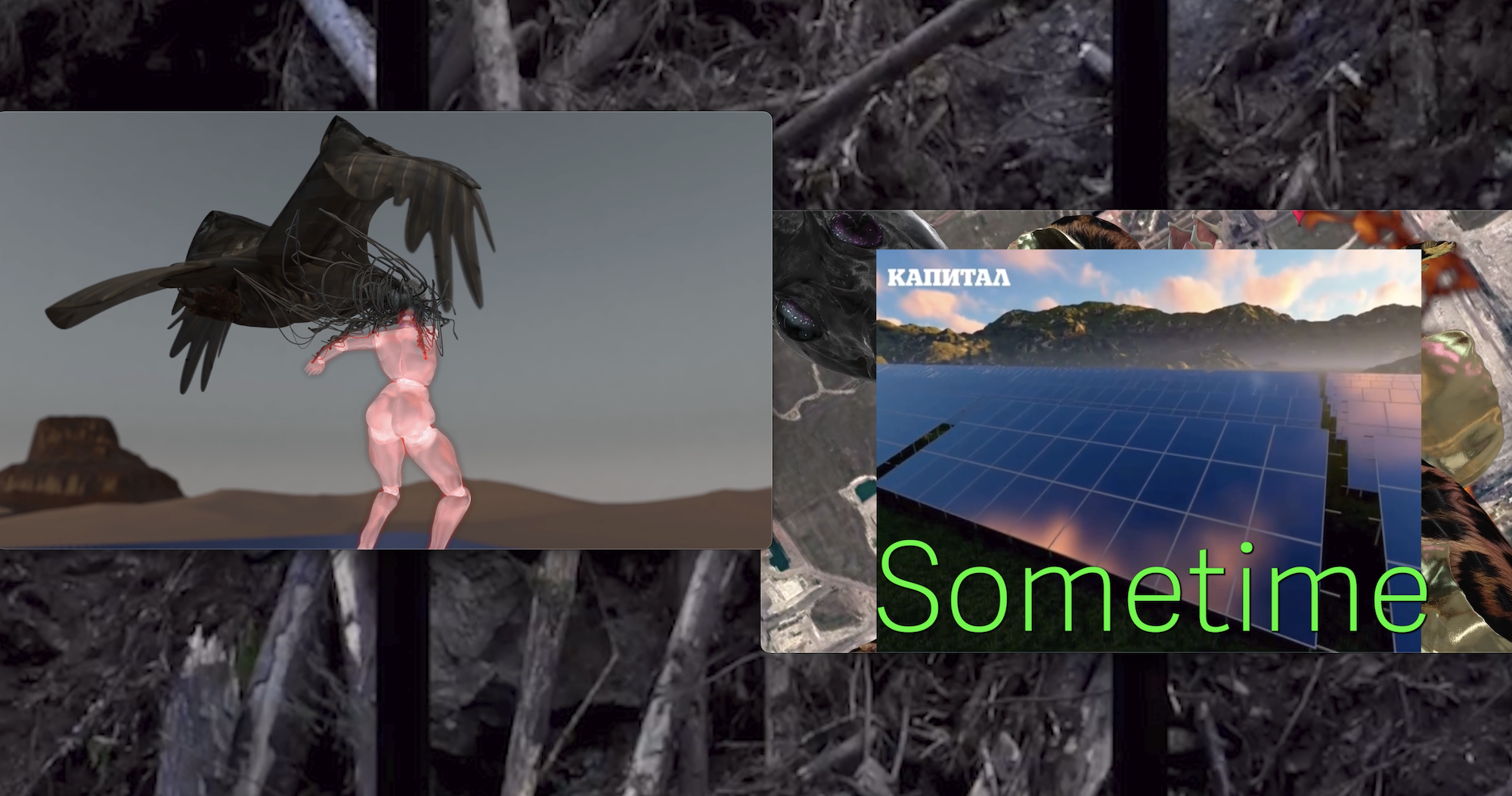
Causal Legacies (2026) is a new multimedia artwork that resulted from a year of research as part of the S+T+ARTS EC(H)O residency programme, integrating video, sculpture, sound and performance art. Probing AI through climatic, socio-ecological and posthuman perspectives, the work traces how algorithmic systems mediate shifting weather patterns in Europe and the Global South. It analyses precipitation fluctuations and their associated effects, based on qualitative and quantitative data on climatic conditions in Europe and the central Sahel region. Looking at the correlations between environmental problems with social tensions and conflict, the project aims to investigate how attribution – i.e. the identification of cause and effect – can be possible even where data sets are limited, models inappropriate or experimental interventions are not feasible.
My research frames these instabilities as a speculative interface between human and more-than-human bodies, looking at the reactive relationships between different substances that drive climatic change. The artistic articulations emerging from this synthesis are conceived as relational choreographies: systems of interaction with other species and materials that make alternative pathways and solutions visible. New artworks in the form of a 3D-animated video and a series of sculptures – entitled Chromium Spunk – translate the complex scientific backdrop into accessible aesthetic experiences.
At its core, Causal Legacies seeks to generate new forms of knowledge by seeking an interdisciplinary dialogue between methods and information from art and science, thereby contributing to finding intersectional approaches to encounter the climate crisis. Aiming to test equitable future scenarios, the goal of this new work is to make scientific research accessible through artistic expression, thereby exploring climate research findings as the basis for an inclusive future. Causal Legacies draws attention to the complexity of causal chains underlying the climate crisis and, above all, to raise awareness of social crises.
The accompanying sculptural installation Chromium Spunk presents an articulation of my research into the ethics of materiality on a quantum level. I designed the sculptures based on quantum materials, as these present sustainable, low-cost alternatives to common toxic materials that are products of mining processes. Zooming in on graphite, bromine, chromium and other synthetically and organically produced composites, the sculptures consider the moment such quantum materials collide and interact in unpredictable ways. Transgressing their fixed state, the substances are suspended in a limbo where they are neither one nor the other material, but perform in and as multiple states simultaneously. Chromium Spunk imagines that very moment of simultaneous action and reaction; the moment that sees all molecular components of a given entity in contact at once; as a kind of aleatory, ghostly matter, in which calculation collapses and re-invents their state of materiality at the very moment of quantification. These materials, equipped with quantum sensors, support the creation of new sustainable materialities, their economic and social application and handling. The works' shapeshifting forms and unknowable bodies channel the state of tension amidst fragments of a whole and their totality, constantly negotiating their “final state” of being. The physical research behind these processes support cleaner and ecologically friendly future materials used in technology and other applications.
Background Information
Existing climate models often underestimate the extent of precipitation fluctuations, a phenomenon that has far-reaching consequences. In the central Sahel region – Mali, Burkina Faso and Niger – climate fluctuations shape livelihoods. Agriculture, water availability, food security and migration are heavily dependent on precipitation patterns. At the same time, the region is experiencing increasing instability: state authority is limited to urban centres, while militant groups are advancing into rural areas. It is often assumed that climate change directly leads to resource scarcity, which in turn leads to violence. However, as the International Crisis Group points out, this causal chain is overly simplistic – transformation processes are more complex and multidimensional.
In this sense, Causal Legacies views climate change not only as an environmental crisis, but also as a socio-political crisis whose causes and consequences can only be understood through a broader, interdisciplinary perspective that encompasses both scientific research and artistic engagement.
Research Process & Partners
In the initial stages of this undertaking, the theoretical basis of Causal Legacies was further researched in collaboration with experts, achieving a scientifically-backed theoretical framework. Various research methods were used for this purpose, such as literature analysis, interviews and collaborative approaches. Sources included texts on cultural heritage, such as mythologies based on observations of local rainfall in the central Sahel region, as well as discussions with local experts.
Thanks to the S+T+ARTS EC(H)O network, I was able to visit many universities and research centres and received professional mentoring from scientists and art professionals. Next to my hosting institution, TU Dresden, I also conducted research at the Institute for Quantum Materials, the Institute for Nanotechnology, Berlin University of Technology, Munich University of Technology, Helmholz-Gesellschaft, ScaDS.AI and CERN, the European Organisation for Nuclear Research. In conversation with Prof. Dr. Oliver Bruns, Prof. Jakob Runge, Prof. Dr. Larysa Baraban, Prof. Dr. Simon Razniewski, Prof. Stefanie Speidel, Dr. Rebecca J. Herman, Dr. Carla Rieger and Adrien Blanchet, I was able to deepen my knowledge on AI, specifically pertaining to environmental applications, quantum computing and quantum machine learning.
Next to the scientific inquiries, I also worked on further developing my artistic practice. Under the guidance of curators Steven Cairns (ICA London), Lisa Long (independent) and Dr. Catherine Nichols (Hamburger Bahnhof), I reviewed artistic and managerial strategies and received valuable industry insights. Furthermore, two series of sculptures as well as a video work were exhibited at Galerie der Kustodie Dresden at TU Dresden, curated by Gwendolin Kremer and Pauline Hohn.
As part of my research process, I specifically looked at Big Geospatial Data with my business mentor Carla Rieger from TU Munich. She introduced me to advanced principles of Quantum Machine Learning and its applications on geospatial research, which was a crucial addition to my research. I learned how Quantum Machine Learning is employed to represent the Earth’s surface beyond commercial platforms such as Google Maps, which are often distorted or compromised in profit-oriented processes. In catastrophe scenarios of environmental or terrorist nature such as hacking, it is thus important to be able to consult an accurate, scientific rendering of the Earth. During this stage of my research, I captured hundreds of low resolution images of the Earth’s surface, produced through the machine learning process. It was interesting to note that some of the surfaces rendered by the quantum computer look unusual, with a speculative or utopian quality replacing the realism I expected. As part of my developmental process, I started working on a video that merges the images generated through quantum machine learning, accompanied by a narrating voice that provides insights into the subject matter in a poetic way.
As for the sculptural component of the project, based on my research, I created digital renderings and looked into production possibilities to articulate my ideas and bring the 3D sketches to life. With a keen eye on cutting-edge developments within the field, I researched what materials and methods might be suitable to translate theoretical and practical considerations into sculptures. Ultimately, I opted for sustainable quantum materials, aligning theoretical backdrop and physical manifestation, therein rendering my research process visible. At this moment, the properties of materials remain somewhat of a mystery, which is why their potential for transgression and innovation is particularly suitable to to emphasise the uncertain and multiplicit future my work envision.
Relevance & Outlook
Looking at the insights of Artificial Intelligence on climate change and the applications to better understand and encounter its repercussions, this project directly addresses some of the great challenges of the present-day. As part of the long-term process of conceiving of new approaches to inform climate action, the present research and artwork propose interdisciplinary frameworks to begin formulating responses. Aiming to deepen our understanding of the relationship between artificial intelligence and climate change, the present research is directly linked to the goal of ecological sustainability and the search for viable innovations. By developing new and more appropriate tools, grounded in quantum theory, quantum AI and causal AI, the project sought to make the causes and effects of climate change more tangible and accessible, enabling more accurate measurement and analysis of climate-related phenomena. While this scientific framework aims to support the creation of innovative solutions and foster broader awareness among the public, it also provides a long-term incentive sustaining the on-going nature of my research. Therein, Causal Legacies seeds long-term art–research exchange (quantum materials, large-action modelling), creating formats for talks, exhibitions, and collaborations that connect research with cultural audiences.
In terms of further development of the project, I aim to continue my research in the field of Causal AI in Europe and the Global South by continuing the conversations with scientific and artistic partners I was able to open as part of my time in residence. With a new and expanded network gained through conversations with my business mentors, I want to aim to secure more exhibition opportunities, working towards widening my reach and sharing my findings with larger audiences worldwide. Simultaneously, I strive to share my research via various academic platforms, adding to the list of colloquiums and other educational formats that I was able to take on during the residency. Another way to keep expanding upon my findings and outputs will be further inquiry into the possibilities of new software, which I aim to undertake as part of future collaborations with data scientists and experts in the field of Causal AI.
Causal Legacies aims to shed light on climate-related issues and their entwinement with political and economic systems. Exhibiting this project would capture the attention of public and policymakers alike, while approaching the themes of AI and climate change from a differentiated perspective, which is not always possible by means of scientific research and dialogue within the scientific community alone. Artistic insights may contribute to interdisciplinary research and projects that promote integrative and cross-disciplinary decision-making processes in order to ensure fair access to resources.
The present research can be seen as an extension of my on-going inquiry into the links between AI, queer theory, ecology, and posthumanism. Embedded in the discourse around Large Language Models in AI, Quantum AI, Agential Realism and New Materialisms, this investigation aesthetically and analytically examines the complex relationship between climate change and artificial intelligence. Within this framework, I used my time in residence to understand how AI may be re-framed as embodied, affective, and entangled, broadening the public understanding of algorithmic power, bias, and climate entanglements.
Causal Legacies (2026) is a new multimedia artwork that resulted from a year of research as part of the S+T+ARTS EC(H)O residency programme, integrating video, sculpture, sound and performance art. Probing AI through climatic, socio-ecological and posthuman perspectives, the work traces how algorithmic systems mediate shifting weather patterns in Europe and the Global South. It analyses precipitation fluctuations and their associated effects, based on qualitative and quantitative data on climatic conditions in Europe and the central Sahel region. Looking at the correlations between environmental problems with social tensions and conflict, the project aims to investigate how attribution – i.e. the identification of cause and effect – can be possible even where data sets are limited, models inappropriate or experimental interventions are not feasible.
My research frames these instabilities as a speculative interface between human and more-than-human bodies, looking at the reactive relationships between different substances that drive climatic change. The artistic articulations emerging from this synthesis are conceived as relational choreographies: systems of interaction with other species and materials that make alternative pathways and solutions visible. New artworks in the form of a 3D-animated video and a series of sculptures – entitled Chromium Spunk – translate the complex scientific backdrop into accessible aesthetic experiences.
At its core, Causal Legacies seeks to generate new forms of knowledge by seeking an interdisciplinary dialogue between methods and information from art and science, thereby contributing to finding intersectional approaches to encounter the climate crisis. Aiming to test equitable future scenarios, the goal of this new work is to make scientific research accessible through artistic expression, thereby exploring climate research findings as the basis for an inclusive future. Causal Legacies draws attention to the complexity of causal chains underlying the climate crisis and, above all, to raise awareness of social crises.
The accompanying sculptural installation Chromium Spunk presents an articulation of my research into the ethics of materiality on a quantum level. I designed the sculptures based on quantum materials, as these present sustainable, low-cost alternatives to common toxic materials that are products of mining processes. Zooming in on graphite, bromine, chromium and other synthetically and organically produced composites, the sculptures consider the moment such quantum materials collide and interact in unpredictable ways. Transgressing their fixed state, the substances are suspended in a limbo where they are neither one nor the other material, but perform in and as multiple states simultaneously. Chromium Spunk imagines that very moment of simultaneous action and reaction; the moment that sees all molecular components of a given entity in contact at once; as a kind of aleatory, ghostly matter, in which calculation collapses and re-invents their state of materiality at the very moment of quantification. These materials, equipped with quantum sensors, support the creation of new sustainable materialities, their economic and social application and handling. The works' shapeshifting forms and unknowable bodies channel the state of tension amidst fragments of a whole and their totality, constantly negotiating their “final state” of being. The physical research behind these processes support cleaner and ecologically friendly future materials used in technology and other applications.
Background Information
Existing climate models often underestimate the extent of precipitation fluctuations, a phenomenon that has far-reaching consequences. In the central Sahel region – Mali, Burkina Faso and Niger – climate fluctuations shape livelihoods. Agriculture, water availability, food security and migration are heavily dependent on precipitation patterns. At the same time, the region is experiencing increasing instability: state authority is limited to urban centres, while militant groups are advancing into rural areas. It is often assumed that climate change directly leads to resource scarcity, which in turn leads to violence. However, as the International Crisis Group points out, this causal chain is overly simplistic – transformation processes are more complex and multidimensional.
In this sense, Causal Legacies views climate change not only as an environmental crisis, but also as a socio-political crisis whose causes and consequences can only be understood through a broader, interdisciplinary perspective that encompasses both scientific research and artistic engagement.
Research Process & Partners
In the initial stages of this undertaking, the theoretical basis of Causal Legacies was further researched in collaboration with experts, achieving a scientifically-backed theoretical framework. Various research methods were used for this purpose, such as literature analysis, interviews and collaborative approaches. Sources included texts on cultural heritage, such as mythologies based on observations of local rainfall in the central Sahel region, as well as discussions with local experts.
Thanks to the S+T+ARTS EC(H)O network, I was able to visit many universities and research centres and received professional mentoring from scientists and art professionals. Next to my hosting institution, TU Dresden, I also conducted research at the Institute for Quantum Materials, the Institute for Nanotechnology, Berlin University of Technology, Munich University of Technology, Helmholz-Gesellschaft, ScaDS.AI and CERN, the European Organisation for Nuclear Research. In conversation with Prof. Dr. Oliver Bruns, Prof. Jakob Runge, Prof. Dr. Larysa Baraban, Prof. Dr. Simon Razniewski, Prof. Stefanie Speidel, Dr. Rebecca J. Herman, Dr. Carla Rieger and Adrien Blanchet, I was able to deepen my knowledge on AI, specifically pertaining to environmental applications, quantum computing and quantum machine learning.
Next to the scientific inquiries, I also worked on further developing my artistic practice. Under the guidance of curators Steven Cairns (ICA London), Lisa Long (independent) and Dr. Catherine Nichols (Hamburger Bahnhof), I reviewed artistic and managerial strategies and received valuable industry insights. Furthermore, two series of sculptures as well as a video work were exhibited at Galerie der Kustodie Dresden at TU Dresden, curated by Gwendolin Kremer and Pauline Hohn.
As part of my research process, I specifically looked at Big Geospatial Data with my business mentor Carla Rieger from TU Munich. She introduced me to advanced principles of Quantum Machine Learning and its applications on geospatial research, which was a crucial addition to my research. I learned how Quantum Machine Learning is employed to represent the Earth’s surface beyond commercial platforms such as Google Maps, which are often distorted or compromised in profit-oriented processes. In catastrophe scenarios of environmental or terrorist nature such as hacking, it is thus important to be able to consult an accurate, scientific rendering of the Earth. During this stage of my research, I captured hundreds of low resolution images of the Earth’s surface, produced through the machine learning process. It was interesting to note that some of the surfaces rendered by the quantum computer look unusual, with a speculative or utopian quality replacing the realism I expected. As part of my developmental process, I started working on a video that merges the images generated through quantum machine learning, accompanied by a narrating voice that provides insights into the subject matter in a poetic way.
As for the sculptural component of the project, based on my research, I created digital renderings and looked into production possibilities to articulate my ideas and bring the 3D sketches to life. With a keen eye on cutting-edge developments within the field, I researched what materials and methods might be suitable to translate theoretical and practical considerations into sculptures. Ultimately, I opted for sustainable quantum materials, aligning theoretical backdrop and physical manifestation, therein rendering my research process visible. At this moment, the properties of materials remain somewhat of a mystery, which is why their potential for transgression and innovation is particularly suitable to to emphasise the uncertain and multiplicit future my work envision.
Relevance & Outlook
Looking at the insights of Artificial Intelligence on climate change and the applications to better understand and encounter its repercussions, this project directly addresses some of the great challenges of the present-day. As part of the long-term process of conceiving of new approaches to inform climate action, the present research and artwork propose interdisciplinary frameworks to begin formulating responses. Aiming to deepen our understanding of the relationship between artificial intelligence and climate change, the present research is directly linked to the goal of ecological sustainability and the search for viable innovations. By developing new and more appropriate tools, grounded in quantum theory, quantum AI and causal AI, the project sought to make the causes and effects of climate change more tangible and accessible, enabling more accurate measurement and analysis of climate-related phenomena. While this scientific framework aims to support the creation of innovative solutions and foster broader awareness among the public, it also provides a long-term incentive sustaining the on-going nature of my research. Therein, Causal Legacies seeds long-term art–research exchange (quantum materials, large-action modelling), creating formats for talks, exhibitions, and collaborations that connect research with cultural audiences.
In terms of further development of the project, I aim to continue my research in the field of Causal AI in Europe and the Global South by continuing the conversations with scientific and artistic partners I was able to open as part of my time in residence. With a new and expanded network gained through conversations with my business mentors, I want to aim to secure more exhibition opportunities, working towards widening my reach and sharing my findings with larger audiences worldwide. Simultaneously, I strive to share my research via various academic platforms, adding to the list of colloquiums and other educational formats that I was able to take on during the residency. Another way to keep expanding upon my findings and outputs will be further inquiry into the possibilities of new software, which I aim to undertake as part of future collaborations with data scientists and experts in the field of Causal AI.
Causal Legacies aims to shed light on climate-related issues and their entwinement with political and economic systems. Exhibiting this project would capture the attention of public and policymakers alike, while approaching the themes of AI and climate change from a differentiated perspective, which is not always possible by means of scientific research and dialogue within the scientific community alone. Artistic insights may contribute to interdisciplinary research and projects that promote integrative and cross-disciplinary decision-making processes in order to ensure fair access to resources.
Johanna Bruckner's work explores the conditions of labour that have been ermerging in response to the technologies of communicative capitalism. Bruckner studied fine arts, cultural studies, and social anthropology across multiple international institutions and her artistic output, including film installations, performative scripts, and writings, explores the tensions at the core of socio-political issues, specifically focusing on biopolitics and queerness within the framework of late capitalism. She also uses collaborative performative design as an organizing principle for social practice and reflection.

.jpg)
.png)
.jpg)
.png)
.jpg)
.jpg)
BY JOHANNA BRUCKNER
The present research can be seen as an extension of my on-going inquiry into the links between AI, queer theory, ecology, and posthumanism. Embedded in the discourse around Large Language Models in AI, Quantum AI, Agential Realism and New Materialisms, this investigation aesthetically and analytically examines the complex relationship between climate change and artificial intelligence. Within this framework, I used my time in residence to understand how AI may be re-framed as embodied, affective, and entangled, broadening the public understanding of algorithmic power, bias, and climate entanglements.
Causal Legacies (2026) is a new multimedia artwork that resulted from a year of research as part of the S+T+ARTS EC(H)O residency programme, integrating video, sculpture, sound and performance art. Probing AI through climatic, socio-ecological and posthuman perspectives, the work traces how algorithmic systems mediate shifting weather patterns in Europe and the Global South. It analyses precipitation fluctuations and their associated effects, based on qualitative and quantitative data on climatic conditions in Europe and the central Sahel region. Looking at the correlations between environmental problems with social tensions and conflict, the project aims to investigate how attribution – i.e. the identification of cause and effect – can be possible even where data sets are limited, models inappropriate or experimental interventions are not feasible.
My research frames these instabilities as a speculative interface between human and more-than-human bodies, looking at the reactive relationships between different substances that drive climatic change. The artistic articulations emerging from this synthesis are conceived as relational choreographies: systems of interaction with other species and materials that make alternative pathways and solutions visible. New artworks in the form of a 3D-animated video and a series of sculptures – entitled Chromium Spunk – translate the complex scientific backdrop into accessible aesthetic experiences.
At its core, Causal Legacies seeks to generate new forms of knowledge by seeking an interdisciplinary dialogue between methods and information from art and science, thereby contributing to finding intersectional approaches to encounter the climate crisis. Aiming to test equitable future scenarios, the goal of this new work is to make scientific research accessible through artistic expression, thereby exploring climate research findings as the basis for an inclusive future. Causal Legacies draws attention to the complexity of causal chains underlying the climate crisis and, above all, to raise awareness of social crises.
The accompanying sculptural installation Chromium Spunk presents an articulation of my research into the ethics of materiality on a quantum level. I designed the sculptures based on quantum materials, as these present sustainable, low-cost alternatives to common toxic materials that are products of mining processes. Zooming in on graphite, bromine, chromium and other synthetically and organically produced composites, the sculptures consider the moment such quantum materials collide and interact in unpredictable ways. Transgressing their fixed state, the substances are suspended in a limbo where they are neither one nor the other material, but perform in and as multiple states simultaneously. Chromium Spunk imagines that very moment of simultaneous action and reaction; the moment that sees all molecular components of a given entity in contact at once; as a kind of aleatory, ghostly matter, in which calculation collapses and re-invents their state of materiality at the very moment of quantification. These materials, equipped with quantum sensors, support the creation of new sustainable materialities, their economic and social application and handling. The works' shapeshifting forms and unknowable bodies channel the state of tension amidst fragments of a whole and their totality, constantly negotiating their “final state” of being. The physical research behind these processes support cleaner and ecologically friendly future materials used in technology and other applications.
Background Information
Existing climate models often underestimate the extent of precipitation fluctuations, a phenomenon that has far-reaching consequences. In the central Sahel region – Mali, Burkina Faso and Niger – climate fluctuations shape livelihoods. Agriculture, water availability, food security and migration are heavily dependent on precipitation patterns. At the same time, the region is experiencing increasing instability: state authority is limited to urban centres, while militant groups are advancing into rural areas. It is often assumed that climate change directly leads to resource scarcity, which in turn leads to violence. However, as the International Crisis Group points out, this causal chain is overly simplistic – transformation processes are more complex and multidimensional.
In this sense, Causal Legacies views climate change not only as an environmental crisis, but also as a socio-political crisis whose causes and consequences can only be understood through a broader, interdisciplinary perspective that encompasses both scientific research and artistic engagement.
Research Process & Partners
In the initial stages of this undertaking, the theoretical basis of Causal Legacies was further researched in collaboration with experts, achieving a scientifically-backed theoretical framework. Various research methods were used for this purpose, such as literature analysis, interviews and collaborative approaches. Sources included texts on cultural heritage, such as mythologies based on observations of local rainfall in the central Sahel region, as well as discussions with local experts.
Thanks to the S+T+ARTS EC(H)O network, I was able to visit many universities and research centres and received professional mentoring from scientists and art professionals. Next to my hosting institution, TU Dresden, I also conducted research at the Institute for Quantum Materials, the Institute for Nanotechnology, Berlin University of Technology, Munich University of Technology, Helmholz-Gesellschaft, ScaDS.AI and CERN, the European Organisation for Nuclear Research. In conversation with Prof. Dr. Oliver Bruns, Prof. Jakob Runge, Prof. Dr. Larysa Baraban, Prof. Dr. Simon Razniewski, Prof. Stefanie Speidel, Dr. Rebecca J. Herman, Dr. Carla Rieger and Adrien Blanchet, I was able to deepen my knowledge on AI, specifically pertaining to environmental applications, quantum computing and quantum machine learning.
Next to the scientific inquiries, I also worked on further developing my artistic practice. Under the guidance of curators Steven Cairns (ICA London), Lisa Long (independent) and Dr. Catherine Nichols (Hamburger Bahnhof), I reviewed artistic and managerial strategies and received valuable industry insights. Furthermore, two series of sculptures as well as a video work were exhibited at Galerie der Kustodie Dresden at TU Dresden, curated by Gwendolin Kremer and Pauline Hohn.
As part of my research process, I specifically looked at Big Geospatial Data with my business mentor Carla Rieger from TU Munich. She introduced me to advanced principles of Quantum Machine Learning and its applications on geospatial research, which was a crucial addition to my research. I learned how Quantum Machine Learning is employed to represent the Earth’s surface beyond commercial platforms such as Google Maps, which are often distorted or compromised in profit-oriented processes. In catastrophe scenarios of environmental or terrorist nature such as hacking, it is thus important to be able to consult an accurate, scientific rendering of the Earth. During this stage of my research, I captured hundreds of low resolution images of the Earth’s surface, produced through the machine learning process. It was interesting to note that some of the surfaces rendered by the quantum computer look unusual, with a speculative or utopian quality replacing the realism I expected. As part of my developmental process, I started working on a video that merges the images generated through quantum machine learning, accompanied by a narrating voice that provides insights into the subject matter in a poetic way.
As for the sculptural component of the project, based on my research, I created digital renderings and looked into production possibilities to articulate my ideas and bring the 3D sketches to life. With a keen eye on cutting-edge developments within the field, I researched what materials and methods might be suitable to translate theoretical and practical considerations into sculptures. Ultimately, I opted for sustainable quantum materials, aligning theoretical backdrop and physical manifestation, therein rendering my research process visible. At this moment, the properties of materials remain somewhat of a mystery, which is why their potential for transgression and innovation is particularly suitable to to emphasise the uncertain and multiplicit future my work envision.
Relevance & Outlook
Looking at the insights of Artificial Intelligence on climate change and the applications to better understand and encounter its repercussions, this project directly addresses some of the great challenges of the present-day. As part of the long-term process of conceiving of new approaches to inform climate action, the present research and artwork propose interdisciplinary frameworks to begin formulating responses. Aiming to deepen our understanding of the relationship between artificial intelligence and climate change, the present research is directly linked to the goal of ecological sustainability and the search for viable innovations. By developing new and more appropriate tools, grounded in quantum theory, quantum AI and causal AI, the project sought to make the causes and effects of climate change more tangible and accessible, enabling more accurate measurement and analysis of climate-related phenomena. While this scientific framework aims to support the creation of innovative solutions and foster broader awareness among the public, it also provides a long-term incentive sustaining the on-going nature of my research. Therein, Causal Legacies seeds long-term art–research exchange (quantum materials, large-action modelling), creating formats for talks, exhibitions, and collaborations that connect research with cultural audiences.
In terms of further development of the project, I aim to continue my research in the field of Causal AI in Europe and the Global South by continuing the conversations with scientific and artistic partners I was able to open as part of my time in residence. With a new and expanded network gained through conversations with my business mentors, I want to aim to secure more exhibition opportunities, working towards widening my reach and sharing my findings with larger audiences worldwide. Simultaneously, I strive to share my research via various academic platforms, adding to the list of colloquiums and other educational formats that I was able to take on during the residency. Another way to keep expanding upon my findings and outputs will be further inquiry into the possibilities of new software, which I aim to undertake as part of future collaborations with data scientists and experts in the field of Causal AI.
Causal Legacies aims to shed light on climate-related issues and their entwinement with political and economic systems. Exhibiting this project would capture the attention of public and policymakers alike, while approaching the themes of AI and climate change from a differentiated perspective, which is not always possible by means of scientific research and dialogue within the scientific community alone. Artistic insights may contribute to interdisciplinary research and projects that promote integrative and cross-disciplinary decision-making processes in order to ensure fair access to resources.
The present research can be seen as an extension of my on-going inquiry into the links between AI, queer theory, ecology, and posthumanism. Embedded in the discourse around Large Language Models in AI, Quantum AI, Agential Realism and New Materialisms, this investigation aesthetically and analytically examines the complex relationship between climate change and artificial intelligence. Within this framework, I used my time in residence to understand how AI may be re-framed as embodied, affective, and entangled, broadening the public understanding of algorithmic power, bias, and climate entanglements.
Causal Legacies (2026) is a new multimedia artwork that resulted from a year of research as part of the S+T+ARTS EC(H)O residency programme, integrating video, sculpture, sound and performance art. Probing AI through climatic, socio-ecological and posthuman perspectives, the work traces how algorithmic systems mediate shifting weather patterns in Europe and the Global South. It analyses precipitation fluctuations and their associated effects, based on qualitative and quantitative data on climatic conditions in Europe and the central Sahel region. Looking at the correlations between environmental problems with social tensions and conflict, the project aims to investigate how attribution – i.e. the identification of cause and effect – can be possible even where data sets are limited, models inappropriate or experimental interventions are not feasible.
My research frames these instabilities as a speculative interface between human and more-than-human bodies, looking at the reactive relationships between different substances that drive climatic change. The artistic articulations emerging from this synthesis are conceived as relational choreographies: systems of interaction with other species and materials that make alternative pathways and solutions visible. New artworks in the form of a 3D-animated video and a series of sculptures – entitled Chromium Spunk – translate the complex scientific backdrop into accessible aesthetic experiences.
At its core, Causal Legacies seeks to generate new forms of knowledge by seeking an interdisciplinary dialogue between methods and information from art and science, thereby contributing to finding intersectional approaches to encounter the climate crisis. Aiming to test equitable future scenarios, the goal of this new work is to make scientific research accessible through artistic expression, thereby exploring climate research findings as the basis for an inclusive future. Causal Legacies draws attention to the complexity of causal chains underlying the climate crisis and, above all, to raise awareness of social crises.
The accompanying sculptural installation Chromium Spunk presents an articulation of my research into the ethics of materiality on a quantum level. I designed the sculptures based on quantum materials, as these present sustainable, low-cost alternatives to common toxic materials that are products of mining processes. Zooming in on graphite, bromine, chromium and other synthetically and organically produced composites, the sculptures consider the moment such quantum materials collide and interact in unpredictable ways. Transgressing their fixed state, the substances are suspended in a limbo where they are neither one nor the other material, but perform in and as multiple states simultaneously. Chromium Spunk imagines that very moment of simultaneous action and reaction; the moment that sees all molecular components of a given entity in contact at once; as a kind of aleatory, ghostly matter, in which calculation collapses and re-invents their state of materiality at the very moment of quantification. These materials, equipped with quantum sensors, support the creation of new sustainable materialities, their economic and social application and handling. The works' shapeshifting forms and unknowable bodies channel the state of tension amidst fragments of a whole and their totality, constantly negotiating their “final state” of being. The physical research behind these processes support cleaner and ecologically friendly future materials used in technology and other applications.
Background Information
Existing climate models often underestimate the extent of precipitation fluctuations, a phenomenon that has far-reaching consequences. In the central Sahel region – Mali, Burkina Faso and Niger – climate fluctuations shape livelihoods. Agriculture, water availability, food security and migration are heavily dependent on precipitation patterns. At the same time, the region is experiencing increasing instability: state authority is limited to urban centres, while militant groups are advancing into rural areas. It is often assumed that climate change directly leads to resource scarcity, which in turn leads to violence. However, as the International Crisis Group points out, this causal chain is overly simplistic – transformation processes are more complex and multidimensional.
In this sense, Causal Legacies views climate change not only as an environmental crisis, but also as a socio-political crisis whose causes and consequences can only be understood through a broader, interdisciplinary perspective that encompasses both scientific research and artistic engagement.
Research Process & Partners
In the initial stages of this undertaking, the theoretical basis of Causal Legacies was further researched in collaboration with experts, achieving a scientifically-backed theoretical framework. Various research methods were used for this purpose, such as literature analysis, interviews and collaborative approaches. Sources included texts on cultural heritage, such as mythologies based on observations of local rainfall in the central Sahel region, as well as discussions with local experts.
Thanks to the S+T+ARTS EC(H)O network, I was able to visit many universities and research centres and received professional mentoring from scientists and art professionals. Next to my hosting institution, TU Dresden, I also conducted research at the Institute for Quantum Materials, the Institute for Nanotechnology, Berlin University of Technology, Munich University of Technology, Helmholz-Gesellschaft, ScaDS.AI and CERN, the European Organisation for Nuclear Research. In conversation with Prof. Dr. Oliver Bruns, Prof. Jakob Runge, Prof. Dr. Larysa Baraban, Prof. Dr. Simon Razniewski, Prof. Stefanie Speidel, Dr. Rebecca J. Herman, Dr. Carla Rieger and Adrien Blanchet, I was able to deepen my knowledge on AI, specifically pertaining to environmental applications, quantum computing and quantum machine learning.
Next to the scientific inquiries, I also worked on further developing my artistic practice. Under the guidance of curators Steven Cairns (ICA London), Lisa Long (independent) and Dr. Catherine Nichols (Hamburger Bahnhof), I reviewed artistic and managerial strategies and received valuable industry insights. Furthermore, two series of sculptures as well as a video work were exhibited at Galerie der Kustodie Dresden at TU Dresden, curated by Gwendolin Kremer and Pauline Hohn.
As part of my research process, I specifically looked at Big Geospatial Data with my business mentor Carla Rieger from TU Munich. She introduced me to advanced principles of Quantum Machine Learning and its applications on geospatial research, which was a crucial addition to my research. I learned how Quantum Machine Learning is employed to represent the Earth’s surface beyond commercial platforms such as Google Maps, which are often distorted or compromised in profit-oriented processes. In catastrophe scenarios of environmental or terrorist nature such as hacking, it is thus important to be able to consult an accurate, scientific rendering of the Earth. During this stage of my research, I captured hundreds of low resolution images of the Earth’s surface, produced through the machine learning process. It was interesting to note that some of the surfaces rendered by the quantum computer look unusual, with a speculative or utopian quality replacing the realism I expected. As part of my developmental process, I started working on a video that merges the images generated through quantum machine learning, accompanied by a narrating voice that provides insights into the subject matter in a poetic way.
As for the sculptural component of the project, based on my research, I created digital renderings and looked into production possibilities to articulate my ideas and bring the 3D sketches to life. With a keen eye on cutting-edge developments within the field, I researched what materials and methods might be suitable to translate theoretical and practical considerations into sculptures. Ultimately, I opted for sustainable quantum materials, aligning theoretical backdrop and physical manifestation, therein rendering my research process visible. At this moment, the properties of materials remain somewhat of a mystery, which is why their potential for transgression and innovation is particularly suitable to to emphasise the uncertain and multiplicit future my work envision.
Relevance & Outlook
Looking at the insights of Artificial Intelligence on climate change and the applications to better understand and encounter its repercussions, this project directly addresses some of the great challenges of the present-day. As part of the long-term process of conceiving of new approaches to inform climate action, the present research and artwork propose interdisciplinary frameworks to begin formulating responses. Aiming to deepen our understanding of the relationship between artificial intelligence and climate change, the present research is directly linked to the goal of ecological sustainability and the search for viable innovations. By developing new and more appropriate tools, grounded in quantum theory, quantum AI and causal AI, the project sought to make the causes and effects of climate change more tangible and accessible, enabling more accurate measurement and analysis of climate-related phenomena. While this scientific framework aims to support the creation of innovative solutions and foster broader awareness among the public, it also provides a long-term incentive sustaining the on-going nature of my research. Therein, Causal Legacies seeds long-term art–research exchange (quantum materials, large-action modelling), creating formats for talks, exhibitions, and collaborations that connect research with cultural audiences.
In terms of further development of the project, I aim to continue my research in the field of Causal AI in Europe and the Global South by continuing the conversations with scientific and artistic partners I was able to open as part of my time in residence. With a new and expanded network gained through conversations with my business mentors, I want to aim to secure more exhibition opportunities, working towards widening my reach and sharing my findings with larger audiences worldwide. Simultaneously, I strive to share my research via various academic platforms, adding to the list of colloquiums and other educational formats that I was able to take on during the residency. Another way to keep expanding upon my findings and outputs will be further inquiry into the possibilities of new software, which I aim to undertake as part of future collaborations with data scientists and experts in the field of Causal AI.
Causal Legacies aims to shed light on climate-related issues and their entwinement with political and economic systems. Exhibiting this project would capture the attention of public and policymakers alike, while approaching the themes of AI and climate change from a differentiated perspective, which is not always possible by means of scientific research and dialogue within the scientific community alone. Artistic insights may contribute to interdisciplinary research and projects that promote integrative and cross-disciplinary decision-making processes in order to ensure fair access to resources.
Johanna Bruckner's work explores the conditions of labour that have been ermerging in response to the technologies of communicative capitalism. Bruckner studied fine arts, cultural studies, and social anthropology across multiple international institutions and her artistic output, including film installations, performative scripts, and writings, explores the tensions at the core of socio-political issues, specifically focusing on biopolitics and queerness within the framework of late capitalism. She also uses collaborative performative design as an organizing principle for social practice and reflection.
BY JOHANNA BRUCKNER
The present research can be seen as an extension of my on-going inquiry into the links between AI, queer theory, ecology, and posthumanism. Embedded in the discourse around Large Language Models in AI, Quantum AI, Agential Realism and New Materialisms, this investigation aesthetically and analytically examines the complex relationship between climate change and artificial intelligence. Within this framework, I used my time in residence to understand how AI may be re-framed as embodied, affective, and entangled, broadening the public understanding of algorithmic power, bias, and climate entanglements.
Causal Legacies (2026) is a new multimedia artwork that resulted from a year of research as part of the S+T+ARTS EC(H)O residency programme, integrating video, sculpture, sound and performance art. Probing AI through climatic, socio-ecological and posthuman perspectives, the work traces how algorithmic systems mediate shifting weather patterns in Europe and the Global South. It analyses precipitation fluctuations and their associated effects, based on qualitative and quantitative data on climatic conditions in Europe and the central Sahel region. Looking at the correlations between environmental problems with social tensions and conflict, the project aims to investigate how attribution – i.e. the identification of cause and effect – can be possible even where data sets are limited, models inappropriate or experimental interventions are not feasible.
My research frames these instabilities as a speculative interface between human and more-than-human bodies, looking at the reactive relationships between different substances that drive climatic change. The artistic articulations emerging from this synthesis are conceived as relational choreographies: systems of interaction with other species and materials that make alternative pathways and solutions visible. New artworks in the form of a 3D-animated video and a series of sculptures – entitled Chromium Spunk – translate the complex scientific backdrop into accessible aesthetic experiences.
At its core, Causal Legacies seeks to generate new forms of knowledge by seeking an interdisciplinary dialogue between methods and information from art and science, thereby contributing to finding intersectional approaches to encounter the climate crisis. Aiming to test equitable future scenarios, the goal of this new work is to make scientific research accessible through artistic expression, thereby exploring climate research findings as the basis for an inclusive future. Causal Legacies draws attention to the complexity of causal chains underlying the climate crisis and, above all, to raise awareness of social crises.
The accompanying sculptural installation Chromium Spunk presents an articulation of my research into the ethics of materiality on a quantum level. I designed the sculptures based on quantum materials, as these present sustainable, low-cost alternatives to common toxic materials that are products of mining processes. Zooming in on graphite, bromine, chromium and other synthetically and organically produced composites, the sculptures consider the moment such quantum materials collide and interact in unpredictable ways. Transgressing their fixed state, the substances are suspended in a limbo where they are neither one nor the other material, but perform in and as multiple states simultaneously. Chromium Spunk imagines that very moment of simultaneous action and reaction; the moment that sees all molecular components of a given entity in contact at once; as a kind of aleatory, ghostly matter, in which calculation collapses and re-invents their state of materiality at the very moment of quantification. These materials, equipped with quantum sensors, support the creation of new sustainable materialities, their economic and social application and handling. The works' shapeshifting forms and unknowable bodies channel the state of tension amidst fragments of a whole and their totality, constantly negotiating their “final state” of being. The physical research behind these processes support cleaner and ecologically friendly future materials used in technology and other applications.
Background Information
Existing climate models often underestimate the extent of precipitation fluctuations, a phenomenon that has far-reaching consequences. In the central Sahel region – Mali, Burkina Faso and Niger – climate fluctuations shape livelihoods. Agriculture, water availability, food security and migration are heavily dependent on precipitation patterns. At the same time, the region is experiencing increasing instability: state authority is limited to urban centres, while militant groups are advancing into rural areas. It is often assumed that climate change directly leads to resource scarcity, which in turn leads to violence. However, as the International Crisis Group points out, this causal chain is overly simplistic – transformation processes are more complex and multidimensional.
In this sense, Causal Legacies views climate change not only as an environmental crisis, but also as a socio-political crisis whose causes and consequences can only be understood through a broader, interdisciplinary perspective that encompasses both scientific research and artistic engagement.
Research Process & Partners
In the initial stages of this undertaking, the theoretical basis of Causal Legacies was further researched in collaboration with experts, achieving a scientifically-backed theoretical framework. Various research methods were used for this purpose, such as literature analysis, interviews and collaborative approaches. Sources included texts on cultural heritage, such as mythologies based on observations of local rainfall in the central Sahel region, as well as discussions with local experts.
Thanks to the S+T+ARTS EC(H)O network, I was able to visit many universities and research centres and received professional mentoring from scientists and art professionals. Next to my hosting institution, TU Dresden, I also conducted research at the Institute for Quantum Materials, the Institute for Nanotechnology, Berlin University of Technology, Munich University of Technology, Helmholz-Gesellschaft, ScaDS.AI and CERN, the European Organisation for Nuclear Research. In conversation with Prof. Dr. Oliver Bruns, Prof. Jakob Runge, Prof. Dr. Larysa Baraban, Prof. Dr. Simon Razniewski, Prof. Stefanie Speidel, Dr. Rebecca J. Herman, Dr. Carla Rieger and Adrien Blanchet, I was able to deepen my knowledge on AI, specifically pertaining to environmental applications, quantum computing and quantum machine learning.
Next to the scientific inquiries, I also worked on further developing my artistic practice. Under the guidance of curators Steven Cairns (ICA London), Lisa Long (independent) and Dr. Catherine Nichols (Hamburger Bahnhof), I reviewed artistic and managerial strategies and received valuable industry insights. Furthermore, two series of sculptures as well as a video work were exhibited at Galerie der Kustodie Dresden at TU Dresden, curated by Gwendolin Kremer and Pauline Hohn.
As part of my research process, I specifically looked at Big Geospatial Data with my business mentor Carla Rieger from TU Munich. She introduced me to advanced principles of Quantum Machine Learning and its applications on geospatial research, which was a crucial addition to my research. I learned how Quantum Machine Learning is employed to represent the Earth’s surface beyond commercial platforms such as Google Maps, which are often distorted or compromised in profit-oriented processes. In catastrophe scenarios of environmental or terrorist nature such as hacking, it is thus important to be able to consult an accurate, scientific rendering of the Earth. During this stage of my research, I captured hundreds of low resolution images of the Earth’s surface, produced through the machine learning process. It was interesting to note that some of the surfaces rendered by the quantum computer look unusual, with a speculative or utopian quality replacing the realism I expected. As part of my developmental process, I started working on a video that merges the images generated through quantum machine learning, accompanied by a narrating voice that provides insights into the subject matter in a poetic way.
As for the sculptural component of the project, based on my research, I created digital renderings and looked into production possibilities to articulate my ideas and bring the 3D sketches to life. With a keen eye on cutting-edge developments within the field, I researched what materials and methods might be suitable to translate theoretical and practical considerations into sculptures. Ultimately, I opted for sustainable quantum materials, aligning theoretical backdrop and physical manifestation, therein rendering my research process visible. At this moment, the properties of materials remain somewhat of a mystery, which is why their potential for transgression and innovation is particularly suitable to to emphasise the uncertain and multiplicit future my work envision.
Relevance & Outlook
Looking at the insights of Artificial Intelligence on climate change and the applications to better understand and encounter its repercussions, this project directly addresses some of the great challenges of the present-day. As part of the long-term process of conceiving of new approaches to inform climate action, the present research and artwork propose interdisciplinary frameworks to begin formulating responses. Aiming to deepen our understanding of the relationship between artificial intelligence and climate change, the present research is directly linked to the goal of ecological sustainability and the search for viable innovations. By developing new and more appropriate tools, grounded in quantum theory, quantum AI and causal AI, the project sought to make the causes and effects of climate change more tangible and accessible, enabling more accurate measurement and analysis of climate-related phenomena. While this scientific framework aims to support the creation of innovative solutions and foster broader awareness among the public, it also provides a long-term incentive sustaining the on-going nature of my research. Therein, Causal Legacies seeds long-term art–research exchange (quantum materials, large-action modelling), creating formats for talks, exhibitions, and collaborations that connect research with cultural audiences.
In terms of further development of the project, I aim to continue my research in the field of Causal AI in Europe and the Global South by continuing the conversations with scientific and artistic partners I was able to open as part of my time in residence. With a new and expanded network gained through conversations with my business mentors, I want to aim to secure more exhibition opportunities, working towards widening my reach and sharing my findings with larger audiences worldwide. Simultaneously, I strive to share my research via various academic platforms, adding to the list of colloquiums and other educational formats that I was able to take on during the residency. Another way to keep expanding upon my findings and outputs will be further inquiry into the possibilities of new software, which I aim to undertake as part of future collaborations with data scientists and experts in the field of Causal AI.
Causal Legacies aims to shed light on climate-related issues and their entwinement with political and economic systems. Exhibiting this project would capture the attention of public and policymakers alike, while approaching the themes of AI and climate change from a differentiated perspective, which is not always possible by means of scientific research and dialogue within the scientific community alone. Artistic insights may contribute to interdisciplinary research and projects that promote integrative and cross-disciplinary decision-making processes in order to ensure fair access to resources.
The present research can be seen as an extension of my on-going inquiry into the links between AI, queer theory, ecology, and posthumanism. Embedded in the discourse around Large Language Models in AI, Quantum AI, Agential Realism and New Materialisms, this investigation aesthetically and analytically examines the complex relationship between climate change and artificial intelligence. Within this framework, I used my time in residence to understand how AI may be re-framed as embodied, affective, and entangled, broadening the public understanding of algorithmic power, bias, and climate entanglements.
Causal Legacies (2026) is a new multimedia artwork that resulted from a year of research as part of the S+T+ARTS EC(H)O residency programme, integrating video, sculpture, sound and performance art. Probing AI through climatic, socio-ecological and posthuman perspectives, the work traces how algorithmic systems mediate shifting weather patterns in Europe and the Global South. It analyses precipitation fluctuations and their associated effects, based on qualitative and quantitative data on climatic conditions in Europe and the central Sahel region. Looking at the correlations between environmental problems with social tensions and conflict, the project aims to investigate how attribution – i.e. the identification of cause and effect – can be possible even where data sets are limited, models inappropriate or experimental interventions are not feasible.
My research frames these instabilities as a speculative interface between human and more-than-human bodies, looking at the reactive relationships between different substances that drive climatic change. The artistic articulations emerging from this synthesis are conceived as relational choreographies: systems of interaction with other species and materials that make alternative pathways and solutions visible. New artworks in the form of a 3D-animated video and a series of sculptures – entitled Chromium Spunk – translate the complex scientific backdrop into accessible aesthetic experiences.
At its core, Causal Legacies seeks to generate new forms of knowledge by seeking an interdisciplinary dialogue between methods and information from art and science, thereby contributing to finding intersectional approaches to encounter the climate crisis. Aiming to test equitable future scenarios, the goal of this new work is to make scientific research accessible through artistic expression, thereby exploring climate research findings as the basis for an inclusive future. Causal Legacies draws attention to the complexity of causal chains underlying the climate crisis and, above all, to raise awareness of social crises.
The accompanying sculptural installation Chromium Spunk presents an articulation of my research into the ethics of materiality on a quantum level. I designed the sculptures based on quantum materials, as these present sustainable, low-cost alternatives to common toxic materials that are products of mining processes. Zooming in on graphite, bromine, chromium and other synthetically and organically produced composites, the sculptures consider the moment such quantum materials collide and interact in unpredictable ways. Transgressing their fixed state, the substances are suspended in a limbo where they are neither one nor the other material, but perform in and as multiple states simultaneously. Chromium Spunk imagines that very moment of simultaneous action and reaction; the moment that sees all molecular components of a given entity in contact at once; as a kind of aleatory, ghostly matter, in which calculation collapses and re-invents their state of materiality at the very moment of quantification. These materials, equipped with quantum sensors, support the creation of new sustainable materialities, their economic and social application and handling. The works' shapeshifting forms and unknowable bodies channel the state of tension amidst fragments of a whole and their totality, constantly negotiating their “final state” of being. The physical research behind these processes support cleaner and ecologically friendly future materials used in technology and other applications.
Background Information
Existing climate models often underestimate the extent of precipitation fluctuations, a phenomenon that has far-reaching consequences. In the central Sahel region – Mali, Burkina Faso and Niger – climate fluctuations shape livelihoods. Agriculture, water availability, food security and migration are heavily dependent on precipitation patterns. At the same time, the region is experiencing increasing instability: state authority is limited to urban centres, while militant groups are advancing into rural areas. It is often assumed that climate change directly leads to resource scarcity, which in turn leads to violence. However, as the International Crisis Group points out, this causal chain is overly simplistic – transformation processes are more complex and multidimensional.
In this sense, Causal Legacies views climate change not only as an environmental crisis, but also as a socio-political crisis whose causes and consequences can only be understood through a broader, interdisciplinary perspective that encompasses both scientific research and artistic engagement.
Research Process & Partners
In the initial stages of this undertaking, the theoretical basis of Causal Legacies was further researched in collaboration with experts, achieving a scientifically-backed theoretical framework. Various research methods were used for this purpose, such as literature analysis, interviews and collaborative approaches. Sources included texts on cultural heritage, such as mythologies based on observations of local rainfall in the central Sahel region, as well as discussions with local experts.
Thanks to the S+T+ARTS EC(H)O network, I was able to visit many universities and research centres and received professional mentoring from scientists and art professionals. Next to my hosting institution, TU Dresden, I also conducted research at the Institute for Quantum Materials, the Institute for Nanotechnology, Berlin University of Technology, Munich University of Technology, Helmholz-Gesellschaft, ScaDS.AI and CERN, the European Organisation for Nuclear Research. In conversation with Prof. Dr. Oliver Bruns, Prof. Jakob Runge, Prof. Dr. Larysa Baraban, Prof. Dr. Simon Razniewski, Prof. Stefanie Speidel, Dr. Rebecca J. Herman, Dr. Carla Rieger and Adrien Blanchet, I was able to deepen my knowledge on AI, specifically pertaining to environmental applications, quantum computing and quantum machine learning.
Next to the scientific inquiries, I also worked on further developing my artistic practice. Under the guidance of curators Steven Cairns (ICA London), Lisa Long (independent) and Dr. Catherine Nichols (Hamburger Bahnhof), I reviewed artistic and managerial strategies and received valuable industry insights. Furthermore, two series of sculptures as well as a video work were exhibited at Galerie der Kustodie Dresden at TU Dresden, curated by Gwendolin Kremer and Pauline Hohn.
As part of my research process, I specifically looked at Big Geospatial Data with my business mentor Carla Rieger from TU Munich. She introduced me to advanced principles of Quantum Machine Learning and its applications on geospatial research, which was a crucial addition to my research. I learned how Quantum Machine Learning is employed to represent the Earth’s surface beyond commercial platforms such as Google Maps, which are often distorted or compromised in profit-oriented processes. In catastrophe scenarios of environmental or terrorist nature such as hacking, it is thus important to be able to consult an accurate, scientific rendering of the Earth. During this stage of my research, I captured hundreds of low resolution images of the Earth’s surface, produced through the machine learning process. It was interesting to note that some of the surfaces rendered by the quantum computer look unusual, with a speculative or utopian quality replacing the realism I expected. As part of my developmental process, I started working on a video that merges the images generated through quantum machine learning, accompanied by a narrating voice that provides insights into the subject matter in a poetic way.
As for the sculptural component of the project, based on my research, I created digital renderings and looked into production possibilities to articulate my ideas and bring the 3D sketches to life. With a keen eye on cutting-edge developments within the field, I researched what materials and methods might be suitable to translate theoretical and practical considerations into sculptures. Ultimately, I opted for sustainable quantum materials, aligning theoretical backdrop and physical manifestation, therein rendering my research process visible. At this moment, the properties of materials remain somewhat of a mystery, which is why their potential for transgression and innovation is particularly suitable to to emphasise the uncertain and multiplicit future my work envision.
Relevance & Outlook
Looking at the insights of Artificial Intelligence on climate change and the applications to better understand and encounter its repercussions, this project directly addresses some of the great challenges of the present-day. As part of the long-term process of conceiving of new approaches to inform climate action, the present research and artwork propose interdisciplinary frameworks to begin formulating responses. Aiming to deepen our understanding of the relationship between artificial intelligence and climate change, the present research is directly linked to the goal of ecological sustainability and the search for viable innovations. By developing new and more appropriate tools, grounded in quantum theory, quantum AI and causal AI, the project sought to make the causes and effects of climate change more tangible and accessible, enabling more accurate measurement and analysis of climate-related phenomena. While this scientific framework aims to support the creation of innovative solutions and foster broader awareness among the public, it also provides a long-term incentive sustaining the on-going nature of my research. Therein, Causal Legacies seeds long-term art–research exchange (quantum materials, large-action modelling), creating formats for talks, exhibitions, and collaborations that connect research with cultural audiences.
In terms of further development of the project, I aim to continue my research in the field of Causal AI in Europe and the Global South by continuing the conversations with scientific and artistic partners I was able to open as part of my time in residence. With a new and expanded network gained through conversations with my business mentors, I want to aim to secure more exhibition opportunities, working towards widening my reach and sharing my findings with larger audiences worldwide. Simultaneously, I strive to share my research via various academic platforms, adding to the list of colloquiums and other educational formats that I was able to take on during the residency. Another way to keep expanding upon my findings and outputs will be further inquiry into the possibilities of new software, which I aim to undertake as part of future collaborations with data scientists and experts in the field of Causal AI.
Causal Legacies aims to shed light on climate-related issues and their entwinement with political and economic systems. Exhibiting this project would capture the attention of public and policymakers alike, while approaching the themes of AI and climate change from a differentiated perspective, which is not always possible by means of scientific research and dialogue within the scientific community alone. Artistic insights may contribute to interdisciplinary research and projects that promote integrative and cross-disciplinary decision-making processes in order to ensure fair access to resources.
Johanna Bruckner's work explores the conditions of labour that have been ermerging in response to the technologies of communicative capitalism. Bruckner studied fine arts, cultural studies, and social anthropology across multiple international institutions and her artistic output, including film installations, performative scripts, and writings, explores the tensions at the core of socio-political issues, specifically focusing on biopolitics and queerness within the framework of late capitalism. She also uses collaborative performative design as an organizing principle for social practice and reflection.
BY JOHANNA BRUCKNER
The present research can be seen as an extension of my on-going inquiry into the links between AI, queer theory, ecology, and posthumanism. Embedded in the discourse around Large Language Models in AI, Quantum AI, Agential Realism and New Materialisms, this investigation aesthetically and analytically examines the complex relationship between climate change and artificial intelligence. Within this framework, I used my time in residence to understand how AI may be re-framed as embodied, affective, and entangled, broadening the public understanding of algorithmic power, bias, and climate entanglements.
Causal Legacies (2026) is a new multimedia artwork that resulted from a year of research as part of the S+T+ARTS EC(H)O residency programme, integrating video, sculpture, sound and performance art. Probing AI through climatic, socio-ecological and posthuman perspectives, the work traces how algorithmic systems mediate shifting weather patterns in Europe and the Global South. It analyses precipitation fluctuations and their associated effects, based on qualitative and quantitative data on climatic conditions in Europe and the central Sahel region. Looking at the correlations between environmental problems with social tensions and conflict, the project aims to investigate how attribution – i.e. the identification of cause and effect – can be possible even where data sets are limited, models inappropriate or experimental interventions are not feasible.
My research frames these instabilities as a speculative interface between human and more-than-human bodies, looking at the reactive relationships between different substances that drive climatic change. The artistic articulations emerging from this synthesis are conceived as relational choreographies: systems of interaction with other species and materials that make alternative pathways and solutions visible. New artworks in the form of a 3D-animated video and a series of sculptures – entitled Chromium Spunk – translate the complex scientific backdrop into accessible aesthetic experiences.
At its core, Causal Legacies seeks to generate new forms of knowledge by seeking an interdisciplinary dialogue between methods and information from art and science, thereby contributing to finding intersectional approaches to encounter the climate crisis. Aiming to test equitable future scenarios, the goal of this new work is to make scientific research accessible through artistic expression, thereby exploring climate research findings as the basis for an inclusive future. Causal Legacies draws attention to the complexity of causal chains underlying the climate crisis and, above all, to raise awareness of social crises.
The accompanying sculptural installation Chromium Spunk presents an articulation of my research into the ethics of materiality on a quantum level. I designed the sculptures based on quantum materials, as these present sustainable, low-cost alternatives to common toxic materials that are products of mining processes. Zooming in on graphite, bromine, chromium and other synthetically and organically produced composites, the sculptures consider the moment such quantum materials collide and interact in unpredictable ways. Transgressing their fixed state, the substances are suspended in a limbo where they are neither one nor the other material, but perform in and as multiple states simultaneously. Chromium Spunk imagines that very moment of simultaneous action and reaction; the moment that sees all molecular components of a given entity in contact at once; as a kind of aleatory, ghostly matter, in which calculation collapses and re-invents their state of materiality at the very moment of quantification. These materials, equipped with quantum sensors, support the creation of new sustainable materialities, their economic and social application and handling. The works' shapeshifting forms and unknowable bodies channel the state of tension amidst fragments of a whole and their totality, constantly negotiating their “final state” of being. The physical research behind these processes support cleaner and ecologically friendly future materials used in technology and other applications.
Background Information
Existing climate models often underestimate the extent of precipitation fluctuations, a phenomenon that has far-reaching consequences. In the central Sahel region – Mali, Burkina Faso and Niger – climate fluctuations shape livelihoods. Agriculture, water availability, food security and migration are heavily dependent on precipitation patterns. At the same time, the region is experiencing increasing instability: state authority is limited to urban centres, while militant groups are advancing into rural areas. It is often assumed that climate change directly leads to resource scarcity, which in turn leads to violence. However, as the International Crisis Group points out, this causal chain is overly simplistic – transformation processes are more complex and multidimensional.
In this sense, Causal Legacies views climate change not only as an environmental crisis, but also as a socio-political crisis whose causes and consequences can only be understood through a broader, interdisciplinary perspective that encompasses both scientific research and artistic engagement.
Research Process & Partners
In the initial stages of this undertaking, the theoretical basis of Causal Legacies was further researched in collaboration with experts, achieving a scientifically-backed theoretical framework. Various research methods were used for this purpose, such as literature analysis, interviews and collaborative approaches. Sources included texts on cultural heritage, such as mythologies based on observations of local rainfall in the central Sahel region, as well as discussions with local experts.
Thanks to the S+T+ARTS EC(H)O network, I was able to visit many universities and research centres and received professional mentoring from scientists and art professionals. Next to my hosting institution, TU Dresden, I also conducted research at the Institute for Quantum Materials, the Institute for Nanotechnology, Berlin University of Technology, Munich University of Technology, Helmholz-Gesellschaft, ScaDS.AI and CERN, the European Organisation for Nuclear Research. In conversation with Prof. Dr. Oliver Bruns, Prof. Jakob Runge, Prof. Dr. Larysa Baraban, Prof. Dr. Simon Razniewski, Prof. Stefanie Speidel, Dr. Rebecca J. Herman, Dr. Carla Rieger and Adrien Blanchet, I was able to deepen my knowledge on AI, specifically pertaining to environmental applications, quantum computing and quantum machine learning.
Next to the scientific inquiries, I also worked on further developing my artistic practice. Under the guidance of curators Steven Cairns (ICA London), Lisa Long (independent) and Dr. Catherine Nichols (Hamburger Bahnhof), I reviewed artistic and managerial strategies and received valuable industry insights. Furthermore, two series of sculptures as well as a video work were exhibited at Galerie der Kustodie Dresden at TU Dresden, curated by Gwendolin Kremer and Pauline Hohn.
As part of my research process, I specifically looked at Big Geospatial Data with my business mentor Carla Rieger from TU Munich. She introduced me to advanced principles of Quantum Machine Learning and its applications on geospatial research, which was a crucial addition to my research. I learned how Quantum Machine Learning is employed to represent the Earth’s surface beyond commercial platforms such as Google Maps, which are often distorted or compromised in profit-oriented processes. In catastrophe scenarios of environmental or terrorist nature such as hacking, it is thus important to be able to consult an accurate, scientific rendering of the Earth. During this stage of my research, I captured hundreds of low resolution images of the Earth’s surface, produced through the machine learning process. It was interesting to note that some of the surfaces rendered by the quantum computer look unusual, with a speculative or utopian quality replacing the realism I expected. As part of my developmental process, I started working on a video that merges the images generated through quantum machine learning, accompanied by a narrating voice that provides insights into the subject matter in a poetic way.
As for the sculptural component of the project, based on my research, I created digital renderings and looked into production possibilities to articulate my ideas and bring the 3D sketches to life. With a keen eye on cutting-edge developments within the field, I researched what materials and methods might be suitable to translate theoretical and practical considerations into sculptures. Ultimately, I opted for sustainable quantum materials, aligning theoretical backdrop and physical manifestation, therein rendering my research process visible. At this moment, the properties of materials remain somewhat of a mystery, which is why their potential for transgression and innovation is particularly suitable to to emphasise the uncertain and multiplicit future my work envision.
Relevance & Outlook
Looking at the insights of Artificial Intelligence on climate change and the applications to better understand and encounter its repercussions, this project directly addresses some of the great challenges of the present-day. As part of the long-term process of conceiving of new approaches to inform climate action, the present research and artwork propose interdisciplinary frameworks to begin formulating responses. Aiming to deepen our understanding of the relationship between artificial intelligence and climate change, the present research is directly linked to the goal of ecological sustainability and the search for viable innovations. By developing new and more appropriate tools, grounded in quantum theory, quantum AI and causal AI, the project sought to make the causes and effects of climate change more tangible and accessible, enabling more accurate measurement and analysis of climate-related phenomena. While this scientific framework aims to support the creation of innovative solutions and foster broader awareness among the public, it also provides a long-term incentive sustaining the on-going nature of my research. Therein, Causal Legacies seeds long-term art–research exchange (quantum materials, large-action modelling), creating formats for talks, exhibitions, and collaborations that connect research with cultural audiences.
In terms of further development of the project, I aim to continue my research in the field of Causal AI in Europe and the Global South by continuing the conversations with scientific and artistic partners I was able to open as part of my time in residence. With a new and expanded network gained through conversations with my business mentors, I want to aim to secure more exhibition opportunities, working towards widening my reach and sharing my findings with larger audiences worldwide. Simultaneously, I strive to share my research via various academic platforms, adding to the list of colloquiums and other educational formats that I was able to take on during the residency. Another way to keep expanding upon my findings and outputs will be further inquiry into the possibilities of new software, which I aim to undertake as part of future collaborations with data scientists and experts in the field of Causal AI.
Causal Legacies aims to shed light on climate-related issues and their entwinement with political and economic systems. Exhibiting this project would capture the attention of public and policymakers alike, while approaching the themes of AI and climate change from a differentiated perspective, which is not always possible by means of scientific research and dialogue within the scientific community alone. Artistic insights may contribute to interdisciplinary research and projects that promote integrative and cross-disciplinary decision-making processes in order to ensure fair access to resources.
The present research can be seen as an extension of my on-going inquiry into the links between AI, queer theory, ecology, and posthumanism. Embedded in the discourse around Large Language Models in AI, Quantum AI, Agential Realism and New Materialisms, this investigation aesthetically and analytically examines the complex relationship between climate change and artificial intelligence. Within this framework, I used my time in residence to understand how AI may be re-framed as embodied, affective, and entangled, broadening the public understanding of algorithmic power, bias, and climate entanglements.
Causal Legacies (2026) is a new multimedia artwork that resulted from a year of research as part of the S+T+ARTS EC(H)O residency programme, integrating video, sculpture, sound and performance art. Probing AI through climatic, socio-ecological and posthuman perspectives, the work traces how algorithmic systems mediate shifting weather patterns in Europe and the Global South. It analyses precipitation fluctuations and their associated effects, based on qualitative and quantitative data on climatic conditions in Europe and the central Sahel region. Looking at the correlations between environmental problems with social tensions and conflict, the project aims to investigate how attribution – i.e. the identification of cause and effect – can be possible even where data sets are limited, models inappropriate or experimental interventions are not feasible.
My research frames these instabilities as a speculative interface between human and more-than-human bodies, looking at the reactive relationships between different substances that drive climatic change. The artistic articulations emerging from this synthesis are conceived as relational choreographies: systems of interaction with other species and materials that make alternative pathways and solutions visible. New artworks in the form of a 3D-animated video and a series of sculptures – entitled Chromium Spunk – translate the complex scientific backdrop into accessible aesthetic experiences.
At its core, Causal Legacies seeks to generate new forms of knowledge by seeking an interdisciplinary dialogue between methods and information from art and science, thereby contributing to finding intersectional approaches to encounter the climate crisis. Aiming to test equitable future scenarios, the goal of this new work is to make scientific research accessible through artistic expression, thereby exploring climate research findings as the basis for an inclusive future. Causal Legacies draws attention to the complexity of causal chains underlying the climate crisis and, above all, to raise awareness of social crises.
The accompanying sculptural installation Chromium Spunk presents an articulation of my research into the ethics of materiality on a quantum level. I designed the sculptures based on quantum materials, as these present sustainable, low-cost alternatives to common toxic materials that are products of mining processes. Zooming in on graphite, bromine, chromium and other synthetically and organically produced composites, the sculptures consider the moment such quantum materials collide and interact in unpredictable ways. Transgressing their fixed state, the substances are suspended in a limbo where they are neither one nor the other material, but perform in and as multiple states simultaneously. Chromium Spunk imagines that very moment of simultaneous action and reaction; the moment that sees all molecular components of a given entity in contact at once; as a kind of aleatory, ghostly matter, in which calculation collapses and re-invents their state of materiality at the very moment of quantification. These materials, equipped with quantum sensors, support the creation of new sustainable materialities, their economic and social application and handling. The works' shapeshifting forms and unknowable bodies channel the state of tension amidst fragments of a whole and their totality, constantly negotiating their “final state” of being. The physical research behind these processes support cleaner and ecologically friendly future materials used in technology and other applications.
Background Information
Existing climate models often underestimate the extent of precipitation fluctuations, a phenomenon that has far-reaching consequences. In the central Sahel region – Mali, Burkina Faso and Niger – climate fluctuations shape livelihoods. Agriculture, water availability, food security and migration are heavily dependent on precipitation patterns. At the same time, the region is experiencing increasing instability: state authority is limited to urban centres, while militant groups are advancing into rural areas. It is often assumed that climate change directly leads to resource scarcity, which in turn leads to violence. However, as the International Crisis Group points out, this causal chain is overly simplistic – transformation processes are more complex and multidimensional.
In this sense, Causal Legacies views climate change not only as an environmental crisis, but also as a socio-political crisis whose causes and consequences can only be understood through a broader, interdisciplinary perspective that encompasses both scientific research and artistic engagement.
Research Process & Partners
In the initial stages of this undertaking, the theoretical basis of Causal Legacies was further researched in collaboration with experts, achieving a scientifically-backed theoretical framework. Various research methods were used for this purpose, such as literature analysis, interviews and collaborative approaches. Sources included texts on cultural heritage, such as mythologies based on observations of local rainfall in the central Sahel region, as well as discussions with local experts.
Thanks to the S+T+ARTS EC(H)O network, I was able to visit many universities and research centres and received professional mentoring from scientists and art professionals. Next to my hosting institution, TU Dresden, I also conducted research at the Institute for Quantum Materials, the Institute for Nanotechnology, Berlin University of Technology, Munich University of Technology, Helmholz-Gesellschaft, ScaDS.AI and CERN, the European Organisation for Nuclear Research. In conversation with Prof. Dr. Oliver Bruns, Prof. Jakob Runge, Prof. Dr. Larysa Baraban, Prof. Dr. Simon Razniewski, Prof. Stefanie Speidel, Dr. Rebecca J. Herman, Dr. Carla Rieger and Adrien Blanchet, I was able to deepen my knowledge on AI, specifically pertaining to environmental applications, quantum computing and quantum machine learning.
Next to the scientific inquiries, I also worked on further developing my artistic practice. Under the guidance of curators Steven Cairns (ICA London), Lisa Long (independent) and Dr. Catherine Nichols (Hamburger Bahnhof), I reviewed artistic and managerial strategies and received valuable industry insights. Furthermore, two series of sculptures as well as a video work were exhibited at Galerie der Kustodie Dresden at TU Dresden, curated by Gwendolin Kremer and Pauline Hohn.
As part of my research process, I specifically looked at Big Geospatial Data with my business mentor Carla Rieger from TU Munich. She introduced me to advanced principles of Quantum Machine Learning and its applications on geospatial research, which was a crucial addition to my research. I learned how Quantum Machine Learning is employed to represent the Earth’s surface beyond commercial platforms such as Google Maps, which are often distorted or compromised in profit-oriented processes. In catastrophe scenarios of environmental or terrorist nature such as hacking, it is thus important to be able to consult an accurate, scientific rendering of the Earth. During this stage of my research, I captured hundreds of low resolution images of the Earth’s surface, produced through the machine learning process. It was interesting to note that some of the surfaces rendered by the quantum computer look unusual, with a speculative or utopian quality replacing the realism I expected. As part of my developmental process, I started working on a video that merges the images generated through quantum machine learning, accompanied by a narrating voice that provides insights into the subject matter in a poetic way.
As for the sculptural component of the project, based on my research, I created digital renderings and looked into production possibilities to articulate my ideas and bring the 3D sketches to life. With a keen eye on cutting-edge developments within the field, I researched what materials and methods might be suitable to translate theoretical and practical considerations into sculptures. Ultimately, I opted for sustainable quantum materials, aligning theoretical backdrop and physical manifestation, therein rendering my research process visible. At this moment, the properties of materials remain somewhat of a mystery, which is why their potential for transgression and innovation is particularly suitable to to emphasise the uncertain and multiplicit future my work envision.
Relevance & Outlook
Looking at the insights of Artificial Intelligence on climate change and the applications to better understand and encounter its repercussions, this project directly addresses some of the great challenges of the present-day. As part of the long-term process of conceiving of new approaches to inform climate action, the present research and artwork propose interdisciplinary frameworks to begin formulating responses. Aiming to deepen our understanding of the relationship between artificial intelligence and climate change, the present research is directly linked to the goal of ecological sustainability and the search for viable innovations. By developing new and more appropriate tools, grounded in quantum theory, quantum AI and causal AI, the project sought to make the causes and effects of climate change more tangible and accessible, enabling more accurate measurement and analysis of climate-related phenomena. While this scientific framework aims to support the creation of innovative solutions and foster broader awareness among the public, it also provides a long-term incentive sustaining the on-going nature of my research. Therein, Causal Legacies seeds long-term art–research exchange (quantum materials, large-action modelling), creating formats for talks, exhibitions, and collaborations that connect research with cultural audiences.
In terms of further development of the project, I aim to continue my research in the field of Causal AI in Europe and the Global South by continuing the conversations with scientific and artistic partners I was able to open as part of my time in residence. With a new and expanded network gained through conversations with my business mentors, I want to aim to secure more exhibition opportunities, working towards widening my reach and sharing my findings with larger audiences worldwide. Simultaneously, I strive to share my research via various academic platforms, adding to the list of colloquiums and other educational formats that I was able to take on during the residency. Another way to keep expanding upon my findings and outputs will be further inquiry into the possibilities of new software, which I aim to undertake as part of future collaborations with data scientists and experts in the field of Causal AI.
Causal Legacies aims to shed light on climate-related issues and their entwinement with political and economic systems. Exhibiting this project would capture the attention of public and policymakers alike, while approaching the themes of AI and climate change from a differentiated perspective, which is not always possible by means of scientific research and dialogue within the scientific community alone. Artistic insights may contribute to interdisciplinary research and projects that promote integrative and cross-disciplinary decision-making processes in order to ensure fair access to resources.
Johanna Bruckner's work explores the conditions of labour that have been ermerging in response to the technologies of communicative capitalism. Bruckner studied fine arts, cultural studies, and social anthropology across multiple international institutions and her artistic output, including film installations, performative scripts, and writings, explores the tensions at the core of socio-political issues, specifically focusing on biopolitics and queerness within the framework of late capitalism. She also uses collaborative performative design as an organizing principle for social practice and reflection.