WITH CAROLINE DEAR
JF - Your work moves between close observation and deliberate construction, from wind-tangled grasses to peat laid with “bar code precision.” How do you decide when a piece should remain intuitive and fragile, and when it calls for structure, order, or formal restraint?
CD - Yes, in fact I think all my work is guided by a deeper intuitive understanding. Sometimes I know that something needs clarity of form in order to breathe, to be seen, and to give it a clearer edge. At other times, the material or the project process requires a looser approach.
I really like this edge between order and disorder, between the controlled and the uncontrolled. Although which is which, when we really think about it, is not always clear.
JF - Rope, string, and knotting recur in your work, from replicas of early string-making to community rope-making in gardens. What do ropes offer you as both a material and a metaphor for thinking about connection, labour, and shared knowledge?
CD - How long is a piece of rope? I’m continually surprised by how relevant string and rope-making still are, and by how much there is to learn from what seems like a very simple technique.
It begins with the material itself. With natural fibres you ask: what plant is this, how and where was it gathered, and by whom? Who did this in the past? How was the rope used then, and how are we using it now?
The simple skill of working with the hands links us to past people and past stories. Making rope together, using plants gathered locally, allows conversation to flow, deepen, and open out in a way that we don’t usually experience in our electronic world.
I see rope as a metaphor not only for a deeper understanding of the landscape around us, but also as a simple mechanism for connection between people and helping to create new, loose bonds.
What also interests me is the sheer number of ways string is needed. It has been at the forefront of technical developments, even in space exploration, and in the naming of string theory in physics. It’s part of how we understand the world we’re in.
JF - Much of your work balances extreme fragility with deep time, ephemeral grasses or sphagnum sitting alongside archaeological evidence spanning tens of thousands of years. How do you navigate that tension between what is fleeting and what endures when making a piece?
CD - I tend to think of everything as being temporary. Even photographs and documentation will fade. In a way, I like the idea of work not lasting physically, but instead creating a spark, something that might energise, enthuse, or help someone make new connections. That, for me, is what endures.
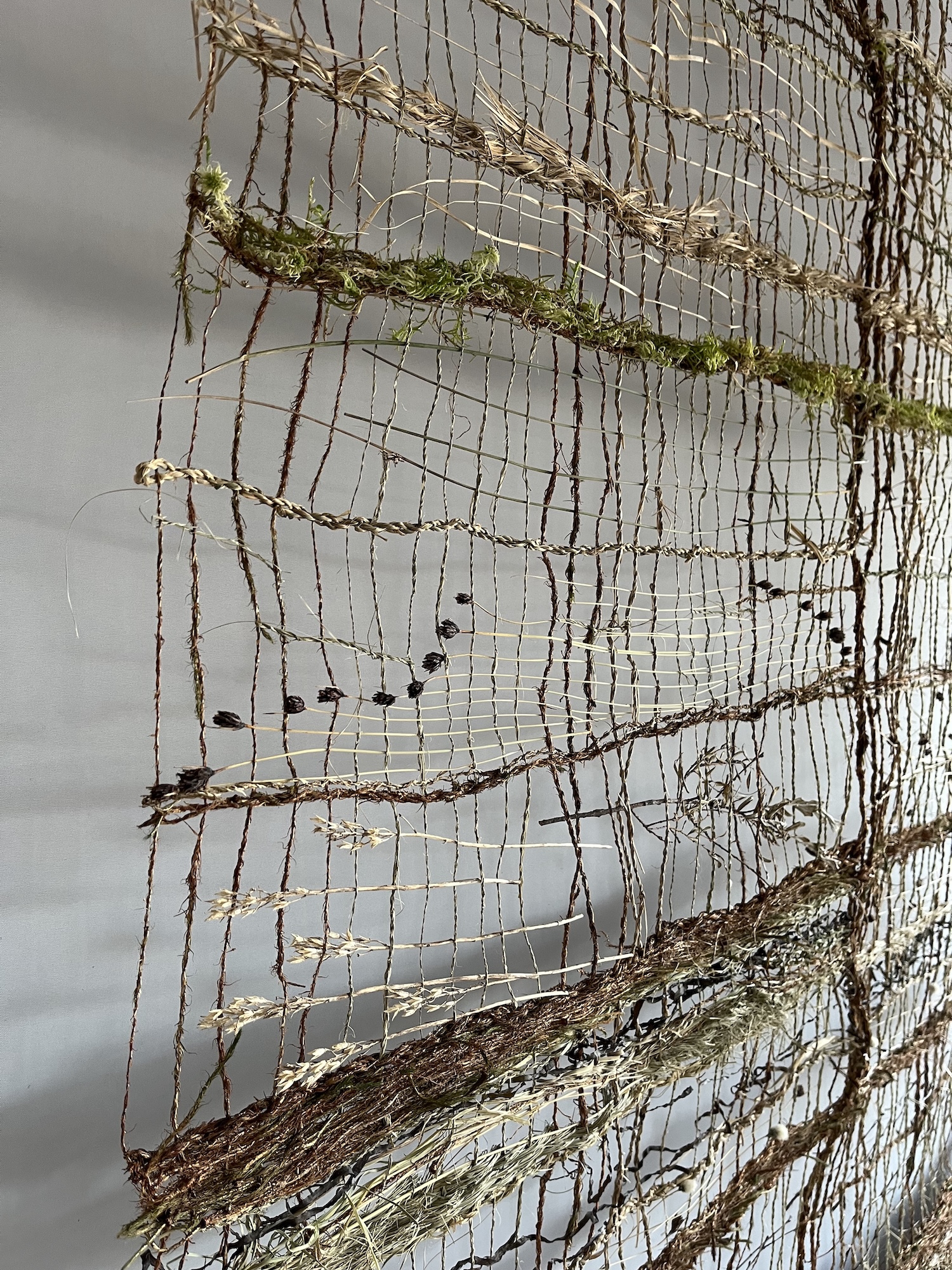
At the same time, I’m drawn to the contradiction that a looped piece of grass or moss can last hundreds of years if kept inside, while it decays quickly outside. There’s evidence of dried botanical specimens of moss coming back to life when water is added so they can be examined under a microscope.
I suppose I like to hold both the fleeting and deep time together, because they are interlinked through us. I use plants in all this work because they help give us different perspectives on the world: through time, adaptation, resilience, and perseverance. Plants can teach us a lot, if we’re open to learning.
JF - Your peat works engage directly with land as both substance and archive, through layering, cutting, and marking. Do you think of peat as a collaborator, a record, or a threshold between worlds, and how does working with it shape your sense of responsibility to place?
CD - I love working with peat. When preparing it and applying it for installations, I only use my hands, for some reason that feels really important. I love the smell, and it’s a direct link to past practices and landscapes in deep time.
I’ve used peat in many ways, always with nothing added — just the clean substance. The idea of a threshold is interesting, because I see that quality in much of my work: making a connection with something you don’t quite know or can’t fully define. That connection might come through material, process, place, or the purpose of a project.
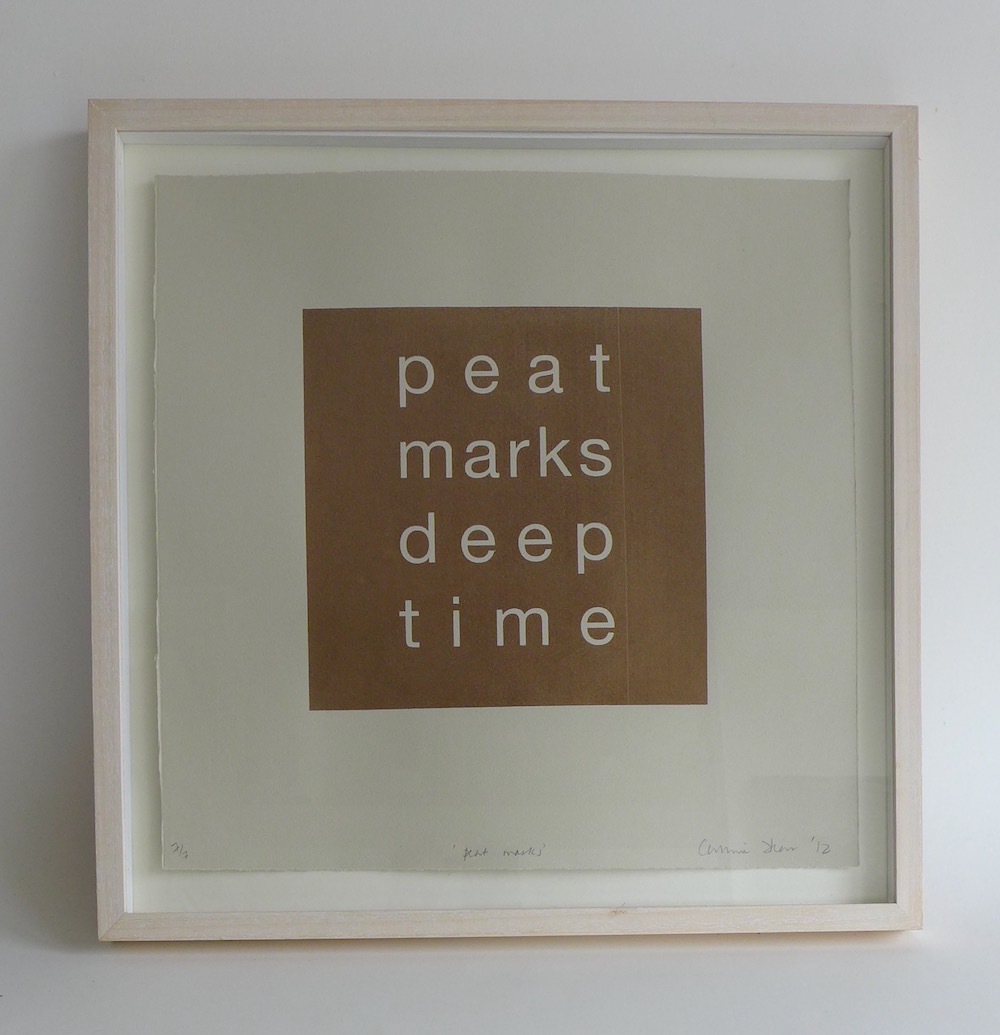
I’ve made a number of screenprints using peat itself as the ink. One includes the text:
“peat bog — a natural archive holding memory of place, of people, of time.”
Another simply reads:
“peat marks deep time.”
In terms of place, I’m very aware of how the climate here changed around 12,000 years ago, becoming warmer and wetter. People moved towards the coast, and peat began to form then, so it has been closely linked to our human story in this landscape.
JF - Projects like String / Lines unfold slowly and collectively, through research, collaboration, gatherings, and making. How important is this durational, communal process to the meaning of the finished work, and what kinds of knowledge do you think only emerge through time and shared attention?
CD - When you’re working with people and transferring skills, sharing stories, developing trust, the process needs to unfold slowly. This allows everyone to feel equally part of it, so quieter, more thoughtful people aren’t overshadowed by those who are louder or quicker.
The knowledge that arises from these processes is often unseen and hard to quantify, but I think it’s vital knowledge for us now. It’s about working together equally, respecting different ways of thinking, and recognising that everyone has something to contribute. It’s also about connecting with past people, practices, and places.
The outcomes are felt both personally and communally, and the work evolves over time, shaped by everyone involved. In that sense, the final works aren’t really mine; I’ve simply helped them emerge.
JF - Your work moves between close observation and deliberate construction, from wind-tangled grasses to peat laid with “bar code precision.” How do you decide when a piece should remain intuitive and fragile, and when it calls for structure, order, or formal restraint?
CD - Yes, in fact I think all my work is guided by a deeper intuitive understanding. Sometimes I know that something needs clarity of form in order to breathe, to be seen, and to give it a clearer edge. At other times, the material or the project process requires a looser approach.
I really like this edge between order and disorder, between the controlled and the uncontrolled. Although which is which, when we really think about it, is not always clear.
JF - Rope, string, and knotting recur in your work, from replicas of early string-making to community rope-making in gardens. What do ropes offer you as both a material and a metaphor for thinking about connection, labour, and shared knowledge?
CD - How long is a piece of rope? I’m continually surprised by how relevant string and rope-making still are, and by how much there is to learn from what seems like a very simple technique.
It begins with the material itself. With natural fibres you ask: what plant is this, how and where was it gathered, and by whom? Who did this in the past? How was the rope used then, and how are we using it now?
The simple skill of working with the hands links us to past people and past stories. Making rope together, using plants gathered locally, allows conversation to flow, deepen, and open out in a way that we don’t usually experience in our electronic world.
I see rope as a metaphor not only for a deeper understanding of the landscape around us, but also as a simple mechanism for connection between people and helping to create new, loose bonds.
What also interests me is the sheer number of ways string is needed. It has been at the forefront of technical developments, even in space exploration, and in the naming of string theory in physics. It’s part of how we understand the world we’re in.
JF - Much of your work balances extreme fragility with deep time, ephemeral grasses or sphagnum sitting alongside archaeological evidence spanning tens of thousands of years. How do you navigate that tension between what is fleeting and what endures when making a piece?
CD - I tend to think of everything as being temporary. Even photographs and documentation will fade. In a way, I like the idea of work not lasting physically, but instead creating a spark, something that might energise, enthuse, or help someone make new connections. That, for me, is what endures.
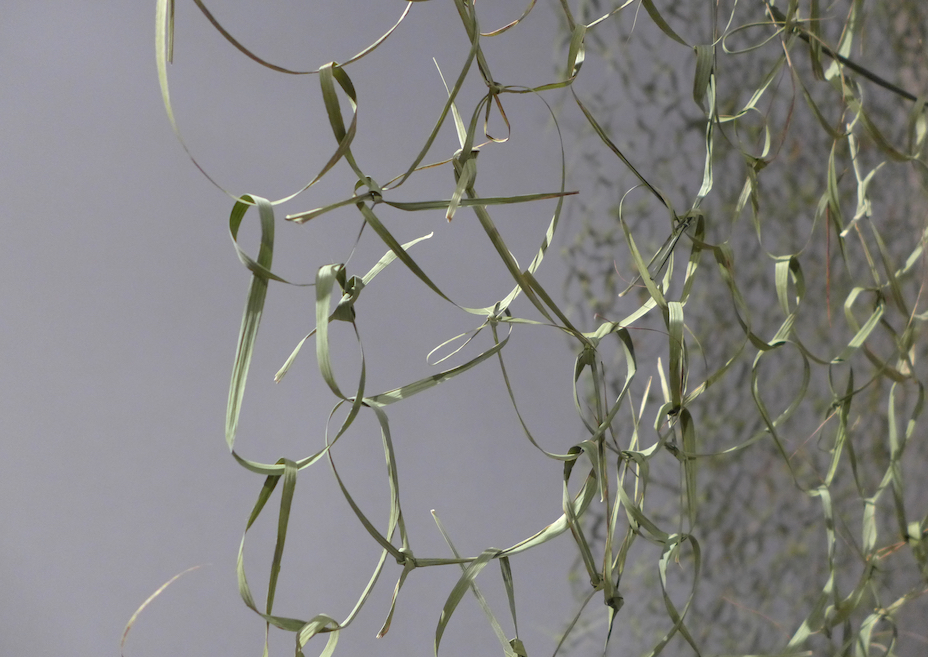
At the same time, I’m drawn to the contradiction that a looped piece of grass or moss can last hundreds of years if kept inside, while it decays quickly outside. There’s evidence of dried botanical specimens of moss coming back to life when water is added so they can be examined under a microscope.
I suppose I like to hold both the fleeting and deep time together, because they are interlinked through us. I use plants in all this work because they help give us different perspectives on the world: through time, adaptation, resilience, and perseverance. Plants can teach us a lot, if we’re open to learning.
JF - Your peat works engage directly with land as both substance and archive, through layering, cutting, and marking. Do you think of peat as a collaborator, a record, or a threshold between worlds, and how does working with it shape your sense of responsibility to place?
CD - I love working with peat. When preparing it and applying it for installations, I only use my hands, for some reason that feels really important. I love the smell, and it’s a direct link to past practices and landscapes in deep time.
I’ve used peat in many ways, always with nothing added — just the clean substance. The idea of a threshold is interesting, because I see that quality in much of my work: making a connection with something you don’t quite know or can’t fully define. That connection might come through material, process, place, or the purpose of a project.
I’ve made a number of screenprints using peat itself as the ink. One includes the text:
“peat bog — a natural archive holding memory of place, of people, of time.”
Another simply reads:
“peat marks deep time.”
In terms of place, I’m very aware of how the climate here changed around 12,000 years ago, becoming warmer and wetter. People moved towards the coast, and peat began to form then, so it has been closely linked to our human story in this landscape.
JF - Projects like String / Lines unfold slowly and collectively, through research, collaboration, gatherings, and making. How important is this durational, communal process to the meaning of the finished work, and what kinds of knowledge do you think only emerge through time and shared attention?
CD - When you’re working with people and transferring skills, sharing stories, developing trust, the process needs to unfold slowly. This allows everyone to feel equally part of it, so quieter, more thoughtful people aren’t overshadowed by those who are louder or quicker.
The knowledge that arises from these processes is often unseen and hard to quantify, but I think it’s vital knowledge for us now. It’s about working together equally, respecting different ways of thinking, and recognising that everyone has something to contribute. It’s also about connecting with past people, practices, and places.
The outcomes are felt both personally and communally, and the work evolves over time, shaped by everyone involved. In that sense, the final works aren’t really mine; I’ve simply helped them emerge.
Working along the edge between producing artefacts and seeding ideas, Caroline Dear's practice is informed by archeology, Gaelic culture, botany and traditional skills. Conscious of our changing relationship with the natural world and of this deeply important metaphysical connection, Caroline makes work which celebrates, reinvigorates and questions this aspect in our lives.
WITH CAROLINE DEAR
JF - Your work moves between close observation and deliberate construction, from wind-tangled grasses to peat laid with “bar code precision.” How do you decide when a piece should remain intuitive and fragile, and when it calls for structure, order, or formal restraint?
CD - Yes, in fact I think all my work is guided by a deeper intuitive understanding. Sometimes I know that something needs clarity of form in order to breathe, to be seen, and to give it a clearer edge. At other times, the material or the project process requires a looser approach.
I really like this edge between order and disorder, between the controlled and the uncontrolled. Although which is which, when we really think about it, is not always clear.
JF - Rope, string, and knotting recur in your work, from replicas of early string-making to community rope-making in gardens. What do ropes offer you as both a material and a metaphor for thinking about connection, labour, and shared knowledge?
CD - How long is a piece of rope? I’m continually surprised by how relevant string and rope-making still are, and by how much there is to learn from what seems like a very simple technique.
It begins with the material itself. With natural fibres you ask: what plant is this, how and where was it gathered, and by whom? Who did this in the past? How was the rope used then, and how are we using it now?
The simple skill of working with the hands links us to past people and past stories. Making rope together, using plants gathered locally, allows conversation to flow, deepen, and open out in a way that we don’t usually experience in our electronic world.
I see rope as a metaphor not only for a deeper understanding of the landscape around us, but also as a simple mechanism for connection between people and helping to create new, loose bonds.
What also interests me is the sheer number of ways string is needed. It has been at the forefront of technical developments, even in space exploration, and in the naming of string theory in physics. It’s part of how we understand the world we’re in.
JF - Much of your work balances extreme fragility with deep time, ephemeral grasses or sphagnum sitting alongside archaeological evidence spanning tens of thousands of years. How do you navigate that tension between what is fleeting and what endures when making a piece?
CD - I tend to think of everything as being temporary. Even photographs and documentation will fade. In a way, I like the idea of work not lasting physically, but instead creating a spark, something that might energise, enthuse, or help someone make new connections. That, for me, is what endures.
At the same time, I’m drawn to the contradiction that a looped piece of grass or moss can last hundreds of years if kept inside, while it decays quickly outside. There’s evidence of dried botanical specimens of moss coming back to life when water is added so they can be examined under a microscope.
I suppose I like to hold both the fleeting and deep time together, because they are interlinked through us. I use plants in all this work because they help give us different perspectives on the world: through time, adaptation, resilience, and perseverance. Plants can teach us a lot, if we’re open to learning.
JF - Your peat works engage directly with land as both substance and archive, through layering, cutting, and marking. Do you think of peat as a collaborator, a record, or a threshold between worlds, and how does working with it shape your sense of responsibility to place?
CD - I love working with peat. When preparing it and applying it for installations, I only use my hands, for some reason that feels really important. I love the smell, and it’s a direct link to past practices and landscapes in deep time.
I’ve used peat in many ways, always with nothing added — just the clean substance. The idea of a threshold is interesting, because I see that quality in much of my work: making a connection with something you don’t quite know or can’t fully define. That connection might come through material, process, place, or the purpose of a project.
I’ve made a number of screenprints using peat itself as the ink. One includes the text:
“peat bog — a natural archive holding memory of place, of people, of time.”
Another simply reads:
“peat marks deep time.”
In terms of place, I’m very aware of how the climate here changed around 12,000 years ago, becoming warmer and wetter. People moved towards the coast, and peat began to form then, so it has been closely linked to our human story in this landscape.
JF - Projects like String / Lines unfold slowly and collectively, through research, collaboration, gatherings, and making. How important is this durational, communal process to the meaning of the finished work, and what kinds of knowledge do you think only emerge through time and shared attention?
CD - When you’re working with people and transferring skills, sharing stories, developing trust, the process needs to unfold slowly. This allows everyone to feel equally part of it, so quieter, more thoughtful people aren’t overshadowed by those who are louder or quicker.
The knowledge that arises from these processes is often unseen and hard to quantify, but I think it’s vital knowledge for us now. It’s about working together equally, respecting different ways of thinking, and recognising that everyone has something to contribute. It’s also about connecting with past people, practices, and places.
The outcomes are felt both personally and communally, and the work evolves over time, shaped by everyone involved. In that sense, the final works aren’t really mine; I’ve simply helped them emerge.
JF - Your work moves between close observation and deliberate construction, from wind-tangled grasses to peat laid with “bar code precision.” How do you decide when a piece should remain intuitive and fragile, and when it calls for structure, order, or formal restraint?
CD - Yes, in fact I think all my work is guided by a deeper intuitive understanding. Sometimes I know that something needs clarity of form in order to breathe, to be seen, and to give it a clearer edge. At other times, the material or the project process requires a looser approach.
I really like this edge between order and disorder, between the controlled and the uncontrolled. Although which is which, when we really think about it, is not always clear.
JF - Rope, string, and knotting recur in your work, from replicas of early string-making to community rope-making in gardens. What do ropes offer you as both a material and a metaphor for thinking about connection, labour, and shared knowledge?
CD - How long is a piece of rope? I’m continually surprised by how relevant string and rope-making still are, and by how much there is to learn from what seems like a very simple technique.
It begins with the material itself. With natural fibres you ask: what plant is this, how and where was it gathered, and by whom? Who did this in the past? How was the rope used then, and how are we using it now?
The simple skill of working with the hands links us to past people and past stories. Making rope together, using plants gathered locally, allows conversation to flow, deepen, and open out in a way that we don’t usually experience in our electronic world.
I see rope as a metaphor not only for a deeper understanding of the landscape around us, but also as a simple mechanism for connection between people and helping to create new, loose bonds.
What also interests me is the sheer number of ways string is needed. It has been at the forefront of technical developments, even in space exploration, and in the naming of string theory in physics. It’s part of how we understand the world we’re in.
JF - Much of your work balances extreme fragility with deep time, ephemeral grasses or sphagnum sitting alongside archaeological evidence spanning tens of thousands of years. How do you navigate that tension between what is fleeting and what endures when making a piece?
CD - I tend to think of everything as being temporary. Even photographs and documentation will fade. In a way, I like the idea of work not lasting physically, but instead creating a spark, something that might energise, enthuse, or help someone make new connections. That, for me, is what endures.
At the same time, I’m drawn to the contradiction that a looped piece of grass or moss can last hundreds of years if kept inside, while it decays quickly outside. There’s evidence of dried botanical specimens of moss coming back to life when water is added so they can be examined under a microscope.
I suppose I like to hold both the fleeting and deep time together, because they are interlinked through us. I use plants in all this work because they help give us different perspectives on the world: through time, adaptation, resilience, and perseverance. Plants can teach us a lot, if we’re open to learning.
JF - Your peat works engage directly with land as both substance and archive, through layering, cutting, and marking. Do you think of peat as a collaborator, a record, or a threshold between worlds, and how does working with it shape your sense of responsibility to place?
CD - I love working with peat. When preparing it and applying it for installations, I only use my hands, for some reason that feels really important. I love the smell, and it’s a direct link to past practices and landscapes in deep time.
I’ve used peat in many ways, always with nothing added — just the clean substance. The idea of a threshold is interesting, because I see that quality in much of my work: making a connection with something you don’t quite know or can’t fully define. That connection might come through material, process, place, or the purpose of a project.
I’ve made a number of screenprints using peat itself as the ink. One includes the text:
“peat bog — a natural archive holding memory of place, of people, of time.”
Another simply reads:
“peat marks deep time.”
In terms of place, I’m very aware of how the climate here changed around 12,000 years ago, becoming warmer and wetter. People moved towards the coast, and peat began to form then, so it has been closely linked to our human story in this landscape.
JF - Projects like String / Lines unfold slowly and collectively, through research, collaboration, gatherings, and making. How important is this durational, communal process to the meaning of the finished work, and what kinds of knowledge do you think only emerge through time and shared attention?
CD - When you’re working with people and transferring skills, sharing stories, developing trust, the process needs to unfold slowly. This allows everyone to feel equally part of it, so quieter, more thoughtful people aren’t overshadowed by those who are louder or quicker.
The knowledge that arises from these processes is often unseen and hard to quantify, but I think it’s vital knowledge for us now. It’s about working together equally, respecting different ways of thinking, and recognising that everyone has something to contribute. It’s also about connecting with past people, practices, and places.
The outcomes are felt both personally and communally, and the work evolves over time, shaped by everyone involved. In that sense, the final works aren’t really mine; I’ve simply helped them emerge.
Working along the edge between producing artefacts and seeding ideas, Caroline Dear's practice is informed by archeology, Gaelic culture, botany and traditional skills. Conscious of our changing relationship with the natural world and of this deeply important metaphysical connection, Caroline makes work which celebrates, reinvigorates and questions this aspect in our lives.
WITH CAROLINE DEAR
JF - Your work moves between close observation and deliberate construction, from wind-tangled grasses to peat laid with “bar code precision.” How do you decide when a piece should remain intuitive and fragile, and when it calls for structure, order, or formal restraint?
CD - Yes, in fact I think all my work is guided by a deeper intuitive understanding. Sometimes I know that something needs clarity of form in order to breathe, to be seen, and to give it a clearer edge. At other times, the material or the project process requires a looser approach.
I really like this edge between order and disorder, between the controlled and the uncontrolled. Although which is which, when we really think about it, is not always clear.
JF - Rope, string, and knotting recur in your work, from replicas of early string-making to community rope-making in gardens. What do ropes offer you as both a material and a metaphor for thinking about connection, labour, and shared knowledge?
CD - How long is a piece of rope? I’m continually surprised by how relevant string and rope-making still are, and by how much there is to learn from what seems like a very simple technique.
It begins with the material itself. With natural fibres you ask: what plant is this, how and where was it gathered, and by whom? Who did this in the past? How was the rope used then, and how are we using it now?
The simple skill of working with the hands links us to past people and past stories. Making rope together, using plants gathered locally, allows conversation to flow, deepen, and open out in a way that we don’t usually experience in our electronic world.
I see rope as a metaphor not only for a deeper understanding of the landscape around us, but also as a simple mechanism for connection between people and helping to create new, loose bonds.
What also interests me is the sheer number of ways string is needed. It has been at the forefront of technical developments, even in space exploration, and in the naming of string theory in physics. It’s part of how we understand the world we’re in.
JF - Much of your work balances extreme fragility with deep time, ephemeral grasses or sphagnum sitting alongside archaeological evidence spanning tens of thousands of years. How do you navigate that tension between what is fleeting and what endures when making a piece?
CD - I tend to think of everything as being temporary. Even photographs and documentation will fade. In a way, I like the idea of work not lasting physically, but instead creating a spark, something that might energise, enthuse, or help someone make new connections. That, for me, is what endures.
At the same time, I’m drawn to the contradiction that a looped piece of grass or moss can last hundreds of years if kept inside, while it decays quickly outside. There’s evidence of dried botanical specimens of moss coming back to life when water is added so they can be examined under a microscope.
I suppose I like to hold both the fleeting and deep time together, because they are interlinked through us. I use plants in all this work because they help give us different perspectives on the world: through time, adaptation, resilience, and perseverance. Plants can teach us a lot, if we’re open to learning.
JF - Your peat works engage directly with land as both substance and archive, through layering, cutting, and marking. Do you think of peat as a collaborator, a record, or a threshold between worlds, and how does working with it shape your sense of responsibility to place?
CD - I love working with peat. When preparing it and applying it for installations, I only use my hands, for some reason that feels really important. I love the smell, and it’s a direct link to past practices and landscapes in deep time.
I’ve used peat in many ways, always with nothing added — just the clean substance. The idea of a threshold is interesting, because I see that quality in much of my work: making a connection with something you don’t quite know or can’t fully define. That connection might come through material, process, place, or the purpose of a project.
I’ve made a number of screenprints using peat itself as the ink. One includes the text:
“peat bog — a natural archive holding memory of place, of people, of time.”
Another simply reads:
“peat marks deep time.”
In terms of place, I’m very aware of how the climate here changed around 12,000 years ago, becoming warmer and wetter. People moved towards the coast, and peat began to form then, so it has been closely linked to our human story in this landscape.
JF - Projects like String / Lines unfold slowly and collectively, through research, collaboration, gatherings, and making. How important is this durational, communal process to the meaning of the finished work, and what kinds of knowledge do you think only emerge through time and shared attention?
CD - When you’re working with people and transferring skills, sharing stories, developing trust, the process needs to unfold slowly. This allows everyone to feel equally part of it, so quieter, more thoughtful people aren’t overshadowed by those who are louder or quicker.
The knowledge that arises from these processes is often unseen and hard to quantify, but I think it’s vital knowledge for us now. It’s about working together equally, respecting different ways of thinking, and recognising that everyone has something to contribute. It’s also about connecting with past people, practices, and places.
The outcomes are felt both personally and communally, and the work evolves over time, shaped by everyone involved. In that sense, the final works aren’t really mine; I’ve simply helped them emerge.
JF - Your work moves between close observation and deliberate construction, from wind-tangled grasses to peat laid with “bar code precision.” How do you decide when a piece should remain intuitive and fragile, and when it calls for structure, order, or formal restraint?
CD - Yes, in fact I think all my work is guided by a deeper intuitive understanding. Sometimes I know that something needs clarity of form in order to breathe, to be seen, and to give it a clearer edge. At other times, the material or the project process requires a looser approach.
I really like this edge between order and disorder, between the controlled and the uncontrolled. Although which is which, when we really think about it, is not always clear.
JF - Rope, string, and knotting recur in your work, from replicas of early string-making to community rope-making in gardens. What do ropes offer you as both a material and a metaphor for thinking about connection, labour, and shared knowledge?
CD - How long is a piece of rope? I’m continually surprised by how relevant string and rope-making still are, and by how much there is to learn from what seems like a very simple technique.
It begins with the material itself. With natural fibres you ask: what plant is this, how and where was it gathered, and by whom? Who did this in the past? How was the rope used then, and how are we using it now?
The simple skill of working with the hands links us to past people and past stories. Making rope together, using plants gathered locally, allows conversation to flow, deepen, and open out in a way that we don’t usually experience in our electronic world.
I see rope as a metaphor not only for a deeper understanding of the landscape around us, but also as a simple mechanism for connection between people and helping to create new, loose bonds.
What also interests me is the sheer number of ways string is needed. It has been at the forefront of technical developments, even in space exploration, and in the naming of string theory in physics. It’s part of how we understand the world we’re in.
JF - Much of your work balances extreme fragility with deep time, ephemeral grasses or sphagnum sitting alongside archaeological evidence spanning tens of thousands of years. How do you navigate that tension between what is fleeting and what endures when making a piece?
CD - I tend to think of everything as being temporary. Even photographs and documentation will fade. In a way, I like the idea of work not lasting physically, but instead creating a spark, something that might energise, enthuse, or help someone make new connections. That, for me, is what endures.
At the same time, I’m drawn to the contradiction that a looped piece of grass or moss can last hundreds of years if kept inside, while it decays quickly outside. There’s evidence of dried botanical specimens of moss coming back to life when water is added so they can be examined under a microscope.
I suppose I like to hold both the fleeting and deep time together, because they are interlinked through us. I use plants in all this work because they help give us different perspectives on the world: through time, adaptation, resilience, and perseverance. Plants can teach us a lot, if we’re open to learning.
JF - Your peat works engage directly with land as both substance and archive, through layering, cutting, and marking. Do you think of peat as a collaborator, a record, or a threshold between worlds, and how does working with it shape your sense of responsibility to place?
CD - I love working with peat. When preparing it and applying it for installations, I only use my hands, for some reason that feels really important. I love the smell, and it’s a direct link to past practices and landscapes in deep time.
I’ve used peat in many ways, always with nothing added — just the clean substance. The idea of a threshold is interesting, because I see that quality in much of my work: making a connection with something you don’t quite know or can’t fully define. That connection might come through material, process, place, or the purpose of a project.
I’ve made a number of screenprints using peat itself as the ink. One includes the text:
“peat bog — a natural archive holding memory of place, of people, of time.”
Another simply reads:
“peat marks deep time.”
In terms of place, I’m very aware of how the climate here changed around 12,000 years ago, becoming warmer and wetter. People moved towards the coast, and peat began to form then, so it has been closely linked to our human story in this landscape.
JF - Projects like String / Lines unfold slowly and collectively, through research, collaboration, gatherings, and making. How important is this durational, communal process to the meaning of the finished work, and what kinds of knowledge do you think only emerge through time and shared attention?
CD - When you’re working with people and transferring skills, sharing stories, developing trust, the process needs to unfold slowly. This allows everyone to feel equally part of it, so quieter, more thoughtful people aren’t overshadowed by those who are louder or quicker.
The knowledge that arises from these processes is often unseen and hard to quantify, but I think it’s vital knowledge for us now. It’s about working together equally, respecting different ways of thinking, and recognising that everyone has something to contribute. It’s also about connecting with past people, practices, and places.
The outcomes are felt both personally and communally, and the work evolves over time, shaped by everyone involved. In that sense, the final works aren’t really mine; I’ve simply helped them emerge.
Working along the edge between producing artefacts and seeding ideas, Caroline Dear's practice is informed by archeology, Gaelic culture, botany and traditional skills. Conscious of our changing relationship with the natural world and of this deeply important metaphysical connection, Caroline makes work which celebrates, reinvigorates and questions this aspect in our lives.
WITH CAROLINE DEAR
JF - Your work moves between close observation and deliberate construction, from wind-tangled grasses to peat laid with “bar code precision.” How do you decide when a piece should remain intuitive and fragile, and when it calls for structure, order, or formal restraint?
CD - Yes, in fact I think all my work is guided by a deeper intuitive understanding. Sometimes I know that something needs clarity of form in order to breathe, to be seen, and to give it a clearer edge. At other times, the material or the project process requires a looser approach.
I really like this edge between order and disorder, between the controlled and the uncontrolled. Although which is which, when we really think about it, is not always clear.
JF - Rope, string, and knotting recur in your work, from replicas of early string-making to community rope-making in gardens. What do ropes offer you as both a material and a metaphor for thinking about connection, labour, and shared knowledge?
CD - How long is a piece of rope? I’m continually surprised by how relevant string and rope-making still are, and by how much there is to learn from what seems like a very simple technique.
It begins with the material itself. With natural fibres you ask: what plant is this, how and where was it gathered, and by whom? Who did this in the past? How was the rope used then, and how are we using it now?
The simple skill of working with the hands links us to past people and past stories. Making rope together, using plants gathered locally, allows conversation to flow, deepen, and open out in a way that we don’t usually experience in our electronic world.
I see rope as a metaphor not only for a deeper understanding of the landscape around us, but also as a simple mechanism for connection between people and helping to create new, loose bonds.
What also interests me is the sheer number of ways string is needed. It has been at the forefront of technical developments, even in space exploration, and in the naming of string theory in physics. It’s part of how we understand the world we’re in.
JF - Much of your work balances extreme fragility with deep time, ephemeral grasses or sphagnum sitting alongside archaeological evidence spanning tens of thousands of years. How do you navigate that tension between what is fleeting and what endures when making a piece?
CD - I tend to think of everything as being temporary. Even photographs and documentation will fade. In a way, I like the idea of work not lasting physically, but instead creating a spark, something that might energise, enthuse, or help someone make new connections. That, for me, is what endures.
At the same time, I’m drawn to the contradiction that a looped piece of grass or moss can last hundreds of years if kept inside, while it decays quickly outside. There’s evidence of dried botanical specimens of moss coming back to life when water is added so they can be examined under a microscope.
I suppose I like to hold both the fleeting and deep time together, because they are interlinked through us. I use plants in all this work because they help give us different perspectives on the world: through time, adaptation, resilience, and perseverance. Plants can teach us a lot, if we’re open to learning.
JF - Your peat works engage directly with land as both substance and archive, through layering, cutting, and marking. Do you think of peat as a collaborator, a record, or a threshold between worlds, and how does working with it shape your sense of responsibility to place?
CD - I love working with peat. When preparing it and applying it for installations, I only use my hands, for some reason that feels really important. I love the smell, and it’s a direct link to past practices and landscapes in deep time.
I’ve used peat in many ways, always with nothing added — just the clean substance. The idea of a threshold is interesting, because I see that quality in much of my work: making a connection with something you don’t quite know or can’t fully define. That connection might come through material, process, place, or the purpose of a project.
I’ve made a number of screenprints using peat itself as the ink. One includes the text:
“peat bog — a natural archive holding memory of place, of people, of time.”
Another simply reads:
“peat marks deep time.”
In terms of place, I’m very aware of how the climate here changed around 12,000 years ago, becoming warmer and wetter. People moved towards the coast, and peat began to form then, so it has been closely linked to our human story in this landscape.
JF - Projects like String / Lines unfold slowly and collectively, through research, collaboration, gatherings, and making. How important is this durational, communal process to the meaning of the finished work, and what kinds of knowledge do you think only emerge through time and shared attention?
CD - When you’re working with people and transferring skills, sharing stories, developing trust, the process needs to unfold slowly. This allows everyone to feel equally part of it, so quieter, more thoughtful people aren’t overshadowed by those who are louder or quicker.
The knowledge that arises from these processes is often unseen and hard to quantify, but I think it’s vital knowledge for us now. It’s about working together equally, respecting different ways of thinking, and recognising that everyone has something to contribute. It’s also about connecting with past people, practices, and places.
The outcomes are felt both personally and communally, and the work evolves over time, shaped by everyone involved. In that sense, the final works aren’t really mine; I’ve simply helped them emerge.
JF - Your work moves between close observation and deliberate construction, from wind-tangled grasses to peat laid with “bar code precision.” How do you decide when a piece should remain intuitive and fragile, and when it calls for structure, order, or formal restraint?
CD - Yes, in fact I think all my work is guided by a deeper intuitive understanding. Sometimes I know that something needs clarity of form in order to breathe, to be seen, and to give it a clearer edge. At other times, the material or the project process requires a looser approach.
I really like this edge between order and disorder, between the controlled and the uncontrolled. Although which is which, when we really think about it, is not always clear.
JF - Rope, string, and knotting recur in your work, from replicas of early string-making to community rope-making in gardens. What do ropes offer you as both a material and a metaphor for thinking about connection, labour, and shared knowledge?
CD - How long is a piece of rope? I’m continually surprised by how relevant string and rope-making still are, and by how much there is to learn from what seems like a very simple technique.
It begins with the material itself. With natural fibres you ask: what plant is this, how and where was it gathered, and by whom? Who did this in the past? How was the rope used then, and how are we using it now?
The simple skill of working with the hands links us to past people and past stories. Making rope together, using plants gathered locally, allows conversation to flow, deepen, and open out in a way that we don’t usually experience in our electronic world.
I see rope as a metaphor not only for a deeper understanding of the landscape around us, but also as a simple mechanism for connection between people and helping to create new, loose bonds.
What also interests me is the sheer number of ways string is needed. It has been at the forefront of technical developments, even in space exploration, and in the naming of string theory in physics. It’s part of how we understand the world we’re in.
JF - Much of your work balances extreme fragility with deep time, ephemeral grasses or sphagnum sitting alongside archaeological evidence spanning tens of thousands of years. How do you navigate that tension between what is fleeting and what endures when making a piece?
CD - I tend to think of everything as being temporary. Even photographs and documentation will fade. In a way, I like the idea of work not lasting physically, but instead creating a spark, something that might energise, enthuse, or help someone make new connections. That, for me, is what endures.
At the same time, I’m drawn to the contradiction that a looped piece of grass or moss can last hundreds of years if kept inside, while it decays quickly outside. There’s evidence of dried botanical specimens of moss coming back to life when water is added so they can be examined under a microscope.
I suppose I like to hold both the fleeting and deep time together, because they are interlinked through us. I use plants in all this work because they help give us different perspectives on the world: through time, adaptation, resilience, and perseverance. Plants can teach us a lot, if we’re open to learning.
JF - Your peat works engage directly with land as both substance and archive, through layering, cutting, and marking. Do you think of peat as a collaborator, a record, or a threshold between worlds, and how does working with it shape your sense of responsibility to place?
CD - I love working with peat. When preparing it and applying it for installations, I only use my hands, for some reason that feels really important. I love the smell, and it’s a direct link to past practices and landscapes in deep time.
I’ve used peat in many ways, always with nothing added — just the clean substance. The idea of a threshold is interesting, because I see that quality in much of my work: making a connection with something you don’t quite know or can’t fully define. That connection might come through material, process, place, or the purpose of a project.
I’ve made a number of screenprints using peat itself as the ink. One includes the text:
“peat bog — a natural archive holding memory of place, of people, of time.”
Another simply reads:
“peat marks deep time.”
In terms of place, I’m very aware of how the climate here changed around 12,000 years ago, becoming warmer and wetter. People moved towards the coast, and peat began to form then, so it has been closely linked to our human story in this landscape.
JF - Projects like String / Lines unfold slowly and collectively, through research, collaboration, gatherings, and making. How important is this durational, communal process to the meaning of the finished work, and what kinds of knowledge do you think only emerge through time and shared attention?
CD - When you’re working with people and transferring skills, sharing stories, developing trust, the process needs to unfold slowly. This allows everyone to feel equally part of it, so quieter, more thoughtful people aren’t overshadowed by those who are louder or quicker.
The knowledge that arises from these processes is often unseen and hard to quantify, but I think it’s vital knowledge for us now. It’s about working together equally, respecting different ways of thinking, and recognising that everyone has something to contribute. It’s also about connecting with past people, practices, and places.
The outcomes are felt both personally and communally, and the work evolves over time, shaped by everyone involved. In that sense, the final works aren’t really mine; I’ve simply helped them emerge.
Working along the edge between producing artefacts and seeding ideas, Caroline Dear's practice is informed by archeology, Gaelic culture, botany and traditional skills. Conscious of our changing relationship with the natural world and of this deeply important metaphysical connection, Caroline makes work which celebrates, reinvigorates and questions this aspect in our lives.