BY MÓNICA DE MIRANDA
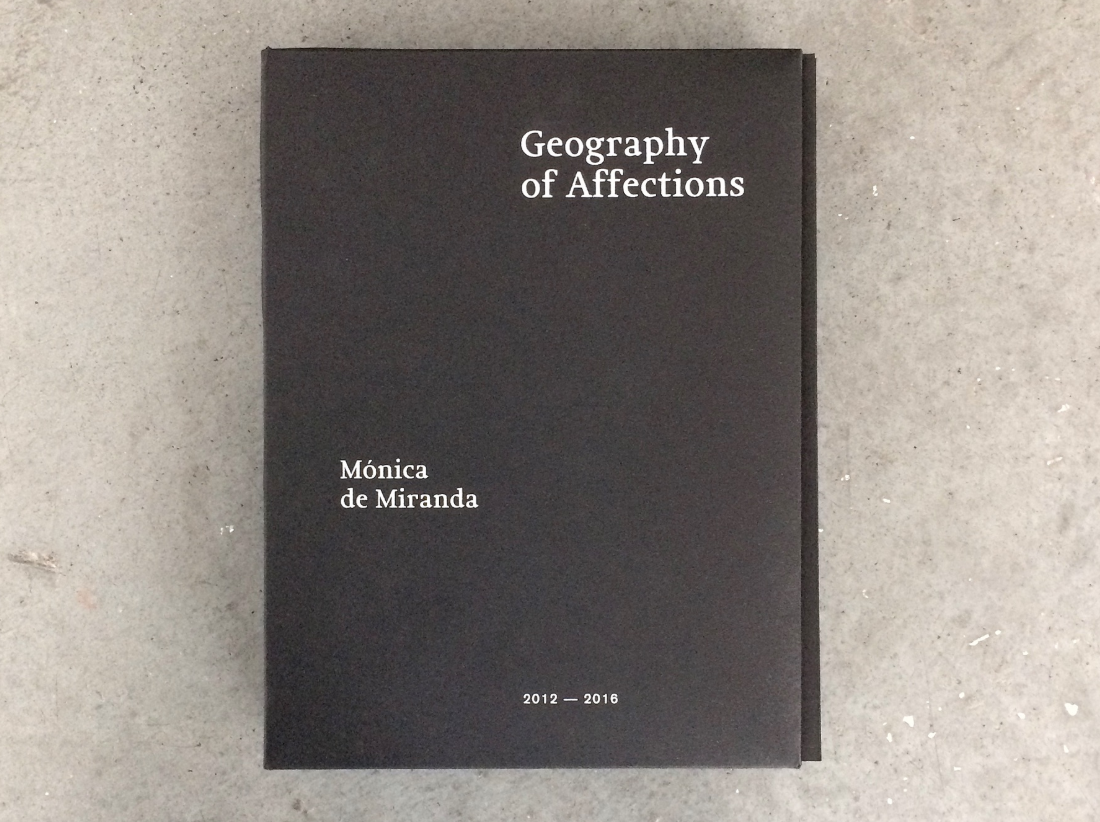
Extracts from Geography of Affections: Tales of Identity, Diaspora and Travel in the work of Mónica de Miranda.
Archaeology of place: Imaginary Landscapes

‘Any landscape is composed not only of what lies before our eyes but what lies within our head’ (Meinig 1976:66).
The work Erosion alludes to landscape history and archaeology as a study of the mode in which humanity has changed the physical appearance of the environment – both past and present. This work uses evidence and approaches from other disciplines including archaeology, architecture, ecology, historical geography and local history in relation to globalization and to my personal stories. I understand landscape, with both it physical origins and cultural overlay of human presence, to reflect the living synthesis of people and places vital to the formation of local and global identities. Landscape in my work is the dynamic backdrop to the reconstruction of the places that are elements of my biography and stand for land; these landscapes are connected to my biography. At this point, geography systematically examines the phenomenology of these represented landscapes. I trace the development of natural and urban landscapes that are connected to my own life stories through the designed and intentionally created landscapes produced for this work. I use landscapes that allude to a subjective place with a specific location, as areas that comprise distinct associations of forms, physical, human and natural, and regard them as cultural and personal landscapes.

This work is about de-territorialized and de-colonised landscapes and represents common signs in the circuits between different countries that signal a route of affection in search of my own personal stories in connection 86 to a route of history in relation to the decolonisation process in a Lusophone context. It is a history that through a constant struggle is pieced together and then continually decomposed and recomposed, interlacing the experience of what I have inherited and where I am now. Erosion represents and recognises the differentiated territories where my imaginary is actively disseminated and my family routes are simultaneously dispersed. This work allows me to question and reconsider the histories I have inherited and inhabit: the histories of language, politics, culture and experience.

Erosion uses a method of landscape art, by employing the depiction of natural scenery such as mountains, valleys, trees, seas, and forests but also focusing on man-made features and disturbances in those landscapes. Buildings in the composition indicate an erosion process caused by urbanisation and exodus. In the arrangement of the images, I use a wide view, with the elements arranged in a composition where the sky is almost always in the view, and the weather is an element of the composition. These landscapes function as a background for a figure dressed in white, although the emphasis is on the landscape as the figure turns its back to the spectator and guides the eye into 87 the scenery of the image and subject represented. The landscape becomes an archive of these multiple sites, visual and sensory textures of enfranchisement and belonging. The role of the landscape here is to support a sense of identity that has been eroded by the process of multiple migrations within my family history.
A sense of place: Maps and landscapes
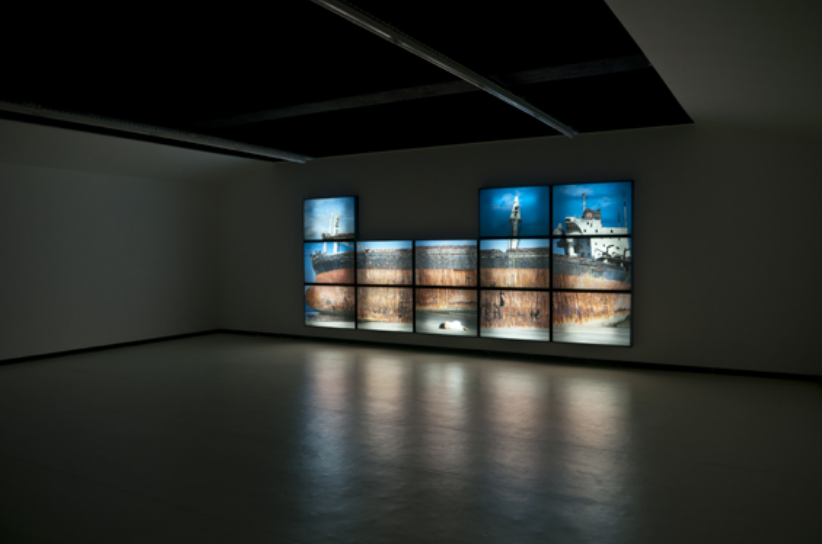
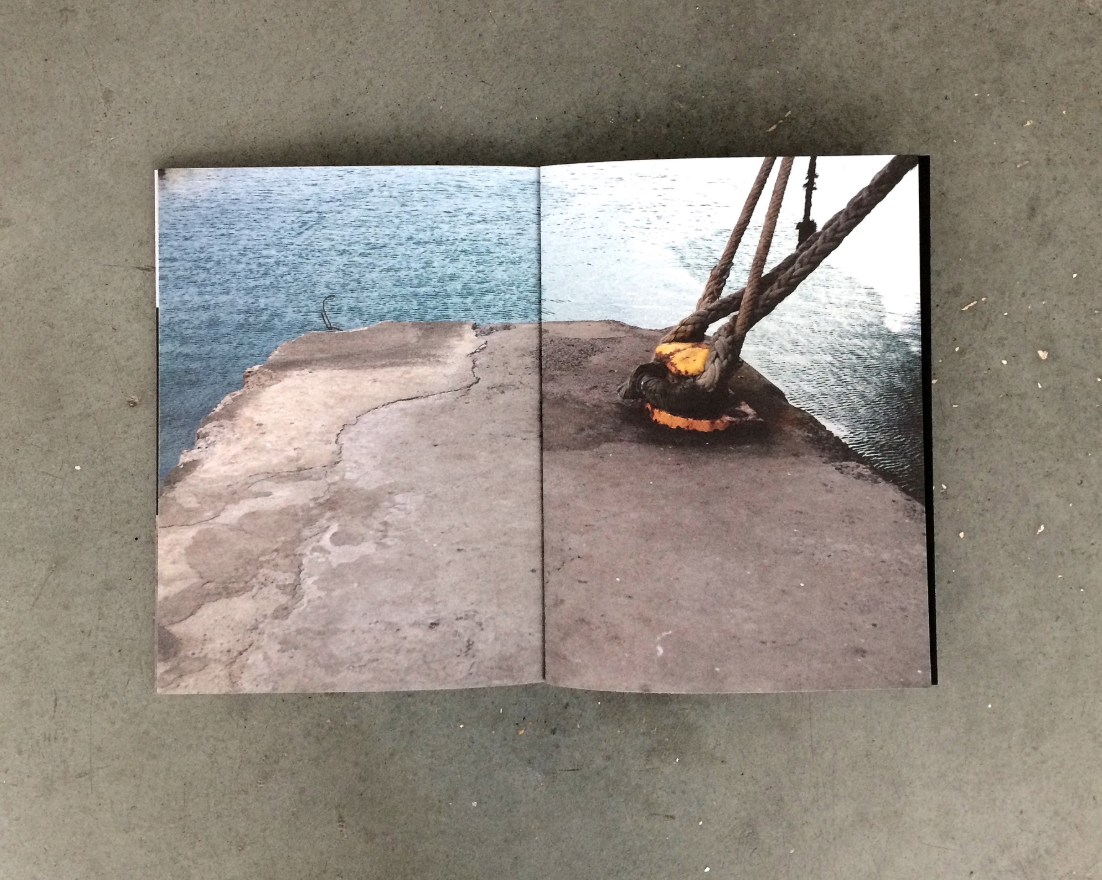
‘The concept of country, homeland, dwelling place becomes simplified as environment – that is, what surround us. Once we see our place, our part of the world, as surrounding us, we have made a profound division between it and ourselves’ (Lippard in Lazy 1995:116). Erosion concerns a study of my subjective places and of an environment that examines into my personal world and ecology. The places re-created are maps of my own social and cultural contexts; places I have inhabited or visited that are part of my family heritage. This work activates my experience of my places of belonging that have eroded throughout time and remain as an album now, a mosaic that attempts to reconfigure memory and place. This work is a booklet guide, a walking tour and a directional sign captioning the history of my family, of the houses where they/ I lived, that suggests the depths of a landscape and the sense of an eroded, hyphenated, transitional community. I inhabit a socio-cultural universe in constant motion, a moving cartography with a floating sense of culture and identity. This world is a transcultural border culture - a multilingual environment. Landscape and environment are positioned here as material signifiers of land, territory and environments that contribute towards connectedness with global cultures and subjective narratives. In fact, the very idea of ‘landscape’ was invented to control territory.

The landscapes presented in my work however refer to a colonial legacy from a postcolonial world, and my family stories are a potent site for understanding process within my family stories. Colonial control over territory is well known and discursively established through technologies of surveying, mapping and 89 representing landscape. The landscapes at this juncture are a living geography of subjective spaces; they are maps that point to a specific direction, a destiny and a route. These maps in form of a landscape inform me where I am, where I come from, and show me where I am going. Understanding my own cultural and affective geography is a necessary component of the reinvention of my own nature, place and identity.
Extracts from Geography of Affections: Tales of Identity, Diaspora and Travel in the work of Mónica de Miranda.
Archaeology of place: Imaginary Landscapes
‘Any landscape is composed not only of what lies before our eyes but what lies within our head’ (Meinig 1976:66).
The work Erosion alludes to landscape history and archaeology as a study of the mode in which humanity has changed the physical appearance of the environment – both past and present. This work uses evidence and approaches from other disciplines including archaeology, architecture, ecology, historical geography and local history in relation to globalization and to my personal stories. I understand landscape, with both it physical origins and cultural overlay of human presence, to reflect the living synthesis of people and places vital to the formation of local and global identities. Landscape in my work is the dynamic backdrop to the reconstruction of the places that are elements of my biography and stand for land; these landscapes are connected to my biography. At this point, geography systematically examines the phenomenology of these represented landscapes. I trace the development of natural and urban landscapes that are connected to my own life stories through the designed and intentionally created landscapes produced for this work. I use landscapes that allude to a subjective place with a specific location, as areas that comprise distinct associations of forms, physical, human and natural, and regard them as cultural and personal landscapes.
This work is about de-territorialized and de-colonised landscapes and represents common signs in the circuits between different countries that signal a route of affection in search of my own personal stories in connection 86 to a route of history in relation to the decolonisation process in a Lusophone context. It is a history that through a constant struggle is pieced together and then continually decomposed and recomposed, interlacing the experience of what I have inherited and where I am now. Erosion represents and recognises the differentiated territories where my imaginary is actively disseminated and my family routes are simultaneously dispersed. This work allows me to question and reconsider the histories I have inherited and inhabit: the histories of language, politics, culture and experience.
Erosion uses a method of landscape art, by employing the depiction of natural scenery such as mountains, valleys, trees, seas, and forests but also focusing on man-made features and disturbances in those landscapes. Buildings in the composition indicate an erosion process caused by urbanisation and exodus. In the arrangement of the images, I use a wide view, with the elements arranged in a composition where the sky is almost always in the view, and the weather is an element of the composition. These landscapes function as a background for a figure dressed in white, although the emphasis is on the landscape as the figure turns its back to the spectator and guides the eye into 87 the scenery of the image and subject represented. The landscape becomes an archive of these multiple sites, visual and sensory textures of enfranchisement and belonging. The role of the landscape here is to support a sense of identity that has been eroded by the process of multiple migrations within my family history.
A sense of place: Maps and landscapes
‘The concept of country, homeland, dwelling place becomes simplified as environment – that is, what surround us. Once we see our place, our part of the world, as surrounding us, we have made a profound division between it and ourselves’ (Lippard in Lazy 1995:116). Erosion concerns a study of my subjective places and of an environment that examines into my personal world and ecology. The places re-created are maps of my own social and cultural contexts; places I have inhabited or visited that are part of my family heritage. This work activates my experience of my places of belonging that have eroded throughout time and remain as an album now, a mosaic that attempts to reconfigure memory and place. This work is a booklet guide, a walking tour and a directional sign captioning the history of my family, of the houses where they/ I lived, that suggests the depths of a landscape and the sense of an eroded, hyphenated, transitional community. I inhabit a socio-cultural universe in constant motion, a moving cartography with a floating sense of culture and identity. This world is a transcultural border culture - a multilingual environment. Landscape and environment are positioned here as material signifiers of land, territory and environments that contribute towards connectedness with global cultures and subjective narratives. In fact, the very idea of ‘landscape’ was invented to control territory.
The landscapes presented in my work however refer to a colonial legacy from a postcolonial world, and my family stories are a potent site for understanding process within my family stories. Colonial control over territory is well known and discursively established through technologies of surveying, mapping and 89 representing landscape. The landscapes at this juncture are a living geography of subjective spaces; they are maps that point to a specific direction, a destiny and a route. These maps in form of a landscape inform me where I am, where I come from, and show me where I am going. Understanding my own cultural and affective geography is a necessary component of the reinvention of my own nature, place and identity.
Mónica de Miranda is a visual artist, filmmaker and researcher whose interdisciplinary and research-based practice critically looks at the convergence of politics, gender, memory, space and history. Her work encompasses drawing, installation, photography, film and sound, on the boundaries between documentary and fiction. Mónica investigates strategies of resistance, geographies of affection, storytelling and ecologies of care.
She is the founder of Hangar (2014), an art and research centre in Lisbon. Hangar’s programmes provide spaces where artists, curators and researchers, mainly from the global south, can co-create and build social and creative networks to benefit their communities.



BY MÓNICA DE MIRANDA
Extracts from Geography of Affections: Tales of Identity, Diaspora and Travel in the work of Mónica de Miranda.
Archaeology of place: Imaginary Landscapes
‘Any landscape is composed not only of what lies before our eyes but what lies within our head’ (Meinig 1976:66).
The work Erosion alludes to landscape history and archaeology as a study of the mode in which humanity has changed the physical appearance of the environment – both past and present. This work uses evidence and approaches from other disciplines including archaeology, architecture, ecology, historical geography and local history in relation to globalization and to my personal stories. I understand landscape, with both it physical origins and cultural overlay of human presence, to reflect the living synthesis of people and places vital to the formation of local and global identities. Landscape in my work is the dynamic backdrop to the reconstruction of the places that are elements of my biography and stand for land; these landscapes are connected to my biography. At this point, geography systematically examines the phenomenology of these represented landscapes. I trace the development of natural and urban landscapes that are connected to my own life stories through the designed and intentionally created landscapes produced for this work. I use landscapes that allude to a subjective place with a specific location, as areas that comprise distinct associations of forms, physical, human and natural, and regard them as cultural and personal landscapes.
This work is about de-territorialized and de-colonised landscapes and represents common signs in the circuits between different countries that signal a route of affection in search of my own personal stories in connection 86 to a route of history in relation to the decolonisation process in a Lusophone context. It is a history that through a constant struggle is pieced together and then continually decomposed and recomposed, interlacing the experience of what I have inherited and where I am now. Erosion represents and recognises the differentiated territories where my imaginary is actively disseminated and my family routes are simultaneously dispersed. This work allows me to question and reconsider the histories I have inherited and inhabit: the histories of language, politics, culture and experience.
Erosion uses a method of landscape art, by employing the depiction of natural scenery such as mountains, valleys, trees, seas, and forests but also focusing on man-made features and disturbances in those landscapes. Buildings in the composition indicate an erosion process caused by urbanisation and exodus. In the arrangement of the images, I use a wide view, with the elements arranged in a composition where the sky is almost always in the view, and the weather is an element of the composition. These landscapes function as a background for a figure dressed in white, although the emphasis is on the landscape as the figure turns its back to the spectator and guides the eye into 87 the scenery of the image and subject represented. The landscape becomes an archive of these multiple sites, visual and sensory textures of enfranchisement and belonging. The role of the landscape here is to support a sense of identity that has been eroded by the process of multiple migrations within my family history.
A sense of place: Maps and landscapes
‘The concept of country, homeland, dwelling place becomes simplified as environment – that is, what surround us. Once we see our place, our part of the world, as surrounding us, we have made a profound division between it and ourselves’ (Lippard in Lazy 1995:116). Erosion concerns a study of my subjective places and of an environment that examines into my personal world and ecology. The places re-created are maps of my own social and cultural contexts; places I have inhabited or visited that are part of my family heritage. This work activates my experience of my places of belonging that have eroded throughout time and remain as an album now, a mosaic that attempts to reconfigure memory and place. This work is a booklet guide, a walking tour and a directional sign captioning the history of my family, of the houses where they/ I lived, that suggests the depths of a landscape and the sense of an eroded, hyphenated, transitional community. I inhabit a socio-cultural universe in constant motion, a moving cartography with a floating sense of culture and identity. This world is a transcultural border culture - a multilingual environment. Landscape and environment are positioned here as material signifiers of land, territory and environments that contribute towards connectedness with global cultures and subjective narratives. In fact, the very idea of ‘landscape’ was invented to control territory.
The landscapes presented in my work however refer to a colonial legacy from a postcolonial world, and my family stories are a potent site for understanding process within my family stories. Colonial control over territory is well known and discursively established through technologies of surveying, mapping and 89 representing landscape. The landscapes at this juncture are a living geography of subjective spaces; they are maps that point to a specific direction, a destiny and a route. These maps in form of a landscape inform me where I am, where I come from, and show me where I am going. Understanding my own cultural and affective geography is a necessary component of the reinvention of my own nature, place and identity.
Extracts from Geography of Affections: Tales of Identity, Diaspora and Travel in the work of Mónica de Miranda.
Archaeology of place: Imaginary Landscapes
‘Any landscape is composed not only of what lies before our eyes but what lies within our head’ (Meinig 1976:66).
The work Erosion alludes to landscape history and archaeology as a study of the mode in which humanity has changed the physical appearance of the environment – both past and present. This work uses evidence and approaches from other disciplines including archaeology, architecture, ecology, historical geography and local history in relation to globalization and to my personal stories. I understand landscape, with both it physical origins and cultural overlay of human presence, to reflect the living synthesis of people and places vital to the formation of local and global identities. Landscape in my work is the dynamic backdrop to the reconstruction of the places that are elements of my biography and stand for land; these landscapes are connected to my biography. At this point, geography systematically examines the phenomenology of these represented landscapes. I trace the development of natural and urban landscapes that are connected to my own life stories through the designed and intentionally created landscapes produced for this work. I use landscapes that allude to a subjective place with a specific location, as areas that comprise distinct associations of forms, physical, human and natural, and regard them as cultural and personal landscapes.
This work is about de-territorialized and de-colonised landscapes and represents common signs in the circuits between different countries that signal a route of affection in search of my own personal stories in connection 86 to a route of history in relation to the decolonisation process in a Lusophone context. It is a history that through a constant struggle is pieced together and then continually decomposed and recomposed, interlacing the experience of what I have inherited and where I am now. Erosion represents and recognises the differentiated territories where my imaginary is actively disseminated and my family routes are simultaneously dispersed. This work allows me to question and reconsider the histories I have inherited and inhabit: the histories of language, politics, culture and experience.
Erosion uses a method of landscape art, by employing the depiction of natural scenery such as mountains, valleys, trees, seas, and forests but also focusing on man-made features and disturbances in those landscapes. Buildings in the composition indicate an erosion process caused by urbanisation and exodus. In the arrangement of the images, I use a wide view, with the elements arranged in a composition where the sky is almost always in the view, and the weather is an element of the composition. These landscapes function as a background for a figure dressed in white, although the emphasis is on the landscape as the figure turns its back to the spectator and guides the eye into 87 the scenery of the image and subject represented. The landscape becomes an archive of these multiple sites, visual and sensory textures of enfranchisement and belonging. The role of the landscape here is to support a sense of identity that has been eroded by the process of multiple migrations within my family history.
A sense of place: Maps and landscapes
‘The concept of country, homeland, dwelling place becomes simplified as environment – that is, what surround us. Once we see our place, our part of the world, as surrounding us, we have made a profound division between it and ourselves’ (Lippard in Lazy 1995:116). Erosion concerns a study of my subjective places and of an environment that examines into my personal world and ecology. The places re-created are maps of my own social and cultural contexts; places I have inhabited or visited that are part of my family heritage. This work activates my experience of my places of belonging that have eroded throughout time and remain as an album now, a mosaic that attempts to reconfigure memory and place. This work is a booklet guide, a walking tour and a directional sign captioning the history of my family, of the houses where they/ I lived, that suggests the depths of a landscape and the sense of an eroded, hyphenated, transitional community. I inhabit a socio-cultural universe in constant motion, a moving cartography with a floating sense of culture and identity. This world is a transcultural border culture - a multilingual environment. Landscape and environment are positioned here as material signifiers of land, territory and environments that contribute towards connectedness with global cultures and subjective narratives. In fact, the very idea of ‘landscape’ was invented to control territory.
The landscapes presented in my work however refer to a colonial legacy from a postcolonial world, and my family stories are a potent site for understanding process within my family stories. Colonial control over territory is well known and discursively established through technologies of surveying, mapping and 89 representing landscape. The landscapes at this juncture are a living geography of subjective spaces; they are maps that point to a specific direction, a destiny and a route. These maps in form of a landscape inform me where I am, where I come from, and show me where I am going. Understanding my own cultural and affective geography is a necessary component of the reinvention of my own nature, place and identity.
Mónica de Miranda is a visual artist, filmmaker and researcher whose interdisciplinary and research-based practice critically looks at the convergence of politics, gender, memory, space and history. Her work encompasses drawing, installation, photography, film and sound, on the boundaries between documentary and fiction. Mónica investigates strategies of resistance, geographies of affection, storytelling and ecologies of care.
She is the founder of Hangar (2014), an art and research centre in Lisbon. Hangar’s programmes provide spaces where artists, curators and researchers, mainly from the global south, can co-create and build social and creative networks to benefit their communities.
BY MÓNICA DE MIRANDA
Extracts from Geography of Affections: Tales of Identity, Diaspora and Travel in the work of Mónica de Miranda.
Archaeology of place: Imaginary Landscapes
‘Any landscape is composed not only of what lies before our eyes but what lies within our head’ (Meinig 1976:66).
The work Erosion alludes to landscape history and archaeology as a study of the mode in which humanity has changed the physical appearance of the environment – both past and present. This work uses evidence and approaches from other disciplines including archaeology, architecture, ecology, historical geography and local history in relation to globalization and to my personal stories. I understand landscape, with both it physical origins and cultural overlay of human presence, to reflect the living synthesis of people and places vital to the formation of local and global identities. Landscape in my work is the dynamic backdrop to the reconstruction of the places that are elements of my biography and stand for land; these landscapes are connected to my biography. At this point, geography systematically examines the phenomenology of these represented landscapes. I trace the development of natural and urban landscapes that are connected to my own life stories through the designed and intentionally created landscapes produced for this work. I use landscapes that allude to a subjective place with a specific location, as areas that comprise distinct associations of forms, physical, human and natural, and regard them as cultural and personal landscapes.
This work is about de-territorialized and de-colonised landscapes and represents common signs in the circuits between different countries that signal a route of affection in search of my own personal stories in connection 86 to a route of history in relation to the decolonisation process in a Lusophone context. It is a history that through a constant struggle is pieced together and then continually decomposed and recomposed, interlacing the experience of what I have inherited and where I am now. Erosion represents and recognises the differentiated territories where my imaginary is actively disseminated and my family routes are simultaneously dispersed. This work allows me to question and reconsider the histories I have inherited and inhabit: the histories of language, politics, culture and experience.
Erosion uses a method of landscape art, by employing the depiction of natural scenery such as mountains, valleys, trees, seas, and forests but also focusing on man-made features and disturbances in those landscapes. Buildings in the composition indicate an erosion process caused by urbanisation and exodus. In the arrangement of the images, I use a wide view, with the elements arranged in a composition where the sky is almost always in the view, and the weather is an element of the composition. These landscapes function as a background for a figure dressed in white, although the emphasis is on the landscape as the figure turns its back to the spectator and guides the eye into 87 the scenery of the image and subject represented. The landscape becomes an archive of these multiple sites, visual and sensory textures of enfranchisement and belonging. The role of the landscape here is to support a sense of identity that has been eroded by the process of multiple migrations within my family history.
A sense of place: Maps and landscapes
‘The concept of country, homeland, dwelling place becomes simplified as environment – that is, what surround us. Once we see our place, our part of the world, as surrounding us, we have made a profound division between it and ourselves’ (Lippard in Lazy 1995:116). Erosion concerns a study of my subjective places and of an environment that examines into my personal world and ecology. The places re-created are maps of my own social and cultural contexts; places I have inhabited or visited that are part of my family heritage. This work activates my experience of my places of belonging that have eroded throughout time and remain as an album now, a mosaic that attempts to reconfigure memory and place. This work is a booklet guide, a walking tour and a directional sign captioning the history of my family, of the houses where they/ I lived, that suggests the depths of a landscape and the sense of an eroded, hyphenated, transitional community. I inhabit a socio-cultural universe in constant motion, a moving cartography with a floating sense of culture and identity. This world is a transcultural border culture - a multilingual environment. Landscape and environment are positioned here as material signifiers of land, territory and environments that contribute towards connectedness with global cultures and subjective narratives. In fact, the very idea of ‘landscape’ was invented to control territory.
The landscapes presented in my work however refer to a colonial legacy from a postcolonial world, and my family stories are a potent site for understanding process within my family stories. Colonial control over territory is well known and discursively established through technologies of surveying, mapping and 89 representing landscape. The landscapes at this juncture are a living geography of subjective spaces; they are maps that point to a specific direction, a destiny and a route. These maps in form of a landscape inform me where I am, where I come from, and show me where I am going. Understanding my own cultural and affective geography is a necessary component of the reinvention of my own nature, place and identity.
Extracts from Geography of Affections: Tales of Identity, Diaspora and Travel in the work of Mónica de Miranda.
Archaeology of place: Imaginary Landscapes
‘Any landscape is composed not only of what lies before our eyes but what lies within our head’ (Meinig 1976:66).
The work Erosion alludes to landscape history and archaeology as a study of the mode in which humanity has changed the physical appearance of the environment – both past and present. This work uses evidence and approaches from other disciplines including archaeology, architecture, ecology, historical geography and local history in relation to globalization and to my personal stories. I understand landscape, with both it physical origins and cultural overlay of human presence, to reflect the living synthesis of people and places vital to the formation of local and global identities. Landscape in my work is the dynamic backdrop to the reconstruction of the places that are elements of my biography and stand for land; these landscapes are connected to my biography. At this point, geography systematically examines the phenomenology of these represented landscapes. I trace the development of natural and urban landscapes that are connected to my own life stories through the designed and intentionally created landscapes produced for this work. I use landscapes that allude to a subjective place with a specific location, as areas that comprise distinct associations of forms, physical, human and natural, and regard them as cultural and personal landscapes.
This work is about de-territorialized and de-colonised landscapes and represents common signs in the circuits between different countries that signal a route of affection in search of my own personal stories in connection 86 to a route of history in relation to the decolonisation process in a Lusophone context. It is a history that through a constant struggle is pieced together and then continually decomposed and recomposed, interlacing the experience of what I have inherited and where I am now. Erosion represents and recognises the differentiated territories where my imaginary is actively disseminated and my family routes are simultaneously dispersed. This work allows me to question and reconsider the histories I have inherited and inhabit: the histories of language, politics, culture and experience.
Erosion uses a method of landscape art, by employing the depiction of natural scenery such as mountains, valleys, trees, seas, and forests but also focusing on man-made features and disturbances in those landscapes. Buildings in the composition indicate an erosion process caused by urbanisation and exodus. In the arrangement of the images, I use a wide view, with the elements arranged in a composition where the sky is almost always in the view, and the weather is an element of the composition. These landscapes function as a background for a figure dressed in white, although the emphasis is on the landscape as the figure turns its back to the spectator and guides the eye into 87 the scenery of the image and subject represented. The landscape becomes an archive of these multiple sites, visual and sensory textures of enfranchisement and belonging. The role of the landscape here is to support a sense of identity that has been eroded by the process of multiple migrations within my family history.
A sense of place: Maps and landscapes
‘The concept of country, homeland, dwelling place becomes simplified as environment – that is, what surround us. Once we see our place, our part of the world, as surrounding us, we have made a profound division between it and ourselves’ (Lippard in Lazy 1995:116). Erosion concerns a study of my subjective places and of an environment that examines into my personal world and ecology. The places re-created are maps of my own social and cultural contexts; places I have inhabited or visited that are part of my family heritage. This work activates my experience of my places of belonging that have eroded throughout time and remain as an album now, a mosaic that attempts to reconfigure memory and place. This work is a booklet guide, a walking tour and a directional sign captioning the history of my family, of the houses where they/ I lived, that suggests the depths of a landscape and the sense of an eroded, hyphenated, transitional community. I inhabit a socio-cultural universe in constant motion, a moving cartography with a floating sense of culture and identity. This world is a transcultural border culture - a multilingual environment. Landscape and environment are positioned here as material signifiers of land, territory and environments that contribute towards connectedness with global cultures and subjective narratives. In fact, the very idea of ‘landscape’ was invented to control territory.
The landscapes presented in my work however refer to a colonial legacy from a postcolonial world, and my family stories are a potent site for understanding process within my family stories. Colonial control over territory is well known and discursively established through technologies of surveying, mapping and 89 representing landscape. The landscapes at this juncture are a living geography of subjective spaces; they are maps that point to a specific direction, a destiny and a route. These maps in form of a landscape inform me where I am, where I come from, and show me where I am going. Understanding my own cultural and affective geography is a necessary component of the reinvention of my own nature, place and identity.
Mónica de Miranda is a visual artist, filmmaker and researcher whose interdisciplinary and research-based practice critically looks at the convergence of politics, gender, memory, space and history. Her work encompasses drawing, installation, photography, film and sound, on the boundaries between documentary and fiction. Mónica investigates strategies of resistance, geographies of affection, storytelling and ecologies of care.
She is the founder of Hangar (2014), an art and research centre in Lisbon. Hangar’s programmes provide spaces where artists, curators and researchers, mainly from the global south, can co-create and build social and creative networks to benefit their communities.
BY MÓNICA DE MIRANDA
Extracts from Geography of Affections: Tales of Identity, Diaspora and Travel in the work of Mónica de Miranda.
Archaeology of place: Imaginary Landscapes
‘Any landscape is composed not only of what lies before our eyes but what lies within our head’ (Meinig 1976:66).
The work Erosion alludes to landscape history and archaeology as a study of the mode in which humanity has changed the physical appearance of the environment – both past and present. This work uses evidence and approaches from other disciplines including archaeology, architecture, ecology, historical geography and local history in relation to globalization and to my personal stories. I understand landscape, with both it physical origins and cultural overlay of human presence, to reflect the living synthesis of people and places vital to the formation of local and global identities. Landscape in my work is the dynamic backdrop to the reconstruction of the places that are elements of my biography and stand for land; these landscapes are connected to my biography. At this point, geography systematically examines the phenomenology of these represented landscapes. I trace the development of natural and urban landscapes that are connected to my own life stories through the designed and intentionally created landscapes produced for this work. I use landscapes that allude to a subjective place with a specific location, as areas that comprise distinct associations of forms, physical, human and natural, and regard them as cultural and personal landscapes.
This work is about de-territorialized and de-colonised landscapes and represents common signs in the circuits between different countries that signal a route of affection in search of my own personal stories in connection 86 to a route of history in relation to the decolonisation process in a Lusophone context. It is a history that through a constant struggle is pieced together and then continually decomposed and recomposed, interlacing the experience of what I have inherited and where I am now. Erosion represents and recognises the differentiated territories where my imaginary is actively disseminated and my family routes are simultaneously dispersed. This work allows me to question and reconsider the histories I have inherited and inhabit: the histories of language, politics, culture and experience.
Erosion uses a method of landscape art, by employing the depiction of natural scenery such as mountains, valleys, trees, seas, and forests but also focusing on man-made features and disturbances in those landscapes. Buildings in the composition indicate an erosion process caused by urbanisation and exodus. In the arrangement of the images, I use a wide view, with the elements arranged in a composition where the sky is almost always in the view, and the weather is an element of the composition. These landscapes function as a background for a figure dressed in white, although the emphasis is on the landscape as the figure turns its back to the spectator and guides the eye into 87 the scenery of the image and subject represented. The landscape becomes an archive of these multiple sites, visual and sensory textures of enfranchisement and belonging. The role of the landscape here is to support a sense of identity that has been eroded by the process of multiple migrations within my family history.
A sense of place: Maps and landscapes
‘The concept of country, homeland, dwelling place becomes simplified as environment – that is, what surround us. Once we see our place, our part of the world, as surrounding us, we have made a profound division between it and ourselves’ (Lippard in Lazy 1995:116). Erosion concerns a study of my subjective places and of an environment that examines into my personal world and ecology. The places re-created are maps of my own social and cultural contexts; places I have inhabited or visited that are part of my family heritage. This work activates my experience of my places of belonging that have eroded throughout time and remain as an album now, a mosaic that attempts to reconfigure memory and place. This work is a booklet guide, a walking tour and a directional sign captioning the history of my family, of the houses where they/ I lived, that suggests the depths of a landscape and the sense of an eroded, hyphenated, transitional community. I inhabit a socio-cultural universe in constant motion, a moving cartography with a floating sense of culture and identity. This world is a transcultural border culture - a multilingual environment. Landscape and environment are positioned here as material signifiers of land, territory and environments that contribute towards connectedness with global cultures and subjective narratives. In fact, the very idea of ‘landscape’ was invented to control territory.
The landscapes presented in my work however refer to a colonial legacy from a postcolonial world, and my family stories are a potent site for understanding process within my family stories. Colonial control over territory is well known and discursively established through technologies of surveying, mapping and 89 representing landscape. The landscapes at this juncture are a living geography of subjective spaces; they are maps that point to a specific direction, a destiny and a route. These maps in form of a landscape inform me where I am, where I come from, and show me where I am going. Understanding my own cultural and affective geography is a necessary component of the reinvention of my own nature, place and identity.
Extracts from Geography of Affections: Tales of Identity, Diaspora and Travel in the work of Mónica de Miranda.
Archaeology of place: Imaginary Landscapes
‘Any landscape is composed not only of what lies before our eyes but what lies within our head’ (Meinig 1976:66).
The work Erosion alludes to landscape history and archaeology as a study of the mode in which humanity has changed the physical appearance of the environment – both past and present. This work uses evidence and approaches from other disciplines including archaeology, architecture, ecology, historical geography and local history in relation to globalization and to my personal stories. I understand landscape, with both it physical origins and cultural overlay of human presence, to reflect the living synthesis of people and places vital to the formation of local and global identities. Landscape in my work is the dynamic backdrop to the reconstruction of the places that are elements of my biography and stand for land; these landscapes are connected to my biography. At this point, geography systematically examines the phenomenology of these represented landscapes. I trace the development of natural and urban landscapes that are connected to my own life stories through the designed and intentionally created landscapes produced for this work. I use landscapes that allude to a subjective place with a specific location, as areas that comprise distinct associations of forms, physical, human and natural, and regard them as cultural and personal landscapes.
This work is about de-territorialized and de-colonised landscapes and represents common signs in the circuits between different countries that signal a route of affection in search of my own personal stories in connection 86 to a route of history in relation to the decolonisation process in a Lusophone context. It is a history that through a constant struggle is pieced together and then continually decomposed and recomposed, interlacing the experience of what I have inherited and where I am now. Erosion represents and recognises the differentiated territories where my imaginary is actively disseminated and my family routes are simultaneously dispersed. This work allows me to question and reconsider the histories I have inherited and inhabit: the histories of language, politics, culture and experience.
Erosion uses a method of landscape art, by employing the depiction of natural scenery such as mountains, valleys, trees, seas, and forests but also focusing on man-made features and disturbances in those landscapes. Buildings in the composition indicate an erosion process caused by urbanisation and exodus. In the arrangement of the images, I use a wide view, with the elements arranged in a composition where the sky is almost always in the view, and the weather is an element of the composition. These landscapes function as a background for a figure dressed in white, although the emphasis is on the landscape as the figure turns its back to the spectator and guides the eye into 87 the scenery of the image and subject represented. The landscape becomes an archive of these multiple sites, visual and sensory textures of enfranchisement and belonging. The role of the landscape here is to support a sense of identity that has been eroded by the process of multiple migrations within my family history.
A sense of place: Maps and landscapes
‘The concept of country, homeland, dwelling place becomes simplified as environment – that is, what surround us. Once we see our place, our part of the world, as surrounding us, we have made a profound division between it and ourselves’ (Lippard in Lazy 1995:116). Erosion concerns a study of my subjective places and of an environment that examines into my personal world and ecology. The places re-created are maps of my own social and cultural contexts; places I have inhabited or visited that are part of my family heritage. This work activates my experience of my places of belonging that have eroded throughout time and remain as an album now, a mosaic that attempts to reconfigure memory and place. This work is a booklet guide, a walking tour and a directional sign captioning the history of my family, of the houses where they/ I lived, that suggests the depths of a landscape and the sense of an eroded, hyphenated, transitional community. I inhabit a socio-cultural universe in constant motion, a moving cartography with a floating sense of culture and identity. This world is a transcultural border culture - a multilingual environment. Landscape and environment are positioned here as material signifiers of land, territory and environments that contribute towards connectedness with global cultures and subjective narratives. In fact, the very idea of ‘landscape’ was invented to control territory.
The landscapes presented in my work however refer to a colonial legacy from a postcolonial world, and my family stories are a potent site for understanding process within my family stories. Colonial control over territory is well known and discursively established through technologies of surveying, mapping and 89 representing landscape. The landscapes at this juncture are a living geography of subjective spaces; they are maps that point to a specific direction, a destiny and a route. These maps in form of a landscape inform me where I am, where I come from, and show me where I am going. Understanding my own cultural and affective geography is a necessary component of the reinvention of my own nature, place and identity.
Mónica de Miranda is a visual artist, filmmaker and researcher whose interdisciplinary and research-based practice critically looks at the convergence of politics, gender, memory, space and history. Her work encompasses drawing, installation, photography, film and sound, on the boundaries between documentary and fiction. Mónica investigates strategies of resistance, geographies of affection, storytelling and ecologies of care.
She is the founder of Hangar (2014), an art and research centre in Lisbon. Hangar’s programmes provide spaces where artists, curators and researchers, mainly from the global south, can co-create and build social and creative networks to benefit their communities.