
BY KOSMICA
An Archive of Lunar Crashes
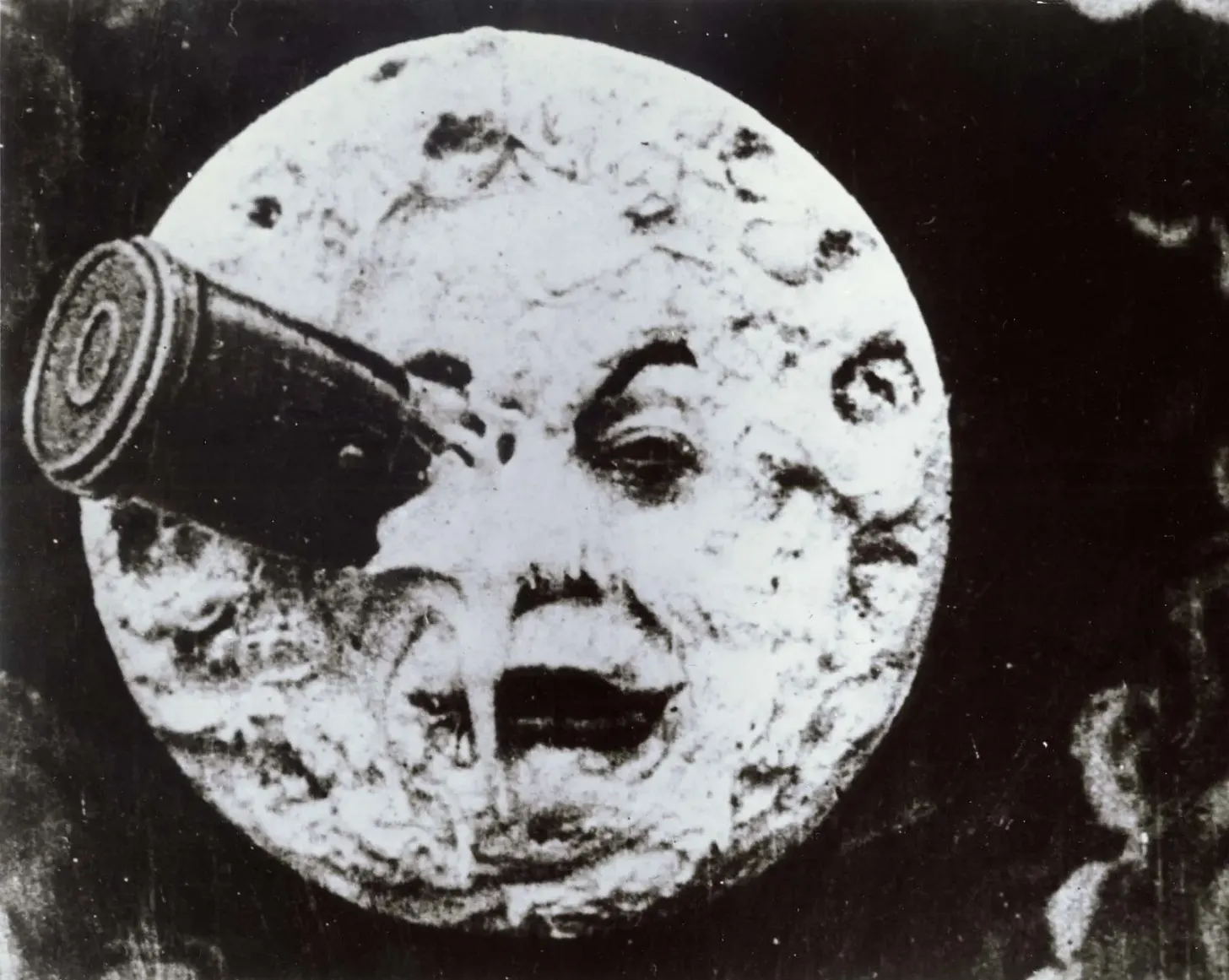
In 1902, Georges Méliès imagined a rocket piercing the face of the Moon. The image became one of cinema’s most enduring icons: a bullet-shaped capsule lodged in a lunar eye, the Moon expressing a strange mixture of surprise and discomfort at humanity’s arrival. What Méliès created as a fantasy of exploration has become, over the past sixty years, a hauntingly accurate reflection of our physical and cultural imprint on the lunar landscape.
On 5 August 2026, a four-tonne section of a SpaceX Falcon 9 rocket crashed into the Moon at 5,400 miles per hour, striking near the Einstein Crater on the far side. This rocket had been drifting through space since launching a lunar lander in January 2025, too far from Earth to burn up in the atmosphere, yet too close to the Moon to escape its gravity. By the time astronomers determined it was heading for the Moon, there was nothing to be done. SpaceX faced no accountability for what happened next.
It joined a growing archive of human presence on the Moon. Since Luna 2 became the first human object to reach the lunar surface in 1959, carrying Soviet emblems embedded in exploding silver spheres, the Moon has received 8 rocket bodies, 18 orbiters, 6 impactors, 9 landers, and 5 ascent vehicles, bringing the total weight of human-made debris on the lunar surface to over 209 tonnes. Some impacts were intentional. The Apollo programme deliberately crashed rocket bodies from Apollo 13, 14, 15, 16 and 17 into the surface so that seismometers left by astronauts could measure the impact. From that data, scientists determined that the Moon had a crust, a mantle and a core.
Humanity’s visions of the Moon have not always been driven by curiosity alone. In 1958, the US Air Force commissioned a classified study known as Project A119, which explored the possibility of detonating a nuclear bomb on the lunar surface. The aim was to demonstrate military power during the Cold War. A display of force visible from Earth with the naked eye. Among the young researchers involved was Carl Sagan, then a doctoral student, tasked with modelling the expansion of the dust cloud that would follow the explosion. The project was eventually abandoned, partly because a lunar landing was considered a more powerful demonstration of capability.
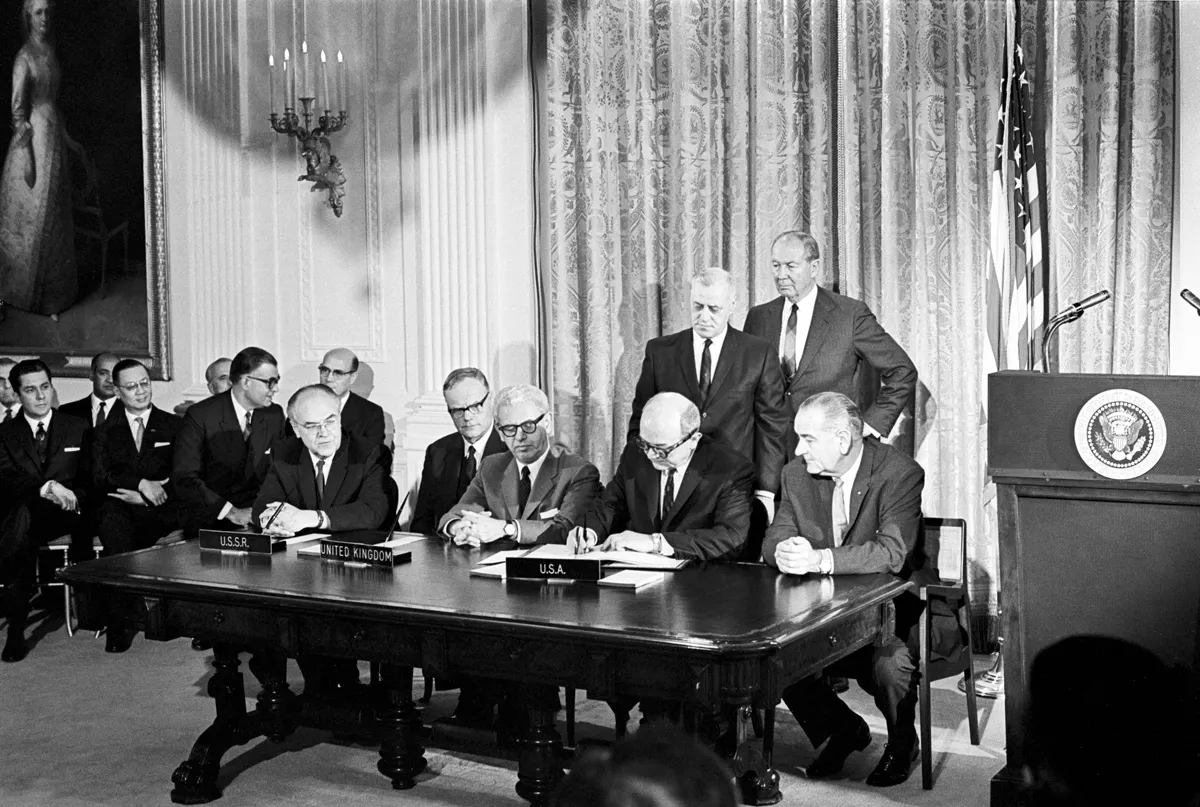
The Outer Space Treaty of 1967 established that no nation can claim sovereignty over the Moon, but left no meaningful mechanism for protecting it. The lunar surface has no legal status equivalent to Antarctica. There is no authority with the power to determine that the accumulation of debris requires remediation, or that certain uses of the Moon should be prohibited. The conversation about lunar governance is happening slowly, at the margins of space policy discussions. A four-tonne piece of uncontrolled hardware crashing into the Moon at 5,400 miles per hour exposes the gap between humanity’s ability to reach the Moon and its ability to take responsibility for what happens there.
Méliès gave the Moon a face with a crashed rocket. A century later, that image is still relevant. The rocket that crashed today harmed no one. It added one more mark to a body that has been receiving human traces, largely unprotected, since 1959.
The Outer Space Treaty established that the Moon belongs to no nation. But it left a more difficult question unanswered: what responsibilities do we have toward a place we cannot own and shouldn’t own?
IMAGES:
A Trip to the Moon by Georges Méliès, 1902
Luna 2 Spacecraft
Signing of the Outer Space Treaty, 1967
An Archive of Lunar Crashes
In 1902, Georges Méliès imagined a rocket piercing the face of the Moon. The image became one of cinema’s most enduring icons: a bullet-shaped capsule lodged in a lunar eye, the Moon expressing a strange mixture of surprise and discomfort at humanity’s arrival. What Méliès created as a fantasy of exploration has become, over the past sixty years, a hauntingly accurate reflection of our physical and cultural imprint on the lunar landscape.
On 5 August 2026, a four-tonne section of a SpaceX Falcon 9 rocket crashed into the Moon at 5,400 miles per hour, striking near the Einstein Crater on the far side. This rocket had been drifting through space since launching a lunar lander in January 2025, too far from Earth to burn up in the atmosphere, yet too close to the Moon to escape its gravity. By the time astronomers determined it was heading for the Moon, there was nothing to be done. SpaceX faced no accountability for what happened next.
It joined a growing archive of human presence on the Moon. Since Luna 2 became the first human object to reach the lunar surface in 1959, carrying Soviet emblems embedded in exploding silver spheres, the Moon has received 8 rocket bodies, 18 orbiters, 6 impactors, 9 landers, and 5 ascent vehicles, bringing the total weight of human-made debris on the lunar surface to over 209 tonnes. Some impacts were intentional. The Apollo programme deliberately crashed rocket bodies from Apollo 13, 14, 15, 16 and 17 into the surface so that seismometers left by astronauts could measure the impact. From that data, scientists determined that the Moon had a crust, a mantle and a core.
Humanity’s visions of the Moon have not always been driven by curiosity alone. In 1958, the US Air Force commissioned a classified study known as Project A119, which explored the possibility of detonating a nuclear bomb on the lunar surface. The aim was to demonstrate military power during the Cold War. A display of force visible from Earth with the naked eye. Among the young researchers involved was Carl Sagan, then a doctoral student, tasked with modelling the expansion of the dust cloud that would follow the explosion. The project was eventually abandoned, partly because a lunar landing was considered a more powerful demonstration of capability.
The Outer Space Treaty of 1967 established that no nation can claim sovereignty over the Moon, but left no meaningful mechanism for protecting it. The lunar surface has no legal status equivalent to Antarctica. There is no authority with the power to determine that the accumulation of debris requires remediation, or that certain uses of the Moon should be prohibited. The conversation about lunar governance is happening slowly, at the margins of space policy discussions. A four-tonne piece of uncontrolled hardware crashing into the Moon at 5,400 miles per hour exposes the gap between humanity’s ability to reach the Moon and its ability to take responsibility for what happens there.
Méliès gave the Moon a face with a crashed rocket. A century later, that image is still relevant. The rocket that crashed today harmed no one. It added one more mark to a body that has been receiving human traces, largely unprotected, since 1959.
The Outer Space Treaty established that the Moon belongs to no nation. But it left a more difficult question unanswered: what responsibilities do we have toward a place we cannot own and shouldn’t own?
IMAGES:
A Trip to the Moon by Georges Méliès, 1902
Luna 2 Spacecraft
Signing of the Outer Space Treaty, 1967
KOSMICA is a global institute founded in 2011 with the mission to create a space organisation for critical, cultural and poetic discourses on our relationship with the universe, space activities and their impact here on Earth.
KOSMICA supports that space does not belong to anyone and our relationship with it is deeply rooted in every culture around the world. We believe that all of us have a stake in humanity’s actions beyond our planetary home. In particular, we are convinced that artists, poets, anthropologists, musicians, philosophers and other cultural practitioners can bring unique perspectives to the debates and issues surrounding space activities.
KOSMICA curates and produces original content, projects and programmes. Each of our activities is unique, bringing together experts across disciplines to explore the cultural impact of space activities, the future of humanity and the most urgent issues we are currently facing on our planet.

BY KOSMICA
An Archive of Lunar Crashes
In 1902, Georges Méliès imagined a rocket piercing the face of the Moon. The image became one of cinema’s most enduring icons: a bullet-shaped capsule lodged in a lunar eye, the Moon expressing a strange mixture of surprise and discomfort at humanity’s arrival. What Méliès created as a fantasy of exploration has become, over the past sixty years, a hauntingly accurate reflection of our physical and cultural imprint on the lunar landscape.
On 5 August 2026, a four-tonne section of a SpaceX Falcon 9 rocket crashed into the Moon at 5,400 miles per hour, striking near the Einstein Crater on the far side. This rocket had been drifting through space since launching a lunar lander in January 2025, too far from Earth to burn up in the atmosphere, yet too close to the Moon to escape its gravity. By the time astronomers determined it was heading for the Moon, there was nothing to be done. SpaceX faced no accountability for what happened next.
It joined a growing archive of human presence on the Moon. Since Luna 2 became the first human object to reach the lunar surface in 1959, carrying Soviet emblems embedded in exploding silver spheres, the Moon has received 8 rocket bodies, 18 orbiters, 6 impactors, 9 landers, and 5 ascent vehicles, bringing the total weight of human-made debris on the lunar surface to over 209 tonnes. Some impacts were intentional. The Apollo programme deliberately crashed rocket bodies from Apollo 13, 14, 15, 16 and 17 into the surface so that seismometers left by astronauts could measure the impact. From that data, scientists determined that the Moon had a crust, a mantle and a core.
Humanity’s visions of the Moon have not always been driven by curiosity alone. In 1958, the US Air Force commissioned a classified study known as Project A119, which explored the possibility of detonating a nuclear bomb on the lunar surface. The aim was to demonstrate military power during the Cold War. A display of force visible from Earth with the naked eye. Among the young researchers involved was Carl Sagan, then a doctoral student, tasked with modelling the expansion of the dust cloud that would follow the explosion. The project was eventually abandoned, partly because a lunar landing was considered a more powerful demonstration of capability.
The Outer Space Treaty of 1967 established that no nation can claim sovereignty over the Moon, but left no meaningful mechanism for protecting it. The lunar surface has no legal status equivalent to Antarctica. There is no authority with the power to determine that the accumulation of debris requires remediation, or that certain uses of the Moon should be prohibited. The conversation about lunar governance is happening slowly, at the margins of space policy discussions. A four-tonne piece of uncontrolled hardware crashing into the Moon at 5,400 miles per hour exposes the gap between humanity’s ability to reach the Moon and its ability to take responsibility for what happens there.
Méliès gave the Moon a face with a crashed rocket. A century later, that image is still relevant. The rocket that crashed today harmed no one. It added one more mark to a body that has been receiving human traces, largely unprotected, since 1959.
The Outer Space Treaty established that the Moon belongs to no nation. But it left a more difficult question unanswered: what responsibilities do we have toward a place we cannot own and shouldn’t own?
IMAGES:
A Trip to the Moon by Georges Méliès, 1902
Luna 2 Spacecraft
Signing of the Outer Space Treaty, 1967
An Archive of Lunar Crashes
In 1902, Georges Méliès imagined a rocket piercing the face of the Moon. The image became one of cinema’s most enduring icons: a bullet-shaped capsule lodged in a lunar eye, the Moon expressing a strange mixture of surprise and discomfort at humanity’s arrival. What Méliès created as a fantasy of exploration has become, over the past sixty years, a hauntingly accurate reflection of our physical and cultural imprint on the lunar landscape.
On 5 August 2026, a four-tonne section of a SpaceX Falcon 9 rocket crashed into the Moon at 5,400 miles per hour, striking near the Einstein Crater on the far side. This rocket had been drifting through space since launching a lunar lander in January 2025, too far from Earth to burn up in the atmosphere, yet too close to the Moon to escape its gravity. By the time astronomers determined it was heading for the Moon, there was nothing to be done. SpaceX faced no accountability for what happened next.
It joined a growing archive of human presence on the Moon. Since Luna 2 became the first human object to reach the lunar surface in 1959, carrying Soviet emblems embedded in exploding silver spheres, the Moon has received 8 rocket bodies, 18 orbiters, 6 impactors, 9 landers, and 5 ascent vehicles, bringing the total weight of human-made debris on the lunar surface to over 209 tonnes. Some impacts were intentional. The Apollo programme deliberately crashed rocket bodies from Apollo 13, 14, 15, 16 and 17 into the surface so that seismometers left by astronauts could measure the impact. From that data, scientists determined that the Moon had a crust, a mantle and a core.
Humanity’s visions of the Moon have not always been driven by curiosity alone. In 1958, the US Air Force commissioned a classified study known as Project A119, which explored the possibility of detonating a nuclear bomb on the lunar surface. The aim was to demonstrate military power during the Cold War. A display of force visible from Earth with the naked eye. Among the young researchers involved was Carl Sagan, then a doctoral student, tasked with modelling the expansion of the dust cloud that would follow the explosion. The project was eventually abandoned, partly because a lunar landing was considered a more powerful demonstration of capability.
The Outer Space Treaty of 1967 established that no nation can claim sovereignty over the Moon, but left no meaningful mechanism for protecting it. The lunar surface has no legal status equivalent to Antarctica. There is no authority with the power to determine that the accumulation of debris requires remediation, or that certain uses of the Moon should be prohibited. The conversation about lunar governance is happening slowly, at the margins of space policy discussions. A four-tonne piece of uncontrolled hardware crashing into the Moon at 5,400 miles per hour exposes the gap between humanity’s ability to reach the Moon and its ability to take responsibility for what happens there.
Méliès gave the Moon a face with a crashed rocket. A century later, that image is still relevant. The rocket that crashed today harmed no one. It added one more mark to a body that has been receiving human traces, largely unprotected, since 1959.
The Outer Space Treaty established that the Moon belongs to no nation. But it left a more difficult question unanswered: what responsibilities do we have toward a place we cannot own and shouldn’t own?
IMAGES:
A Trip to the Moon by Georges Méliès, 1902
Luna 2 Spacecraft
Signing of the Outer Space Treaty, 1967
KOSMICA is a global institute founded in 2011 with the mission to create a space organisation for critical, cultural and poetic discourses on our relationship with the universe, space activities and their impact here on Earth.
KOSMICA supports that space does not belong to anyone and our relationship with it is deeply rooted in every culture around the world. We believe that all of us have a stake in humanity’s actions beyond our planetary home. In particular, we are convinced that artists, poets, anthropologists, musicians, philosophers and other cultural practitioners can bring unique perspectives to the debates and issues surrounding space activities.
KOSMICA curates and produces original content, projects and programmes. Each of our activities is unique, bringing together experts across disciplines to explore the cultural impact of space activities, the future of humanity and the most urgent issues we are currently facing on our planet.
BY KOSMICA
An Archive of Lunar Crashes
In 1902, Georges Méliès imagined a rocket piercing the face of the Moon. The image became one of cinema’s most enduring icons: a bullet-shaped capsule lodged in a lunar eye, the Moon expressing a strange mixture of surprise and discomfort at humanity’s arrival. What Méliès created as a fantasy of exploration has become, over the past sixty years, a hauntingly accurate reflection of our physical and cultural imprint on the lunar landscape.
On 5 August 2026, a four-tonne section of a SpaceX Falcon 9 rocket crashed into the Moon at 5,400 miles per hour, striking near the Einstein Crater on the far side. This rocket had been drifting through space since launching a lunar lander in January 2025, too far from Earth to burn up in the atmosphere, yet too close to the Moon to escape its gravity. By the time astronomers determined it was heading for the Moon, there was nothing to be done. SpaceX faced no accountability for what happened next.
It joined a growing archive of human presence on the Moon. Since Luna 2 became the first human object to reach the lunar surface in 1959, carrying Soviet emblems embedded in exploding silver spheres, the Moon has received 8 rocket bodies, 18 orbiters, 6 impactors, 9 landers, and 5 ascent vehicles, bringing the total weight of human-made debris on the lunar surface to over 209 tonnes. Some impacts were intentional. The Apollo programme deliberately crashed rocket bodies from Apollo 13, 14, 15, 16 and 17 into the surface so that seismometers left by astronauts could measure the impact. From that data, scientists determined that the Moon had a crust, a mantle and a core.
Humanity’s visions of the Moon have not always been driven by curiosity alone. In 1958, the US Air Force commissioned a classified study known as Project A119, which explored the possibility of detonating a nuclear bomb on the lunar surface. The aim was to demonstrate military power during the Cold War. A display of force visible from Earth with the naked eye. Among the young researchers involved was Carl Sagan, then a doctoral student, tasked with modelling the expansion of the dust cloud that would follow the explosion. The project was eventually abandoned, partly because a lunar landing was considered a more powerful demonstration of capability.
The Outer Space Treaty of 1967 established that no nation can claim sovereignty over the Moon, but left no meaningful mechanism for protecting it. The lunar surface has no legal status equivalent to Antarctica. There is no authority with the power to determine that the accumulation of debris requires remediation, or that certain uses of the Moon should be prohibited. The conversation about lunar governance is happening slowly, at the margins of space policy discussions. A four-tonne piece of uncontrolled hardware crashing into the Moon at 5,400 miles per hour exposes the gap between humanity’s ability to reach the Moon and its ability to take responsibility for what happens there.
Méliès gave the Moon a face with a crashed rocket. A century later, that image is still relevant. The rocket that crashed today harmed no one. It added one more mark to a body that has been receiving human traces, largely unprotected, since 1959.
The Outer Space Treaty established that the Moon belongs to no nation. But it left a more difficult question unanswered: what responsibilities do we have toward a place we cannot own and shouldn’t own?
IMAGES:
A Trip to the Moon by Georges Méliès, 1902
Luna 2 Spacecraft
Signing of the Outer Space Treaty, 1967
An Archive of Lunar Crashes
In 1902, Georges Méliès imagined a rocket piercing the face of the Moon. The image became one of cinema’s most enduring icons: a bullet-shaped capsule lodged in a lunar eye, the Moon expressing a strange mixture of surprise and discomfort at humanity’s arrival. What Méliès created as a fantasy of exploration has become, over the past sixty years, a hauntingly accurate reflection of our physical and cultural imprint on the lunar landscape.
On 5 August 2026, a four-tonne section of a SpaceX Falcon 9 rocket crashed into the Moon at 5,400 miles per hour, striking near the Einstein Crater on the far side. This rocket had been drifting through space since launching a lunar lander in January 2025, too far from Earth to burn up in the atmosphere, yet too close to the Moon to escape its gravity. By the time astronomers determined it was heading for the Moon, there was nothing to be done. SpaceX faced no accountability for what happened next.
It joined a growing archive of human presence on the Moon. Since Luna 2 became the first human object to reach the lunar surface in 1959, carrying Soviet emblems embedded in exploding silver spheres, the Moon has received 8 rocket bodies, 18 orbiters, 6 impactors, 9 landers, and 5 ascent vehicles, bringing the total weight of human-made debris on the lunar surface to over 209 tonnes. Some impacts were intentional. The Apollo programme deliberately crashed rocket bodies from Apollo 13, 14, 15, 16 and 17 into the surface so that seismometers left by astronauts could measure the impact. From that data, scientists determined that the Moon had a crust, a mantle and a core.
Humanity’s visions of the Moon have not always been driven by curiosity alone. In 1958, the US Air Force commissioned a classified study known as Project A119, which explored the possibility of detonating a nuclear bomb on the lunar surface. The aim was to demonstrate military power during the Cold War. A display of force visible from Earth with the naked eye. Among the young researchers involved was Carl Sagan, then a doctoral student, tasked with modelling the expansion of the dust cloud that would follow the explosion. The project was eventually abandoned, partly because a lunar landing was considered a more powerful demonstration of capability.
The Outer Space Treaty of 1967 established that no nation can claim sovereignty over the Moon, but left no meaningful mechanism for protecting it. The lunar surface has no legal status equivalent to Antarctica. There is no authority with the power to determine that the accumulation of debris requires remediation, or that certain uses of the Moon should be prohibited. The conversation about lunar governance is happening slowly, at the margins of space policy discussions. A four-tonne piece of uncontrolled hardware crashing into the Moon at 5,400 miles per hour exposes the gap between humanity’s ability to reach the Moon and its ability to take responsibility for what happens there.
Méliès gave the Moon a face with a crashed rocket. A century later, that image is still relevant. The rocket that crashed today harmed no one. It added one more mark to a body that has been receiving human traces, largely unprotected, since 1959.
The Outer Space Treaty established that the Moon belongs to no nation. But it left a more difficult question unanswered: what responsibilities do we have toward a place we cannot own and shouldn’t own?
IMAGES:
A Trip to the Moon by Georges Méliès, 1902
Luna 2 Spacecraft
Signing of the Outer Space Treaty, 1967
KOSMICA is a global institute founded in 2011 with the mission to create a space organisation for critical, cultural and poetic discourses on our relationship with the universe, space activities and their impact here on Earth.
KOSMICA supports that space does not belong to anyone and our relationship with it is deeply rooted in every culture around the world. We believe that all of us have a stake in humanity’s actions beyond our planetary home. In particular, we are convinced that artists, poets, anthropologists, musicians, philosophers and other cultural practitioners can bring unique perspectives to the debates and issues surrounding space activities.
KOSMICA curates and produces original content, projects and programmes. Each of our activities is unique, bringing together experts across disciplines to explore the cultural impact of space activities, the future of humanity and the most urgent issues we are currently facing on our planet.
BY KOSMICA
An Archive of Lunar Crashes
In 1902, Georges Méliès imagined a rocket piercing the face of the Moon. The image became one of cinema’s most enduring icons: a bullet-shaped capsule lodged in a lunar eye, the Moon expressing a strange mixture of surprise and discomfort at humanity’s arrival. What Méliès created as a fantasy of exploration has become, over the past sixty years, a hauntingly accurate reflection of our physical and cultural imprint on the lunar landscape.
On 5 August 2026, a four-tonne section of a SpaceX Falcon 9 rocket crashed into the Moon at 5,400 miles per hour, striking near the Einstein Crater on the far side. This rocket had been drifting through space since launching a lunar lander in January 2025, too far from Earth to burn up in the atmosphere, yet too close to the Moon to escape its gravity. By the time astronomers determined it was heading for the Moon, there was nothing to be done. SpaceX faced no accountability for what happened next.
It joined a growing archive of human presence on the Moon. Since Luna 2 became the first human object to reach the lunar surface in 1959, carrying Soviet emblems embedded in exploding silver spheres, the Moon has received 8 rocket bodies, 18 orbiters, 6 impactors, 9 landers, and 5 ascent vehicles, bringing the total weight of human-made debris on the lunar surface to over 209 tonnes. Some impacts were intentional. The Apollo programme deliberately crashed rocket bodies from Apollo 13, 14, 15, 16 and 17 into the surface so that seismometers left by astronauts could measure the impact. From that data, scientists determined that the Moon had a crust, a mantle and a core.
Humanity’s visions of the Moon have not always been driven by curiosity alone. In 1958, the US Air Force commissioned a classified study known as Project A119, which explored the possibility of detonating a nuclear bomb on the lunar surface. The aim was to demonstrate military power during the Cold War. A display of force visible from Earth with the naked eye. Among the young researchers involved was Carl Sagan, then a doctoral student, tasked with modelling the expansion of the dust cloud that would follow the explosion. The project was eventually abandoned, partly because a lunar landing was considered a more powerful demonstration of capability.
The Outer Space Treaty of 1967 established that no nation can claim sovereignty over the Moon, but left no meaningful mechanism for protecting it. The lunar surface has no legal status equivalent to Antarctica. There is no authority with the power to determine that the accumulation of debris requires remediation, or that certain uses of the Moon should be prohibited. The conversation about lunar governance is happening slowly, at the margins of space policy discussions. A four-tonne piece of uncontrolled hardware crashing into the Moon at 5,400 miles per hour exposes the gap between humanity’s ability to reach the Moon and its ability to take responsibility for what happens there.
Méliès gave the Moon a face with a crashed rocket. A century later, that image is still relevant. The rocket that crashed today harmed no one. It added one more mark to a body that has been receiving human traces, largely unprotected, since 1959.
The Outer Space Treaty established that the Moon belongs to no nation. But it left a more difficult question unanswered: what responsibilities do we have toward a place we cannot own and shouldn’t own?
IMAGES:
A Trip to the Moon by Georges Méliès, 1902
Luna 2 Spacecraft
Signing of the Outer Space Treaty, 1967
An Archive of Lunar Crashes
In 1902, Georges Méliès imagined a rocket piercing the face of the Moon. The image became one of cinema’s most enduring icons: a bullet-shaped capsule lodged in a lunar eye, the Moon expressing a strange mixture of surprise and discomfort at humanity’s arrival. What Méliès created as a fantasy of exploration has become, over the past sixty years, a hauntingly accurate reflection of our physical and cultural imprint on the lunar landscape.
On 5 August 2026, a four-tonne section of a SpaceX Falcon 9 rocket crashed into the Moon at 5,400 miles per hour, striking near the Einstein Crater on the far side. This rocket had been drifting through space since launching a lunar lander in January 2025, too far from Earth to burn up in the atmosphere, yet too close to the Moon to escape its gravity. By the time astronomers determined it was heading for the Moon, there was nothing to be done. SpaceX faced no accountability for what happened next.
It joined a growing archive of human presence on the Moon. Since Luna 2 became the first human object to reach the lunar surface in 1959, carrying Soviet emblems embedded in exploding silver spheres, the Moon has received 8 rocket bodies, 18 orbiters, 6 impactors, 9 landers, and 5 ascent vehicles, bringing the total weight of human-made debris on the lunar surface to over 209 tonnes. Some impacts were intentional. The Apollo programme deliberately crashed rocket bodies from Apollo 13, 14, 15, 16 and 17 into the surface so that seismometers left by astronauts could measure the impact. From that data, scientists determined that the Moon had a crust, a mantle and a core.
Humanity’s visions of the Moon have not always been driven by curiosity alone. In 1958, the US Air Force commissioned a classified study known as Project A119, which explored the possibility of detonating a nuclear bomb on the lunar surface. The aim was to demonstrate military power during the Cold War. A display of force visible from Earth with the naked eye. Among the young researchers involved was Carl Sagan, then a doctoral student, tasked with modelling the expansion of the dust cloud that would follow the explosion. The project was eventually abandoned, partly because a lunar landing was considered a more powerful demonstration of capability.
The Outer Space Treaty of 1967 established that no nation can claim sovereignty over the Moon, but left no meaningful mechanism for protecting it. The lunar surface has no legal status equivalent to Antarctica. There is no authority with the power to determine that the accumulation of debris requires remediation, or that certain uses of the Moon should be prohibited. The conversation about lunar governance is happening slowly, at the margins of space policy discussions. A four-tonne piece of uncontrolled hardware crashing into the Moon at 5,400 miles per hour exposes the gap between humanity’s ability to reach the Moon and its ability to take responsibility for what happens there.
Méliès gave the Moon a face with a crashed rocket. A century later, that image is still relevant. The rocket that crashed today harmed no one. It added one more mark to a body that has been receiving human traces, largely unprotected, since 1959.
The Outer Space Treaty established that the Moon belongs to no nation. But it left a more difficult question unanswered: what responsibilities do we have toward a place we cannot own and shouldn’t own?
IMAGES:
A Trip to the Moon by Georges Méliès, 1902
Luna 2 Spacecraft
Signing of the Outer Space Treaty, 1967
KOSMICA is a global institute founded in 2011 with the mission to create a space organisation for critical, cultural and poetic discourses on our relationship with the universe, space activities and their impact here on Earth.
KOSMICA supports that space does not belong to anyone and our relationship with it is deeply rooted in every culture around the world. We believe that all of us have a stake in humanity’s actions beyond our planetary home. In particular, we are convinced that artists, poets, anthropologists, musicians, philosophers and other cultural practitioners can bring unique perspectives to the debates and issues surrounding space activities.
KOSMICA curates and produces original content, projects and programmes. Each of our activities is unique, bringing together experts across disciplines to explore the cultural impact of space activities, the future of humanity and the most urgent issues we are currently facing on our planet.