INTERVIEW WITH FILMMAKER ORBAN WALLACE, DIRECTOR OF DOCUMENTARY 'OUR LAND'
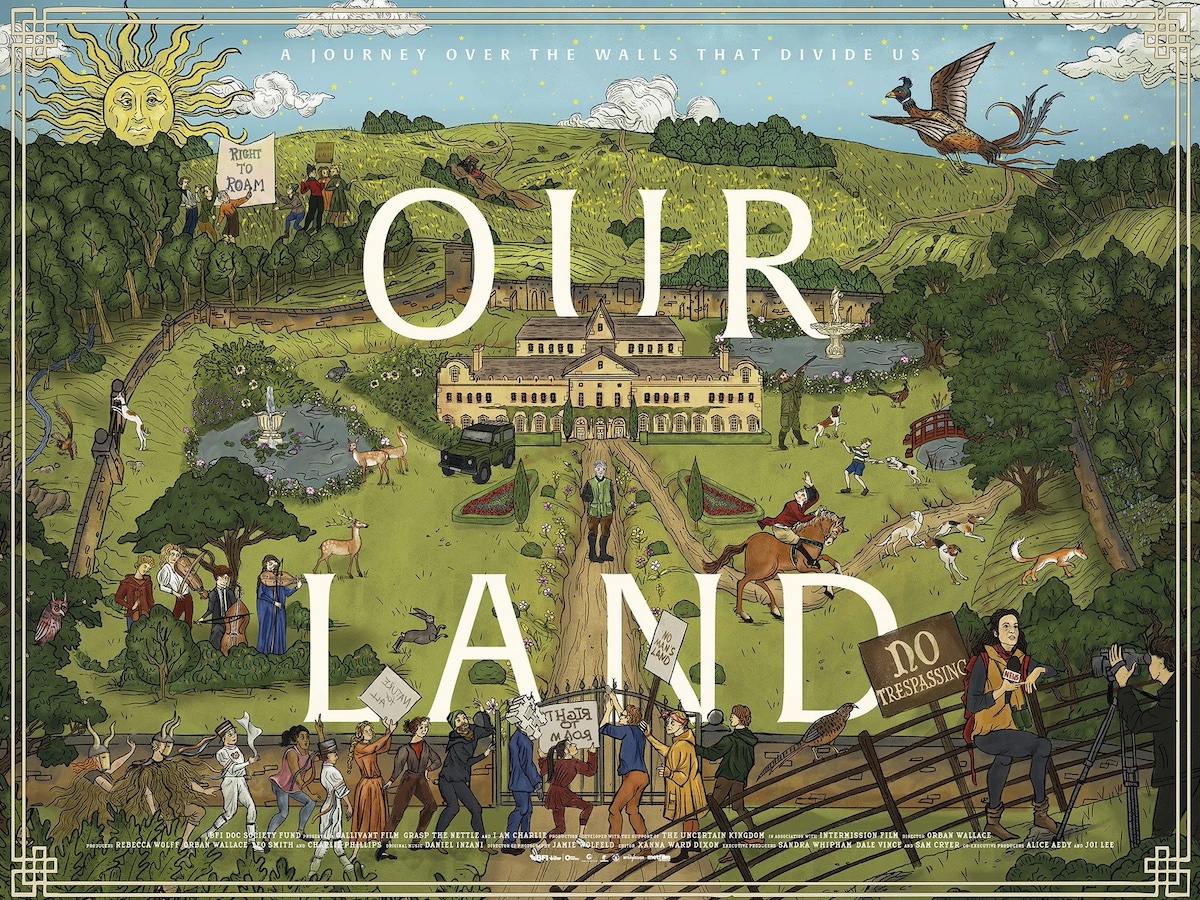
A journey over the walls that divide us, to explore the age-old debate of land and power, amid the fight for greater access to nature.
Our Land dares to tread where few have trespassed before, asking the timely question of who has the right to roam in the English countryside? The UK is a wild and beautiful place, but the vast majority of it is off limits to the general public, with 92% of land and 97% of all rivers in England not legally accessible. At the same time, it is a landscape shaped by centuries of inheritance and tradition, with land held and cared for by families across multiple generations.
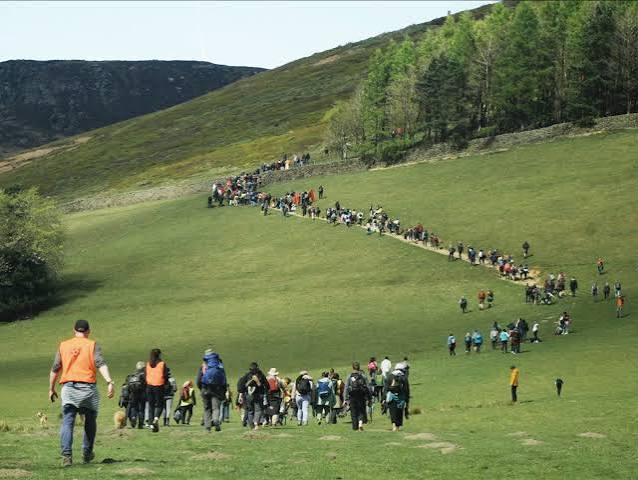
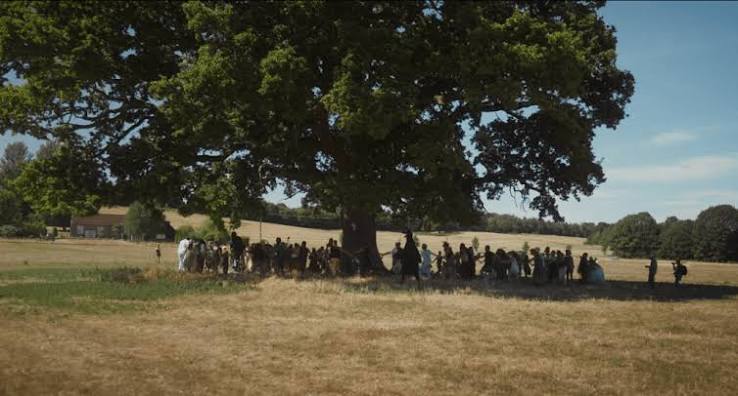
Our Land takes us to the heart of the ‘Right to Roam’ movement as it embarks on a provocative trail of mass trespass, campaigning and education, while also exploring landowners’ concerns around environmental protection and the danger such widespread access could pose to a landscape already under threat.
Bringing these often-opposed worlds into sharp and revealing conversation, the film spotlights those fighting for greater public access — including Right to Roam campaigner Nadia Sheikh; Sunday Times bestselling author of The Book of Trespass, Nick Hayes; and Guy Shrubsole, Wainwright Prize-winning author of Who Owns England? and The Lie of the Land — as well as hearing from landowners from Cornwall to Scotland who see themselves as long-term custodians of the countryside. The film also brings to light barriers to connection to the countryside for people of colour, featuring groups that promote access to nature for Global Majority and refugee communities.
With an introduction to the history of the land justice debate by renowned nature writer Robert Macfarlane, animated by May Kindred Boothby, Our Land examines the complex issues of access, custodianship, and conservation, challenging age-old beliefs about property that have shaped our relationship with the land for over a thousand years.
Our Land is produced by Rebecca Wolff, Charlie Phillips, Leo Smith and Orban Wallace, for Gallivant Film, Grasp the Nettle Films and I Am Charlie Ltd, in association with Intermission Film. Executive producers are Sandra Whipham, Dale Vince and Sam Cryer, with Alice Aedy and Joi Lee of Earthrise as co-executive producers. Original music is by Daniel Inzani with a title track by Cosmo Sheldrake. It is supported by The BFI Doc Society Fund, awarding National Lottery funding and The Uncertain Kingdom.
JF: Our Land explores questions of access, stewardship and belonging. What has your own relationship with the countryside been, and how did it shape the film?
OW: This project began during lockdown. I grew up in the countryside, surrounded by estates, so I spent my childhood trespassing and exploring. There was always that feeling that the land belonged to someone else, and that ordinary people weren't supposed to be there or enjoy it in the way I'd wanted to.
During lockdown we'd all returned to my family home in the countryside and spending much of our time outdoors. I read Nick Hayes' The Book of Trespass and I could immediately visualise a film that moved between different perspectives. I didn't know exactly how to make it at that point, but the idea was there.
Then, rather fortuitously, Sam Lee happened to stay with us on his way to meet Nick and introduced us. We started filming with Nick before the Right to Roam movement had really taken off, before the mass trespasses and the wider campaign had begun. From there, it evolved quite naturally. We met Nadia Shaikh, Guy Shrubsole and others involved in the movement, and the story grew alongside it.
JF: What was your approach to documenting the story of Right to Roam, and how did you navigate the different perspectives surrounding it?
OW: From the beginning I was keen to bring in the landowners' perspective. I wanted the film to become a conversation, something people could move forward from, rather than simply making a campaign film.
Finding people willing to take part wasn't easy. Once they knew we were making a film about the Right to Roam movement, and that Nick Hayes was involved, many were happy to talk privately but didn't necessarily want to appear on camera. It took time to build those relationships, but gradually we met people willing to be part of the conversation, including Hugh Inge-Innes-Lillingston, Johnny Mildmay-White and Francis Fulford.
During filming, we never wanted to manufacture confrontations between different sides. Once we'd heard everyone's interviews, we realised their positions were already there. The conversation was happening through the juxtaposition of those different voices.
We also wanted to give enough historical context for people to understand how we'd arrived at this point, without making the whole film about history. The animated opening, written by Robert Macfarlane, illustrated by May Kindred Boothby and narrated by Jodie Powell, became a way of grounding that story before moving into the present.
JF: Several landowners in the film describe people and wild nature as fundamentally incompatible, suggesting that greater public access inevitably comes at the expense of ecological care. What did those conversations reveal to you about the assumptions that underpin that perspective?
OW: Before enclosure, for centuries we had the commons, where people, animals and grazing land all existed together. It was a much more symbiotic relationship and didn't place humans outside nature, as though there's "nature" over here and "humans" over there.
I've lived in the countryside all my life. You go for a walk or a run, there are deer on the track, pheasants in the fields, wildlife moving around you. It is simply humans and animals coexisting in a landscape. The greater impacts come from elsewhere. A pheasant shoot, with thirty people driving wildlife through a forest, has a far greater effect. Gamekeepers shooting predators, intensive farming and herbicides all have a much bigger impact on biodiversity.
Nadia says it well in the film: "It's not the people, it's the systems." That's why nature is in such poor condition in this country.
The film also brought into focus that every estate is ultimately a business. A lot of decisions are driven by money, overheads and maintaining a certain way of life. Nature becomes something that can generate income, whether through shooting, weddings, festivals or exclusivity. From that perspective, the idea of people simply being allowed to walk across the land threatens the business model as much as anything else.
Those concerns aren't always expressed directly, but the more time you spend talking to people, the more layers to the argument begin to emerge.
JF: The Right to Roam movement advocates responsible public access, with education playing an important role in rebuilding a culture of care for the countryside. As a child in the late ‘80s and early ‘90s, I remember the Countryside Code being far more visible through schools, films and public information campaigns. Why do you think that culture has been lost?
OW: Education has to begin at school. Children should be taken into the countryside from a young age and taught how to move through it responsibly. It needs that level of investment.
I remember the Countryside Code as a child. It felt like a genuine movement. Everybody knew it. I think we've lost that, partly because of the influence landowners have had through government and lobbying organisations such as the Country Land and Business Association (CLA) and the National Farmers' Union (NFA). Increasingly, the countryside has come to be seen as a place of business rather than somewhere people are welcomed.
The result is that we funnel people into a handful of honeypot sites, while vast areas of countryside remain empty. One of the biggest problems is that not enough people are out walking. We're facing a crisis of people spending more time on screens and less time outdoors.
JF: The film also documents a deeper culture of exclusion around who feels the countryside is a place for them. What do you think needs to change for that relationship to shift?
OW: It’s about a sense of safety and belonging. People have been made to feel they don't belong in the countryside, and that they don't have the right to be there. It's deeply embedded in our class system and in our culture. People know their place. You have villages that are generally working-class communities, and then the big estates and the landowners. That division has become normalised over generations.
The conversation around nature and our relationship with it is much more present than it has been for a long time, and you'd hope that begins to shift things. Ultimately, though, people have to feel that the countryside is somewhere they belong, not somewhere they're simply permitted to enter.
JF: Inheritance runs quietly through the film, not only as the inheritance of land, but of values, responsibility and ways of seeing. What gives you hope that the next generation might reimagine that inheritance?
OW: In the film, Johnny represents a generation that's inherited a huge weight of responsibility. They're trying to live up to generations before them. There's this lingering effect of a patriarchal system of land ownership that's still present, even for younger landowners today.
At the same time, every generation is different. Society has changed enormously, and ideas about what's acceptable and what isn't have changed too. This generation has an opportunity to do things differently, and there's a real urgency to that now. There are already people doing rewilding projects and managing land in different ways, opening it up, even if it's still managed access.
I don't think change will happen overnight, and there will always be tensions around public access. But this generation does feel like a bridge. The conversation around nature and our relationship with it is far more present than it was even a decade ago, and you'd hope that will influence how the next generation thinks about land and stewardship.
JF: What do you see as the most effective pathway towards securing a Right to Roam in England and Wales?
OW: A lot of people still don't know what the Right to Roam is, or how little access they actually have. If a Right to Roam were introduced in the way Scotland has approached it, it would need full government backing and investment. It would require negotiation with landowners and a willingness to work together. It needs education, signage explaining how the countryside works, funding to create and maintain footpaths, and potentially countryside rangers. It has to be supported by an entire system.
I still think a blanket Right to Roam is the right approach, because once you begin negotiating access piece by piece, it's much easier for those rights to be limited or taken away. But achieving that would require political will, investment and long-term commitment.
JF: Many of your films explore our relationship with the systems we inhabit, whether ecological, cultural or social. Where is this work taking you next?
OW: During the making of Our Land, we spent a great deal of time with the Gypsy, Roma and Traveller community, documenting their music, culture and relationship with the land. We realised it was another film in itself, and that's what we're developing now.
Alongside that, we're working on a long-form series exploring consciousness through the lens of psychedelics, tracing the lost history of our relationship with altered states, where we are now with research into DMT and consciousness, and how those questions might extend into artificial intelligence and machine consciousness.
I'm also making a short film following Guilt Trip, which I made for The Guardian about pilots experiencing climate anxiety. This new film follows people working in the oil industry who are beginning to question the environmental impact of their work.
JF: Looking back on the journey of making Our Land, what do you hope people leave the film carrying with them?
OW: We never wanted the film to preach to the converted. We wanted it to reach people who own land, as well as those already engaged with the Right to Roam movement, and encourage them to think about these issues differently.
We're not on the verge of a revolution, so for now we have to find ways of working with landowners to make things better.
What's been most encouraging is seeing the conversations the film has already begun. Since its release, people have organised their own screenings in village halls, local communities and farming networks, bringing together people who might never otherwise have had these discussions.
That's where I'd like the film to continue to go. The next stage isn't simply cinemas or festivals, it's reaching the places where these conversations matter most.
Watch the film here.
A journey over the walls that divide us, to explore the age-old debate of land and power, amid the fight for greater access to nature.
Our Land dares to tread where few have trespassed before, asking the timely question of who has the right to roam in the English countryside? The UK is a wild and beautiful place, but the vast majority of it is off limits to the general public, with 92% of land and 97% of all rivers in England not legally accessible. At the same time, it is a landscape shaped by centuries of inheritance and tradition, with land held and cared for by families across multiple generations.
Our Land takes us to the heart of the ‘Right to Roam’ movement as it embarks on a provocative trail of mass trespass, campaigning and education, while also exploring landowners’ concerns around environmental protection and the danger such widespread access could pose to a landscape already under threat.
Bringing these often-opposed worlds into sharp and revealing conversation, the film spotlights those fighting for greater public access — including Right to Roam campaigner Nadia Sheikh; Sunday Times bestselling author of The Book of Trespass, Nick Hayes; and Guy Shrubsole, Wainwright Prize-winning author of Who Owns England? and The Lie of the Land — as well as hearing from landowners from Cornwall to Scotland who see themselves as long-term custodians of the countryside. The film also brings to light barriers to connection to the countryside for people of colour, featuring groups that promote access to nature for Global Majority and refugee communities.
With an introduction to the history of the land justice debate by renowned nature writer Robert Macfarlane, animated by May Kindred Boothby, Our Land examines the complex issues of access, custodianship, and conservation, challenging age-old beliefs about property that have shaped our relationship with the land for over a thousand years.
Our Land is produced by Rebecca Wolff, Charlie Phillips, Leo Smith and Orban Wallace, for Gallivant Film, Grasp the Nettle Films and I Am Charlie Ltd, in association with Intermission Film. Executive producers are Sandra Whipham, Dale Vince and Sam Cryer, with Alice Aedy and Joi Lee of Earthrise as co-executive producers. Original music is by Daniel Inzani with a title track by Cosmo Sheldrake. It is supported by The BFI Doc Society Fund, awarding National Lottery funding and The Uncertain Kingdom.
JF: Our Land explores questions of access, stewardship and belonging. What has your own relationship with the countryside been, and how did it shape the film?
OW: This project began during lockdown. I grew up in the countryside, surrounded by estates, so I spent my childhood trespassing and exploring. There was always that feeling that the land belonged to someone else, and that ordinary people weren't supposed to be there or enjoy it in the way I'd wanted to.
During lockdown we'd all returned to my family home in the countryside and spending much of our time outdoors. I read Nick Hayes' The Book of Trespass and I could immediately visualise a film that moved between different perspectives. I didn't know exactly how to make it at that point, but the idea was there.
Then, rather fortuitously, Sam Lee happened to stay with us on his way to meet Nick and introduced us. We started filming with Nick before the Right to Roam movement had really taken off, before the mass trespasses and the wider campaign had begun. From there, it evolved quite naturally. We met Nadia Shaikh, Guy Shrubsole and others involved in the movement, and the story grew alongside it.
JF: What was your approach to documenting the story of Right to Roam, and how did you navigate the different perspectives surrounding it?
OW: From the beginning I was keen to bring in the landowners' perspective. I wanted the film to become a conversation, something people could move forward from, rather than simply making a campaign film.
Finding people willing to take part wasn't easy. Once they knew we were making a film about the Right to Roam movement, and that Nick Hayes was involved, many were happy to talk privately but didn't necessarily want to appear on camera. It took time to build those relationships, but gradually we met people willing to be part of the conversation, including Hugh Inge-Innes-Lillingston, Johnny Mildmay-White and Francis Fulford.
During filming, we never wanted to manufacture confrontations between different sides. Once we'd heard everyone's interviews, we realised their positions were already there. The conversation was happening through the juxtaposition of those different voices.
We also wanted to give enough historical context for people to understand how we'd arrived at this point, without making the whole film about history. The animated opening, written by Robert Macfarlane, illustrated by May Kindred Boothby and narrated by Jodie Powell, became a way of grounding that story before moving into the present.
JF: Several landowners in the film describe people and wild nature as fundamentally incompatible, suggesting that greater public access inevitably comes at the expense of ecological care. What did those conversations reveal to you about the assumptions that underpin that perspective?
OW: Before enclosure, for centuries we had the commons, where people, animals and grazing land all existed together. It was a much more symbiotic relationship and didn't place humans outside nature, as though there's "nature" over here and "humans" over there.
I've lived in the countryside all my life. You go for a walk or a run, there are deer on the track, pheasants in the fields, wildlife moving around you. It is simply humans and animals coexisting in a landscape. The greater impacts come from elsewhere. A pheasant shoot, with thirty people driving wildlife through a forest, has a far greater effect. Gamekeepers shooting predators, intensive farming and herbicides all have a much bigger impact on biodiversity.
Nadia says it well in the film: "It's not the people, it's the systems." That's why nature is in such poor condition in this country.
The film also brought into focus that every estate is ultimately a business. A lot of decisions are driven by money, overheads and maintaining a certain way of life. Nature becomes something that can generate income, whether through shooting, weddings, festivals or exclusivity. From that perspective, the idea of people simply being allowed to walk across the land threatens the business model as much as anything else.
Those concerns aren't always expressed directly, but the more time you spend talking to people, the more layers to the argument begin to emerge.
JF: The Right to Roam movement advocates responsible public access, with education playing an important role in rebuilding a culture of care for the countryside. As a child in the late ‘80s and early ‘90s, I remember the Countryside Code being far more visible through schools, films and public information campaigns. Why do you think that culture has been lost?
OW: Education has to begin at school. Children should be taken into the countryside from a young age and taught how to move through it responsibly. It needs that level of investment.
I remember the Countryside Code as a child. It felt like a genuine movement. Everybody knew it. I think we've lost that, partly because of the influence landowners have had through government and lobbying organisations such as the Country Land and Business Association (CLA) and the National Farmers' Union (NFA). Increasingly, the countryside has come to be seen as a place of business rather than somewhere people are welcomed.
The result is that we funnel people into a handful of honeypot sites, while vast areas of countryside remain empty. One of the biggest problems is that not enough people are out walking. We're facing a crisis of people spending more time on screens and less time outdoors.
JF: The film also documents a deeper culture of exclusion around who feels the countryside is a place for them. What do you think needs to change for that relationship to shift?
OW: It’s about a sense of safety and belonging. People have been made to feel they don't belong in the countryside, and that they don't have the right to be there. It's deeply embedded in our class system and in our culture. People know their place. You have villages that are generally working-class communities, and then the big estates and the landowners. That division has become normalised over generations.
The conversation around nature and our relationship with it is much more present than it has been for a long time, and you'd hope that begins to shift things. Ultimately, though, people have to feel that the countryside is somewhere they belong, not somewhere they're simply permitted to enter.
JF: Inheritance runs quietly through the film, not only as the inheritance of land, but of values, responsibility and ways of seeing. What gives you hope that the next generation might reimagine that inheritance?
OW: In the film, Johnny represents a generation that's inherited a huge weight of responsibility. They're trying to live up to generations before them. There's this lingering effect of a patriarchal system of land ownership that's still present, even for younger landowners today.
At the same time, every generation is different. Society has changed enormously, and ideas about what's acceptable and what isn't have changed too. This generation has an opportunity to do things differently, and there's a real urgency to that now. There are already people doing rewilding projects and managing land in different ways, opening it up, even if it's still managed access.
I don't think change will happen overnight, and there will always be tensions around public access. But this generation does feel like a bridge. The conversation around nature and our relationship with it is far more present than it was even a decade ago, and you'd hope that will influence how the next generation thinks about land and stewardship.
JF: What do you see as the most effective pathway towards securing a Right to Roam in England and Wales?
OW: A lot of people still don't know what the Right to Roam is, or how little access they actually have. If a Right to Roam were introduced in the way Scotland has approached it, it would need full government backing and investment. It would require negotiation with landowners and a willingness to work together. It needs education, signage explaining how the countryside works, funding to create and maintain footpaths, and potentially countryside rangers. It has to be supported by an entire system.
I still think a blanket Right to Roam is the right approach, because once you begin negotiating access piece by piece, it's much easier for those rights to be limited or taken away. But achieving that would require political will, investment and long-term commitment.
JF: Many of your films explore our relationship with the systems we inhabit, whether ecological, cultural or social. Where is this work taking you next?
OW: During the making of Our Land, we spent a great deal of time with the Gypsy, Roma and Traveller community, documenting their music, culture and relationship with the land. We realised it was another film in itself, and that's what we're developing now.
Alongside that, we're working on a long-form series exploring consciousness through the lens of psychedelics, tracing the lost history of our relationship with altered states, where we are now with research into DMT and consciousness, and how those questions might extend into artificial intelligence and machine consciousness.
I'm also making a short film following Guilt Trip, which I made for The Guardian about pilots experiencing climate anxiety. This new film follows people working in the oil industry who are beginning to question the environmental impact of their work.
JF: Looking back on the journey of making Our Land, what do you hope people leave the film carrying with them?
OW: We never wanted the film to preach to the converted. We wanted it to reach people who own land, as well as those already engaged with the Right to Roam movement, and encourage them to think about these issues differently.
We're not on the verge of a revolution, so for now we have to find ways of working with landowners to make things better.
What's been most encouraging is seeing the conversations the film has already begun. Since its release, people have organised their own screenings in village halls, local communities and farming networks, bringing together people who might never otherwise have had these discussions.
That's where I'd like the film to continue to go. The next stage isn't simply cinemas or festivals, it's reaching the places where these conversations matter most.
Watch the film here.
Orban Wallace is a documentary filmmaker dedicated to telling human-centred stories that are socially and environmentally driven. His work spans feature documentaries, short films, and creative commercial content, with a distinctive cinematic style that brings authenticity, improvisation, and emotional depth to every project.
Right to Roam organises peaceful trespasses into some of the vast areas of countryside from which the public are currently excluded. Led by botanists, ornithologists, astronomers, dancers, singers, citizen scientists, outdoors specialists and poets.
The Book of Trespass takes us on a journey over the walls of England, into the thousands of square miles of rivers, woodland, lakes and meadows that are blocked from public access. By trespassing the land of the media magnates, Lords, politicians and private corporations that own England, Nick Hayes argues that the root of social inequality is the uneven distribution of land.

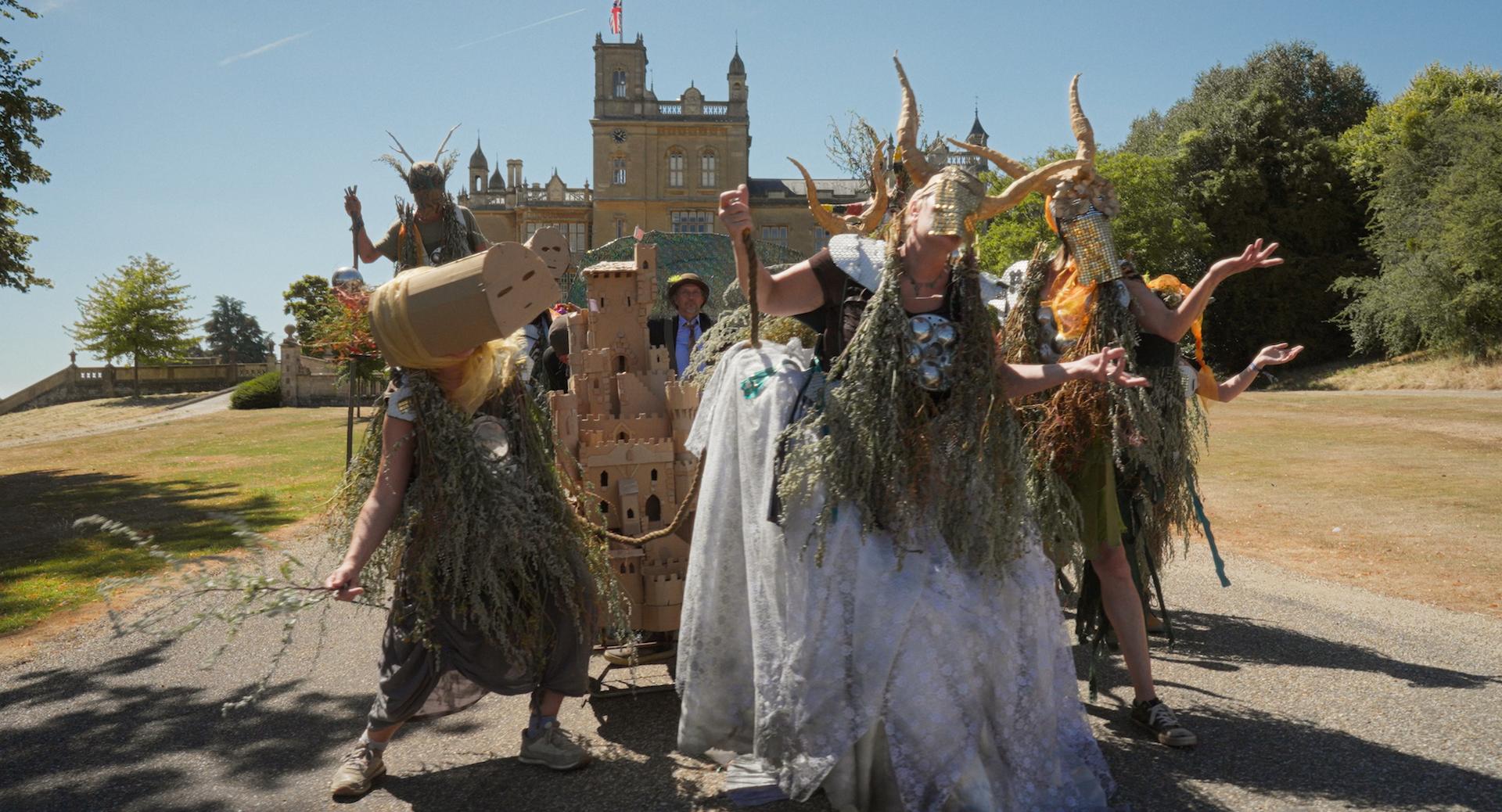
INTERVIEW WITH FILMMAKER ORBAN WALLACE, DIRECTOR OF DOCUMENTARY 'OUR LAND'
A journey over the walls that divide us, to explore the age-old debate of land and power, amid the fight for greater access to nature.
Our Land dares to tread where few have trespassed before, asking the timely question of who has the right to roam in the English countryside? The UK is a wild and beautiful place, but the vast majority of it is off limits to the general public, with 92% of land and 97% of all rivers in England not legally accessible. At the same time, it is a landscape shaped by centuries of inheritance and tradition, with land held and cared for by families across multiple generations.
Our Land takes us to the heart of the ‘Right to Roam’ movement as it embarks on a provocative trail of mass trespass, campaigning and education, while also exploring landowners’ concerns around environmental protection and the danger such widespread access could pose to a landscape already under threat.
Bringing these often-opposed worlds into sharp and revealing conversation, the film spotlights those fighting for greater public access — including Right to Roam campaigner Nadia Sheikh; Sunday Times bestselling author of The Book of Trespass, Nick Hayes; and Guy Shrubsole, Wainwright Prize-winning author of Who Owns England? and The Lie of the Land — as well as hearing from landowners from Cornwall to Scotland who see themselves as long-term custodians of the countryside. The film also brings to light barriers to connection to the countryside for people of colour, featuring groups that promote access to nature for Global Majority and refugee communities.
With an introduction to the history of the land justice debate by renowned nature writer Robert Macfarlane, animated by May Kindred Boothby, Our Land examines the complex issues of access, custodianship, and conservation, challenging age-old beliefs about property that have shaped our relationship with the land for over a thousand years.
Our Land is produced by Rebecca Wolff, Charlie Phillips, Leo Smith and Orban Wallace, for Gallivant Film, Grasp the Nettle Films and I Am Charlie Ltd, in association with Intermission Film. Executive producers are Sandra Whipham, Dale Vince and Sam Cryer, with Alice Aedy and Joi Lee of Earthrise as co-executive producers. Original music is by Daniel Inzani with a title track by Cosmo Sheldrake. It is supported by The BFI Doc Society Fund, awarding National Lottery funding and The Uncertain Kingdom.
JF: Our Land explores questions of access, stewardship and belonging. What has your own relationship with the countryside been, and how did it shape the film?
OW: This project began during lockdown. I grew up in the countryside, surrounded by estates, so I spent my childhood trespassing and exploring. There was always that feeling that the land belonged to someone else, and that ordinary people weren't supposed to be there or enjoy it in the way I'd wanted to.
During lockdown we'd all returned to my family home in the countryside and spending much of our time outdoors. I read Nick Hayes' The Book of Trespass and I could immediately visualise a film that moved between different perspectives. I didn't know exactly how to make it at that point, but the idea was there.
Then, rather fortuitously, Sam Lee happened to stay with us on his way to meet Nick and introduced us. We started filming with Nick before the Right to Roam movement had really taken off, before the mass trespasses and the wider campaign had begun. From there, it evolved quite naturally. We met Nadia Shaikh, Guy Shrubsole and others involved in the movement, and the story grew alongside it.
JF: What was your approach to documenting the story of Right to Roam, and how did you navigate the different perspectives surrounding it?
OW: From the beginning I was keen to bring in the landowners' perspective. I wanted the film to become a conversation, something people could move forward from, rather than simply making a campaign film.
Finding people willing to take part wasn't easy. Once they knew we were making a film about the Right to Roam movement, and that Nick Hayes was involved, many were happy to talk privately but didn't necessarily want to appear on camera. It took time to build those relationships, but gradually we met people willing to be part of the conversation, including Hugh Inge-Innes-Lillingston, Johnny Mildmay-White and Francis Fulford.
During filming, we never wanted to manufacture confrontations between different sides. Once we'd heard everyone's interviews, we realised their positions were already there. The conversation was happening through the juxtaposition of those different voices.
We also wanted to give enough historical context for people to understand how we'd arrived at this point, without making the whole film about history. The animated opening, written by Robert Macfarlane, illustrated by May Kindred Boothby and narrated by Jodie Powell, became a way of grounding that story before moving into the present.
JF: Several landowners in the film describe people and wild nature as fundamentally incompatible, suggesting that greater public access inevitably comes at the expense of ecological care. What did those conversations reveal to you about the assumptions that underpin that perspective?
OW: Before enclosure, for centuries we had the commons, where people, animals and grazing land all existed together. It was a much more symbiotic relationship and didn't place humans outside nature, as though there's "nature" over here and "humans" over there.
I've lived in the countryside all my life. You go for a walk or a run, there are deer on the track, pheasants in the fields, wildlife moving around you. It is simply humans and animals coexisting in a landscape. The greater impacts come from elsewhere. A pheasant shoot, with thirty people driving wildlife through a forest, has a far greater effect. Gamekeepers shooting predators, intensive farming and herbicides all have a much bigger impact on biodiversity.
Nadia says it well in the film: "It's not the people, it's the systems." That's why nature is in such poor condition in this country.
The film also brought into focus that every estate is ultimately a business. A lot of decisions are driven by money, overheads and maintaining a certain way of life. Nature becomes something that can generate income, whether through shooting, weddings, festivals or exclusivity. From that perspective, the idea of people simply being allowed to walk across the land threatens the business model as much as anything else.
Those concerns aren't always expressed directly, but the more time you spend talking to people, the more layers to the argument begin to emerge.
JF: The Right to Roam movement advocates responsible public access, with education playing an important role in rebuilding a culture of care for the countryside. As a child in the late ‘80s and early ‘90s, I remember the Countryside Code being far more visible through schools, films and public information campaigns. Why do you think that culture has been lost?
OW: Education has to begin at school. Children should be taken into the countryside from a young age and taught how to move through it responsibly. It needs that level of investment.
I remember the Countryside Code as a child. It felt like a genuine movement. Everybody knew it. I think we've lost that, partly because of the influence landowners have had through government and lobbying organisations such as the Country Land and Business Association (CLA) and the National Farmers' Union (NFA). Increasingly, the countryside has come to be seen as a place of business rather than somewhere people are welcomed.
The result is that we funnel people into a handful of honeypot sites, while vast areas of countryside remain empty. One of the biggest problems is that not enough people are out walking. We're facing a crisis of people spending more time on screens and less time outdoors.
JF: The film also documents a deeper culture of exclusion around who feels the countryside is a place for them. What do you think needs to change for that relationship to shift?
OW: It’s about a sense of safety and belonging. People have been made to feel they don't belong in the countryside, and that they don't have the right to be there. It's deeply embedded in our class system and in our culture. People know their place. You have villages that are generally working-class communities, and then the big estates and the landowners. That division has become normalised over generations.
The conversation around nature and our relationship with it is much more present than it has been for a long time, and you'd hope that begins to shift things. Ultimately, though, people have to feel that the countryside is somewhere they belong, not somewhere they're simply permitted to enter.
JF: Inheritance runs quietly through the film, not only as the inheritance of land, but of values, responsibility and ways of seeing. What gives you hope that the next generation might reimagine that inheritance?
OW: In the film, Johnny represents a generation that's inherited a huge weight of responsibility. They're trying to live up to generations before them. There's this lingering effect of a patriarchal system of land ownership that's still present, even for younger landowners today.
At the same time, every generation is different. Society has changed enormously, and ideas about what's acceptable and what isn't have changed too. This generation has an opportunity to do things differently, and there's a real urgency to that now. There are already people doing rewilding projects and managing land in different ways, opening it up, even if it's still managed access.
I don't think change will happen overnight, and there will always be tensions around public access. But this generation does feel like a bridge. The conversation around nature and our relationship with it is far more present than it was even a decade ago, and you'd hope that will influence how the next generation thinks about land and stewardship.
JF: What do you see as the most effective pathway towards securing a Right to Roam in England and Wales?
OW: A lot of people still don't know what the Right to Roam is, or how little access they actually have. If a Right to Roam were introduced in the way Scotland has approached it, it would need full government backing and investment. It would require negotiation with landowners and a willingness to work together. It needs education, signage explaining how the countryside works, funding to create and maintain footpaths, and potentially countryside rangers. It has to be supported by an entire system.
I still think a blanket Right to Roam is the right approach, because once you begin negotiating access piece by piece, it's much easier for those rights to be limited or taken away. But achieving that would require political will, investment and long-term commitment.
JF: Many of your films explore our relationship with the systems we inhabit, whether ecological, cultural or social. Where is this work taking you next?
OW: During the making of Our Land, we spent a great deal of time with the Gypsy, Roma and Traveller community, documenting their music, culture and relationship with the land. We realised it was another film in itself, and that's what we're developing now.
Alongside that, we're working on a long-form series exploring consciousness through the lens of psychedelics, tracing the lost history of our relationship with altered states, where we are now with research into DMT and consciousness, and how those questions might extend into artificial intelligence and machine consciousness.
I'm also making a short film following Guilt Trip, which I made for The Guardian about pilots experiencing climate anxiety. This new film follows people working in the oil industry who are beginning to question the environmental impact of their work.
JF: Looking back on the journey of making Our Land, what do you hope people leave the film carrying with them?
OW: We never wanted the film to preach to the converted. We wanted it to reach people who own land, as well as those already engaged with the Right to Roam movement, and encourage them to think about these issues differently.
We're not on the verge of a revolution, so for now we have to find ways of working with landowners to make things better.
What's been most encouraging is seeing the conversations the film has already begun. Since its release, people have organised their own screenings in village halls, local communities and farming networks, bringing together people who might never otherwise have had these discussions.
That's where I'd like the film to continue to go. The next stage isn't simply cinemas or festivals, it's reaching the places where these conversations matter most.
Watch the film here.
A journey over the walls that divide us, to explore the age-old debate of land and power, amid the fight for greater access to nature.
Our Land dares to tread where few have trespassed before, asking the timely question of who has the right to roam in the English countryside? The UK is a wild and beautiful place, but the vast majority of it is off limits to the general public, with 92% of land and 97% of all rivers in England not legally accessible. At the same time, it is a landscape shaped by centuries of inheritance and tradition, with land held and cared for by families across multiple generations.
Our Land takes us to the heart of the ‘Right to Roam’ movement as it embarks on a provocative trail of mass trespass, campaigning and education, while also exploring landowners’ concerns around environmental protection and the danger such widespread access could pose to a landscape already under threat.
Bringing these often-opposed worlds into sharp and revealing conversation, the film spotlights those fighting for greater public access — including Right to Roam campaigner Nadia Sheikh; Sunday Times bestselling author of The Book of Trespass, Nick Hayes; and Guy Shrubsole, Wainwright Prize-winning author of Who Owns England? and The Lie of the Land — as well as hearing from landowners from Cornwall to Scotland who see themselves as long-term custodians of the countryside. The film also brings to light barriers to connection to the countryside for people of colour, featuring groups that promote access to nature for Global Majority and refugee communities.
With an introduction to the history of the land justice debate by renowned nature writer Robert Macfarlane, animated by May Kindred Boothby, Our Land examines the complex issues of access, custodianship, and conservation, challenging age-old beliefs about property that have shaped our relationship with the land for over a thousand years.
Our Land is produced by Rebecca Wolff, Charlie Phillips, Leo Smith and Orban Wallace, for Gallivant Film, Grasp the Nettle Films and I Am Charlie Ltd, in association with Intermission Film. Executive producers are Sandra Whipham, Dale Vince and Sam Cryer, with Alice Aedy and Joi Lee of Earthrise as co-executive producers. Original music is by Daniel Inzani with a title track by Cosmo Sheldrake. It is supported by The BFI Doc Society Fund, awarding National Lottery funding and The Uncertain Kingdom.
JF: Our Land explores questions of access, stewardship and belonging. What has your own relationship with the countryside been, and how did it shape the film?
OW: This project began during lockdown. I grew up in the countryside, surrounded by estates, so I spent my childhood trespassing and exploring. There was always that feeling that the land belonged to someone else, and that ordinary people weren't supposed to be there or enjoy it in the way I'd wanted to.
During lockdown we'd all returned to my family home in the countryside and spending much of our time outdoors. I read Nick Hayes' The Book of Trespass and I could immediately visualise a film that moved between different perspectives. I didn't know exactly how to make it at that point, but the idea was there.
Then, rather fortuitously, Sam Lee happened to stay with us on his way to meet Nick and introduced us. We started filming with Nick before the Right to Roam movement had really taken off, before the mass trespasses and the wider campaign had begun. From there, it evolved quite naturally. We met Nadia Shaikh, Guy Shrubsole and others involved in the movement, and the story grew alongside it.
JF: What was your approach to documenting the story of Right to Roam, and how did you navigate the different perspectives surrounding it?
OW: From the beginning I was keen to bring in the landowners' perspective. I wanted the film to become a conversation, something people could move forward from, rather than simply making a campaign film.
Finding people willing to take part wasn't easy. Once they knew we were making a film about the Right to Roam movement, and that Nick Hayes was involved, many were happy to talk privately but didn't necessarily want to appear on camera. It took time to build those relationships, but gradually we met people willing to be part of the conversation, including Hugh Inge-Innes-Lillingston, Johnny Mildmay-White and Francis Fulford.
During filming, we never wanted to manufacture confrontations between different sides. Once we'd heard everyone's interviews, we realised their positions were already there. The conversation was happening through the juxtaposition of those different voices.
We also wanted to give enough historical context for people to understand how we'd arrived at this point, without making the whole film about history. The animated opening, written by Robert Macfarlane, illustrated by May Kindred Boothby and narrated by Jodie Powell, became a way of grounding that story before moving into the present.
JF: Several landowners in the film describe people and wild nature as fundamentally incompatible, suggesting that greater public access inevitably comes at the expense of ecological care. What did those conversations reveal to you about the assumptions that underpin that perspective?
OW: Before enclosure, for centuries we had the commons, where people, animals and grazing land all existed together. It was a much more symbiotic relationship and didn't place humans outside nature, as though there's "nature" over here and "humans" over there.
I've lived in the countryside all my life. You go for a walk or a run, there are deer on the track, pheasants in the fields, wildlife moving around you. It is simply humans and animals coexisting in a landscape. The greater impacts come from elsewhere. A pheasant shoot, with thirty people driving wildlife through a forest, has a far greater effect. Gamekeepers shooting predators, intensive farming and herbicides all have a much bigger impact on biodiversity.
Nadia says it well in the film: "It's not the people, it's the systems." That's why nature is in such poor condition in this country.
The film also brought into focus that every estate is ultimately a business. A lot of decisions are driven by money, overheads and maintaining a certain way of life. Nature becomes something that can generate income, whether through shooting, weddings, festivals or exclusivity. From that perspective, the idea of people simply being allowed to walk across the land threatens the business model as much as anything else.
Those concerns aren't always expressed directly, but the more time you spend talking to people, the more layers to the argument begin to emerge.
JF: The Right to Roam movement advocates responsible public access, with education playing an important role in rebuilding a culture of care for the countryside. As a child in the late ‘80s and early ‘90s, I remember the Countryside Code being far more visible through schools, films and public information campaigns. Why do you think that culture has been lost?
OW: Education has to begin at school. Children should be taken into the countryside from a young age and taught how to move through it responsibly. It needs that level of investment.
I remember the Countryside Code as a child. It felt like a genuine movement. Everybody knew it. I think we've lost that, partly because of the influence landowners have had through government and lobbying organisations such as the Country Land and Business Association (CLA) and the National Farmers' Union (NFA). Increasingly, the countryside has come to be seen as a place of business rather than somewhere people are welcomed.
The result is that we funnel people into a handful of honeypot sites, while vast areas of countryside remain empty. One of the biggest problems is that not enough people are out walking. We're facing a crisis of people spending more time on screens and less time outdoors.
JF: The film also documents a deeper culture of exclusion around who feels the countryside is a place for them. What do you think needs to change for that relationship to shift?
OW: It’s about a sense of safety and belonging. People have been made to feel they don't belong in the countryside, and that they don't have the right to be there. It's deeply embedded in our class system and in our culture. People know their place. You have villages that are generally working-class communities, and then the big estates and the landowners. That division has become normalised over generations.
The conversation around nature and our relationship with it is much more present than it has been for a long time, and you'd hope that begins to shift things. Ultimately, though, people have to feel that the countryside is somewhere they belong, not somewhere they're simply permitted to enter.
JF: Inheritance runs quietly through the film, not only as the inheritance of land, but of values, responsibility and ways of seeing. What gives you hope that the next generation might reimagine that inheritance?
OW: In the film, Johnny represents a generation that's inherited a huge weight of responsibility. They're trying to live up to generations before them. There's this lingering effect of a patriarchal system of land ownership that's still present, even for younger landowners today.
At the same time, every generation is different. Society has changed enormously, and ideas about what's acceptable and what isn't have changed too. This generation has an opportunity to do things differently, and there's a real urgency to that now. There are already people doing rewilding projects and managing land in different ways, opening it up, even if it's still managed access.
I don't think change will happen overnight, and there will always be tensions around public access. But this generation does feel like a bridge. The conversation around nature and our relationship with it is far more present than it was even a decade ago, and you'd hope that will influence how the next generation thinks about land and stewardship.
JF: What do you see as the most effective pathway towards securing a Right to Roam in England and Wales?
OW: A lot of people still don't know what the Right to Roam is, or how little access they actually have. If a Right to Roam were introduced in the way Scotland has approached it, it would need full government backing and investment. It would require negotiation with landowners and a willingness to work together. It needs education, signage explaining how the countryside works, funding to create and maintain footpaths, and potentially countryside rangers. It has to be supported by an entire system.
I still think a blanket Right to Roam is the right approach, because once you begin negotiating access piece by piece, it's much easier for those rights to be limited or taken away. But achieving that would require political will, investment and long-term commitment.
JF: Many of your films explore our relationship with the systems we inhabit, whether ecological, cultural or social. Where is this work taking you next?
OW: During the making of Our Land, we spent a great deal of time with the Gypsy, Roma and Traveller community, documenting their music, culture and relationship with the land. We realised it was another film in itself, and that's what we're developing now.
Alongside that, we're working on a long-form series exploring consciousness through the lens of psychedelics, tracing the lost history of our relationship with altered states, where we are now with research into DMT and consciousness, and how those questions might extend into artificial intelligence and machine consciousness.
I'm also making a short film following Guilt Trip, which I made for The Guardian about pilots experiencing climate anxiety. This new film follows people working in the oil industry who are beginning to question the environmental impact of their work.
JF: Looking back on the journey of making Our Land, what do you hope people leave the film carrying with them?
OW: We never wanted the film to preach to the converted. We wanted it to reach people who own land, as well as those already engaged with the Right to Roam movement, and encourage them to think about these issues differently.
We're not on the verge of a revolution, so for now we have to find ways of working with landowners to make things better.
What's been most encouraging is seeing the conversations the film has already begun. Since its release, people have organised their own screenings in village halls, local communities and farming networks, bringing together people who might never otherwise have had these discussions.
That's where I'd like the film to continue to go. The next stage isn't simply cinemas or festivals, it's reaching the places where these conversations matter most.
Watch the film here.
Orban Wallace is a documentary filmmaker dedicated to telling human-centred stories that are socially and environmentally driven. His work spans feature documentaries, short films, and creative commercial content, with a distinctive cinematic style that brings authenticity, improvisation, and emotional depth to every project.
Right to Roam organises peaceful trespasses into some of the vast areas of countryside from which the public are currently excluded. Led by botanists, ornithologists, astronomers, dancers, singers, citizen scientists, outdoors specialists and poets.
The Book of Trespass takes us on a journey over the walls of England, into the thousands of square miles of rivers, woodland, lakes and meadows that are blocked from public access. By trespassing the land of the media magnates, Lords, politicians and private corporations that own England, Nick Hayes argues that the root of social inequality is the uneven distribution of land.
INTERVIEW WITH FILMMAKER ORBAN WALLACE, DIRECTOR OF DOCUMENTARY 'OUR LAND'
A journey over the walls that divide us, to explore the age-old debate of land and power, amid the fight for greater access to nature.
Our Land dares to tread where few have trespassed before, asking the timely question of who has the right to roam in the English countryside? The UK is a wild and beautiful place, but the vast majority of it is off limits to the general public, with 92% of land and 97% of all rivers in England not legally accessible. At the same time, it is a landscape shaped by centuries of inheritance and tradition, with land held and cared for by families across multiple generations.
Our Land takes us to the heart of the ‘Right to Roam’ movement as it embarks on a provocative trail of mass trespass, campaigning and education, while also exploring landowners’ concerns around environmental protection and the danger such widespread access could pose to a landscape already under threat.
Bringing these often-opposed worlds into sharp and revealing conversation, the film spotlights those fighting for greater public access — including Right to Roam campaigner Nadia Sheikh; Sunday Times bestselling author of The Book of Trespass, Nick Hayes; and Guy Shrubsole, Wainwright Prize-winning author of Who Owns England? and The Lie of the Land — as well as hearing from landowners from Cornwall to Scotland who see themselves as long-term custodians of the countryside. The film also brings to light barriers to connection to the countryside for people of colour, featuring groups that promote access to nature for Global Majority and refugee communities.
With an introduction to the history of the land justice debate by renowned nature writer Robert Macfarlane, animated by May Kindred Boothby, Our Land examines the complex issues of access, custodianship, and conservation, challenging age-old beliefs about property that have shaped our relationship with the land for over a thousand years.
Our Land is produced by Rebecca Wolff, Charlie Phillips, Leo Smith and Orban Wallace, for Gallivant Film, Grasp the Nettle Films and I Am Charlie Ltd, in association with Intermission Film. Executive producers are Sandra Whipham, Dale Vince and Sam Cryer, with Alice Aedy and Joi Lee of Earthrise as co-executive producers. Original music is by Daniel Inzani with a title track by Cosmo Sheldrake. It is supported by The BFI Doc Society Fund, awarding National Lottery funding and The Uncertain Kingdom.
JF: Our Land explores questions of access, stewardship and belonging. What has your own relationship with the countryside been, and how did it shape the film?
OW: This project began during lockdown. I grew up in the countryside, surrounded by estates, so I spent my childhood trespassing and exploring. There was always that feeling that the land belonged to someone else, and that ordinary people weren't supposed to be there or enjoy it in the way I'd wanted to.
During lockdown we'd all returned to my family home in the countryside and spending much of our time outdoors. I read Nick Hayes' The Book of Trespass and I could immediately visualise a film that moved between different perspectives. I didn't know exactly how to make it at that point, but the idea was there.
Then, rather fortuitously, Sam Lee happened to stay with us on his way to meet Nick and introduced us. We started filming with Nick before the Right to Roam movement had really taken off, before the mass trespasses and the wider campaign had begun. From there, it evolved quite naturally. We met Nadia Shaikh, Guy Shrubsole and others involved in the movement, and the story grew alongside it.
JF: What was your approach to documenting the story of Right to Roam, and how did you navigate the different perspectives surrounding it?
OW: From the beginning I was keen to bring in the landowners' perspective. I wanted the film to become a conversation, something people could move forward from, rather than simply making a campaign film.
Finding people willing to take part wasn't easy. Once they knew we were making a film about the Right to Roam movement, and that Nick Hayes was involved, many were happy to talk privately but didn't necessarily want to appear on camera. It took time to build those relationships, but gradually we met people willing to be part of the conversation, including Hugh Inge-Innes-Lillingston, Johnny Mildmay-White and Francis Fulford.
During filming, we never wanted to manufacture confrontations between different sides. Once we'd heard everyone's interviews, we realised their positions were already there. The conversation was happening through the juxtaposition of those different voices.
We also wanted to give enough historical context for people to understand how we'd arrived at this point, without making the whole film about history. The animated opening, written by Robert Macfarlane, illustrated by May Kindred Boothby and narrated by Jodie Powell, became a way of grounding that story before moving into the present.
JF: Several landowners in the film describe people and wild nature as fundamentally incompatible, suggesting that greater public access inevitably comes at the expense of ecological care. What did those conversations reveal to you about the assumptions that underpin that perspective?
OW: Before enclosure, for centuries we had the commons, where people, animals and grazing land all existed together. It was a much more symbiotic relationship and didn't place humans outside nature, as though there's "nature" over here and "humans" over there.
I've lived in the countryside all my life. You go for a walk or a run, there are deer on the track, pheasants in the fields, wildlife moving around you. It is simply humans and animals coexisting in a landscape. The greater impacts come from elsewhere. A pheasant shoot, with thirty people driving wildlife through a forest, has a far greater effect. Gamekeepers shooting predators, intensive farming and herbicides all have a much bigger impact on biodiversity.
Nadia says it well in the film: "It's not the people, it's the systems." That's why nature is in such poor condition in this country.
The film also brought into focus that every estate is ultimately a business. A lot of decisions are driven by money, overheads and maintaining a certain way of life. Nature becomes something that can generate income, whether through shooting, weddings, festivals or exclusivity. From that perspective, the idea of people simply being allowed to walk across the land threatens the business model as much as anything else.
Those concerns aren't always expressed directly, but the more time you spend talking to people, the more layers to the argument begin to emerge.
JF: The Right to Roam movement advocates responsible public access, with education playing an important role in rebuilding a culture of care for the countryside. As a child in the late ‘80s and early ‘90s, I remember the Countryside Code being far more visible through schools, films and public information campaigns. Why do you think that culture has been lost?
OW: Education has to begin at school. Children should be taken into the countryside from a young age and taught how to move through it responsibly. It needs that level of investment.
I remember the Countryside Code as a child. It felt like a genuine movement. Everybody knew it. I think we've lost that, partly because of the influence landowners have had through government and lobbying organisations such as the Country Land and Business Association (CLA) and the National Farmers' Union (NFA). Increasingly, the countryside has come to be seen as a place of business rather than somewhere people are welcomed.
The result is that we funnel people into a handful of honeypot sites, while vast areas of countryside remain empty. One of the biggest problems is that not enough people are out walking. We're facing a crisis of people spending more time on screens and less time outdoors.
JF: The film also documents a deeper culture of exclusion around who feels the countryside is a place for them. What do you think needs to change for that relationship to shift?
OW: It’s about a sense of safety and belonging. People have been made to feel they don't belong in the countryside, and that they don't have the right to be there. It's deeply embedded in our class system and in our culture. People know their place. You have villages that are generally working-class communities, and then the big estates and the landowners. That division has become normalised over generations.
The conversation around nature and our relationship with it is much more present than it has been for a long time, and you'd hope that begins to shift things. Ultimately, though, people have to feel that the countryside is somewhere they belong, not somewhere they're simply permitted to enter.
JF: Inheritance runs quietly through the film, not only as the inheritance of land, but of values, responsibility and ways of seeing. What gives you hope that the next generation might reimagine that inheritance?
OW: In the film, Johnny represents a generation that's inherited a huge weight of responsibility. They're trying to live up to generations before them. There's this lingering effect of a patriarchal system of land ownership that's still present, even for younger landowners today.
At the same time, every generation is different. Society has changed enormously, and ideas about what's acceptable and what isn't have changed too. This generation has an opportunity to do things differently, and there's a real urgency to that now. There are already people doing rewilding projects and managing land in different ways, opening it up, even if it's still managed access.
I don't think change will happen overnight, and there will always be tensions around public access. But this generation does feel like a bridge. The conversation around nature and our relationship with it is far more present than it was even a decade ago, and you'd hope that will influence how the next generation thinks about land and stewardship.
JF: What do you see as the most effective pathway towards securing a Right to Roam in England and Wales?
OW: A lot of people still don't know what the Right to Roam is, or how little access they actually have. If a Right to Roam were introduced in the way Scotland has approached it, it would need full government backing and investment. It would require negotiation with landowners and a willingness to work together. It needs education, signage explaining how the countryside works, funding to create and maintain footpaths, and potentially countryside rangers. It has to be supported by an entire system.
I still think a blanket Right to Roam is the right approach, because once you begin negotiating access piece by piece, it's much easier for those rights to be limited or taken away. But achieving that would require political will, investment and long-term commitment.
JF: Many of your films explore our relationship with the systems we inhabit, whether ecological, cultural or social. Where is this work taking you next?
OW: During the making of Our Land, we spent a great deal of time with the Gypsy, Roma and Traveller community, documenting their music, culture and relationship with the land. We realised it was another film in itself, and that's what we're developing now.
Alongside that, we're working on a long-form series exploring consciousness through the lens of psychedelics, tracing the lost history of our relationship with altered states, where we are now with research into DMT and consciousness, and how those questions might extend into artificial intelligence and machine consciousness.
I'm also making a short film following Guilt Trip, which I made for The Guardian about pilots experiencing climate anxiety. This new film follows people working in the oil industry who are beginning to question the environmental impact of their work.
JF: Looking back on the journey of making Our Land, what do you hope people leave the film carrying with them?
OW: We never wanted the film to preach to the converted. We wanted it to reach people who own land, as well as those already engaged with the Right to Roam movement, and encourage them to think about these issues differently.
We're not on the verge of a revolution, so for now we have to find ways of working with landowners to make things better.
What's been most encouraging is seeing the conversations the film has already begun. Since its release, people have organised their own screenings in village halls, local communities and farming networks, bringing together people who might never otherwise have had these discussions.
That's where I'd like the film to continue to go. The next stage isn't simply cinemas or festivals, it's reaching the places where these conversations matter most.
Watch the film here.
A journey over the walls that divide us, to explore the age-old debate of land and power, amid the fight for greater access to nature.
Our Land dares to tread where few have trespassed before, asking the timely question of who has the right to roam in the English countryside? The UK is a wild and beautiful place, but the vast majority of it is off limits to the general public, with 92% of land and 97% of all rivers in England not legally accessible. At the same time, it is a landscape shaped by centuries of inheritance and tradition, with land held and cared for by families across multiple generations.
Our Land takes us to the heart of the ‘Right to Roam’ movement as it embarks on a provocative trail of mass trespass, campaigning and education, while also exploring landowners’ concerns around environmental protection and the danger such widespread access could pose to a landscape already under threat.
Bringing these often-opposed worlds into sharp and revealing conversation, the film spotlights those fighting for greater public access — including Right to Roam campaigner Nadia Sheikh; Sunday Times bestselling author of The Book of Trespass, Nick Hayes; and Guy Shrubsole, Wainwright Prize-winning author of Who Owns England? and The Lie of the Land — as well as hearing from landowners from Cornwall to Scotland who see themselves as long-term custodians of the countryside. The film also brings to light barriers to connection to the countryside for people of colour, featuring groups that promote access to nature for Global Majority and refugee communities.
With an introduction to the history of the land justice debate by renowned nature writer Robert Macfarlane, animated by May Kindred Boothby, Our Land examines the complex issues of access, custodianship, and conservation, challenging age-old beliefs about property that have shaped our relationship with the land for over a thousand years.
Our Land is produced by Rebecca Wolff, Charlie Phillips, Leo Smith and Orban Wallace, for Gallivant Film, Grasp the Nettle Films and I Am Charlie Ltd, in association with Intermission Film. Executive producers are Sandra Whipham, Dale Vince and Sam Cryer, with Alice Aedy and Joi Lee of Earthrise as co-executive producers. Original music is by Daniel Inzani with a title track by Cosmo Sheldrake. It is supported by The BFI Doc Society Fund, awarding National Lottery funding and The Uncertain Kingdom.
JF: Our Land explores questions of access, stewardship and belonging. What has your own relationship with the countryside been, and how did it shape the film?
OW: This project began during lockdown. I grew up in the countryside, surrounded by estates, so I spent my childhood trespassing and exploring. There was always that feeling that the land belonged to someone else, and that ordinary people weren't supposed to be there or enjoy it in the way I'd wanted to.
During lockdown we'd all returned to my family home in the countryside and spending much of our time outdoors. I read Nick Hayes' The Book of Trespass and I could immediately visualise a film that moved between different perspectives. I didn't know exactly how to make it at that point, but the idea was there.
Then, rather fortuitously, Sam Lee happened to stay with us on his way to meet Nick and introduced us. We started filming with Nick before the Right to Roam movement had really taken off, before the mass trespasses and the wider campaign had begun. From there, it evolved quite naturally. We met Nadia Shaikh, Guy Shrubsole and others involved in the movement, and the story grew alongside it.
JF: What was your approach to documenting the story of Right to Roam, and how did you navigate the different perspectives surrounding it?
OW: From the beginning I was keen to bring in the landowners' perspective. I wanted the film to become a conversation, something people could move forward from, rather than simply making a campaign film.
Finding people willing to take part wasn't easy. Once they knew we were making a film about the Right to Roam movement, and that Nick Hayes was involved, many were happy to talk privately but didn't necessarily want to appear on camera. It took time to build those relationships, but gradually we met people willing to be part of the conversation, including Hugh Inge-Innes-Lillingston, Johnny Mildmay-White and Francis Fulford.
During filming, we never wanted to manufacture confrontations between different sides. Once we'd heard everyone's interviews, we realised their positions were already there. The conversation was happening through the juxtaposition of those different voices.
We also wanted to give enough historical context for people to understand how we'd arrived at this point, without making the whole film about history. The animated opening, written by Robert Macfarlane, illustrated by May Kindred Boothby and narrated by Jodie Powell, became a way of grounding that story before moving into the present.
JF: Several landowners in the film describe people and wild nature as fundamentally incompatible, suggesting that greater public access inevitably comes at the expense of ecological care. What did those conversations reveal to you about the assumptions that underpin that perspective?
OW: Before enclosure, for centuries we had the commons, where people, animals and grazing land all existed together. It was a much more symbiotic relationship and didn't place humans outside nature, as though there's "nature" over here and "humans" over there.
I've lived in the countryside all my life. You go for a walk or a run, there are deer on the track, pheasants in the fields, wildlife moving around you. It is simply humans and animals coexisting in a landscape. The greater impacts come from elsewhere. A pheasant shoot, with thirty people driving wildlife through a forest, has a far greater effect. Gamekeepers shooting predators, intensive farming and herbicides all have a much bigger impact on biodiversity.
Nadia says it well in the film: "It's not the people, it's the systems." That's why nature is in such poor condition in this country.
The film also brought into focus that every estate is ultimately a business. A lot of decisions are driven by money, overheads and maintaining a certain way of life. Nature becomes something that can generate income, whether through shooting, weddings, festivals or exclusivity. From that perspective, the idea of people simply being allowed to walk across the land threatens the business model as much as anything else.
Those concerns aren't always expressed directly, but the more time you spend talking to people, the more layers to the argument begin to emerge.
JF: The Right to Roam movement advocates responsible public access, with education playing an important role in rebuilding a culture of care for the countryside. As a child in the late ‘80s and early ‘90s, I remember the Countryside Code being far more visible through schools, films and public information campaigns. Why do you think that culture has been lost?
OW: Education has to begin at school. Children should be taken into the countryside from a young age and taught how to move through it responsibly. It needs that level of investment.
I remember the Countryside Code as a child. It felt like a genuine movement. Everybody knew it. I think we've lost that, partly because of the influence landowners have had through government and lobbying organisations such as the Country Land and Business Association (CLA) and the National Farmers' Union (NFA). Increasingly, the countryside has come to be seen as a place of business rather than somewhere people are welcomed.
The result is that we funnel people into a handful of honeypot sites, while vast areas of countryside remain empty. One of the biggest problems is that not enough people are out walking. We're facing a crisis of people spending more time on screens and less time outdoors.
JF: The film also documents a deeper culture of exclusion around who feels the countryside is a place for them. What do you think needs to change for that relationship to shift?
OW: It’s about a sense of safety and belonging. People have been made to feel they don't belong in the countryside, and that they don't have the right to be there. It's deeply embedded in our class system and in our culture. People know their place. You have villages that are generally working-class communities, and then the big estates and the landowners. That division has become normalised over generations.
The conversation around nature and our relationship with it is much more present than it has been for a long time, and you'd hope that begins to shift things. Ultimately, though, people have to feel that the countryside is somewhere they belong, not somewhere they're simply permitted to enter.
JF: Inheritance runs quietly through the film, not only as the inheritance of land, but of values, responsibility and ways of seeing. What gives you hope that the next generation might reimagine that inheritance?
OW: In the film, Johnny represents a generation that's inherited a huge weight of responsibility. They're trying to live up to generations before them. There's this lingering effect of a patriarchal system of land ownership that's still present, even for younger landowners today.
At the same time, every generation is different. Society has changed enormously, and ideas about what's acceptable and what isn't have changed too. This generation has an opportunity to do things differently, and there's a real urgency to that now. There are already people doing rewilding projects and managing land in different ways, opening it up, even if it's still managed access.
I don't think change will happen overnight, and there will always be tensions around public access. But this generation does feel like a bridge. The conversation around nature and our relationship with it is far more present than it was even a decade ago, and you'd hope that will influence how the next generation thinks about land and stewardship.
JF: What do you see as the most effective pathway towards securing a Right to Roam in England and Wales?
OW: A lot of people still don't know what the Right to Roam is, or how little access they actually have. If a Right to Roam were introduced in the way Scotland has approached it, it would need full government backing and investment. It would require negotiation with landowners and a willingness to work together. It needs education, signage explaining how the countryside works, funding to create and maintain footpaths, and potentially countryside rangers. It has to be supported by an entire system.
I still think a blanket Right to Roam is the right approach, because once you begin negotiating access piece by piece, it's much easier for those rights to be limited or taken away. But achieving that would require political will, investment and long-term commitment.
JF: Many of your films explore our relationship with the systems we inhabit, whether ecological, cultural or social. Where is this work taking you next?
OW: During the making of Our Land, we spent a great deal of time with the Gypsy, Roma and Traveller community, documenting their music, culture and relationship with the land. We realised it was another film in itself, and that's what we're developing now.
Alongside that, we're working on a long-form series exploring consciousness through the lens of psychedelics, tracing the lost history of our relationship with altered states, where we are now with research into DMT and consciousness, and how those questions might extend into artificial intelligence and machine consciousness.
I'm also making a short film following Guilt Trip, which I made for The Guardian about pilots experiencing climate anxiety. This new film follows people working in the oil industry who are beginning to question the environmental impact of their work.
JF: Looking back on the journey of making Our Land, what do you hope people leave the film carrying with them?
OW: We never wanted the film to preach to the converted. We wanted it to reach people who own land, as well as those already engaged with the Right to Roam movement, and encourage them to think about these issues differently.
We're not on the verge of a revolution, so for now we have to find ways of working with landowners to make things better.
What's been most encouraging is seeing the conversations the film has already begun. Since its release, people have organised their own screenings in village halls, local communities and farming networks, bringing together people who might never otherwise have had these discussions.
That's where I'd like the film to continue to go. The next stage isn't simply cinemas or festivals, it's reaching the places where these conversations matter most.
Watch the film here.
Orban Wallace is a documentary filmmaker dedicated to telling human-centred stories that are socially and environmentally driven. His work spans feature documentaries, short films, and creative commercial content, with a distinctive cinematic style that brings authenticity, improvisation, and emotional depth to every project.
Right to Roam organises peaceful trespasses into some of the vast areas of countryside from which the public are currently excluded. Led by botanists, ornithologists, astronomers, dancers, singers, citizen scientists, outdoors specialists and poets.
The Book of Trespass takes us on a journey over the walls of England, into the thousands of square miles of rivers, woodland, lakes and meadows that are blocked from public access. By trespassing the land of the media magnates, Lords, politicians and private corporations that own England, Nick Hayes argues that the root of social inequality is the uneven distribution of land.
INTERVIEW WITH FILMMAKER ORBAN WALLACE, DIRECTOR OF DOCUMENTARY 'OUR LAND'
A journey over the walls that divide us, to explore the age-old debate of land and power, amid the fight for greater access to nature.
Our Land dares to tread where few have trespassed before, asking the timely question of who has the right to roam in the English countryside? The UK is a wild and beautiful place, but the vast majority of it is off limits to the general public, with 92% of land and 97% of all rivers in England not legally accessible. At the same time, it is a landscape shaped by centuries of inheritance and tradition, with land held and cared for by families across multiple generations.
Our Land takes us to the heart of the ‘Right to Roam’ movement as it embarks on a provocative trail of mass trespass, campaigning and education, while also exploring landowners’ concerns around environmental protection and the danger such widespread access could pose to a landscape already under threat.
Bringing these often-opposed worlds into sharp and revealing conversation, the film spotlights those fighting for greater public access — including Right to Roam campaigner Nadia Sheikh; Sunday Times bestselling author of The Book of Trespass, Nick Hayes; and Guy Shrubsole, Wainwright Prize-winning author of Who Owns England? and The Lie of the Land — as well as hearing from landowners from Cornwall to Scotland who see themselves as long-term custodians of the countryside. The film also brings to light barriers to connection to the countryside for people of colour, featuring groups that promote access to nature for Global Majority and refugee communities.
With an introduction to the history of the land justice debate by renowned nature writer Robert Macfarlane, animated by May Kindred Boothby, Our Land examines the complex issues of access, custodianship, and conservation, challenging age-old beliefs about property that have shaped our relationship with the land for over a thousand years.
Our Land is produced by Rebecca Wolff, Charlie Phillips, Leo Smith and Orban Wallace, for Gallivant Film, Grasp the Nettle Films and I Am Charlie Ltd, in association with Intermission Film. Executive producers are Sandra Whipham, Dale Vince and Sam Cryer, with Alice Aedy and Joi Lee of Earthrise as co-executive producers. Original music is by Daniel Inzani with a title track by Cosmo Sheldrake. It is supported by The BFI Doc Society Fund, awarding National Lottery funding and The Uncertain Kingdom.
JF: Our Land explores questions of access, stewardship and belonging. What has your own relationship with the countryside been, and how did it shape the film?
OW: This project began during lockdown. I grew up in the countryside, surrounded by estates, so I spent my childhood trespassing and exploring. There was always that feeling that the land belonged to someone else, and that ordinary people weren't supposed to be there or enjoy it in the way I'd wanted to.
During lockdown we'd all returned to my family home in the countryside and spending much of our time outdoors. I read Nick Hayes' The Book of Trespass and I could immediately visualise a film that moved between different perspectives. I didn't know exactly how to make it at that point, but the idea was there.
Then, rather fortuitously, Sam Lee happened to stay with us on his way to meet Nick and introduced us. We started filming with Nick before the Right to Roam movement had really taken off, before the mass trespasses and the wider campaign had begun. From there, it evolved quite naturally. We met Nadia Shaikh, Guy Shrubsole and others involved in the movement, and the story grew alongside it.
JF: What was your approach to documenting the story of Right to Roam, and how did you navigate the different perspectives surrounding it?
OW: From the beginning I was keen to bring in the landowners' perspective. I wanted the film to become a conversation, something people could move forward from, rather than simply making a campaign film.
Finding people willing to take part wasn't easy. Once they knew we were making a film about the Right to Roam movement, and that Nick Hayes was involved, many were happy to talk privately but didn't necessarily want to appear on camera. It took time to build those relationships, but gradually we met people willing to be part of the conversation, including Hugh Inge-Innes-Lillingston, Johnny Mildmay-White and Francis Fulford.
During filming, we never wanted to manufacture confrontations between different sides. Once we'd heard everyone's interviews, we realised their positions were already there. The conversation was happening through the juxtaposition of those different voices.
We also wanted to give enough historical context for people to understand how we'd arrived at this point, without making the whole film about history. The animated opening, written by Robert Macfarlane, illustrated by May Kindred Boothby and narrated by Jodie Powell, became a way of grounding that story before moving into the present.
JF: Several landowners in the film describe people and wild nature as fundamentally incompatible, suggesting that greater public access inevitably comes at the expense of ecological care. What did those conversations reveal to you about the assumptions that underpin that perspective?
OW: Before enclosure, for centuries we had the commons, where people, animals and grazing land all existed together. It was a much more symbiotic relationship and didn't place humans outside nature, as though there's "nature" over here and "humans" over there.
I've lived in the countryside all my life. You go for a walk or a run, there are deer on the track, pheasants in the fields, wildlife moving around you. It is simply humans and animals coexisting in a landscape. The greater impacts come from elsewhere. A pheasant shoot, with thirty people driving wildlife through a forest, has a far greater effect. Gamekeepers shooting predators, intensive farming and herbicides all have a much bigger impact on biodiversity.
Nadia says it well in the film: "It's not the people, it's the systems." That's why nature is in such poor condition in this country.
The film also brought into focus that every estate is ultimately a business. A lot of decisions are driven by money, overheads and maintaining a certain way of life. Nature becomes something that can generate income, whether through shooting, weddings, festivals or exclusivity. From that perspective, the idea of people simply being allowed to walk across the land threatens the business model as much as anything else.
Those concerns aren't always expressed directly, but the more time you spend talking to people, the more layers to the argument begin to emerge.
JF: The Right to Roam movement advocates responsible public access, with education playing an important role in rebuilding a culture of care for the countryside. As a child in the late ‘80s and early ‘90s, I remember the Countryside Code being far more visible through schools, films and public information campaigns. Why do you think that culture has been lost?
OW: Education has to begin at school. Children should be taken into the countryside from a young age and taught how to move through it responsibly. It needs that level of investment.
I remember the Countryside Code as a child. It felt like a genuine movement. Everybody knew it. I think we've lost that, partly because of the influence landowners have had through government and lobbying organisations such as the Country Land and Business Association (CLA) and the National Farmers' Union (NFA). Increasingly, the countryside has come to be seen as a place of business rather than somewhere people are welcomed.
The result is that we funnel people into a handful of honeypot sites, while vast areas of countryside remain empty. One of the biggest problems is that not enough people are out walking. We're facing a crisis of people spending more time on screens and less time outdoors.
JF: The film also documents a deeper culture of exclusion around who feels the countryside is a place for them. What do you think needs to change for that relationship to shift?
OW: It’s about a sense of safety and belonging. People have been made to feel they don't belong in the countryside, and that they don't have the right to be there. It's deeply embedded in our class system and in our culture. People know their place. You have villages that are generally working-class communities, and then the big estates and the landowners. That division has become normalised over generations.
The conversation around nature and our relationship with it is much more present than it has been for a long time, and you'd hope that begins to shift things. Ultimately, though, people have to feel that the countryside is somewhere they belong, not somewhere they're simply permitted to enter.
JF: Inheritance runs quietly through the film, not only as the inheritance of land, but of values, responsibility and ways of seeing. What gives you hope that the next generation might reimagine that inheritance?
OW: In the film, Johnny represents a generation that's inherited a huge weight of responsibility. They're trying to live up to generations before them. There's this lingering effect of a patriarchal system of land ownership that's still present, even for younger landowners today.
At the same time, every generation is different. Society has changed enormously, and ideas about what's acceptable and what isn't have changed too. This generation has an opportunity to do things differently, and there's a real urgency to that now. There are already people doing rewilding projects and managing land in different ways, opening it up, even if it's still managed access.
I don't think change will happen overnight, and there will always be tensions around public access. But this generation does feel like a bridge. The conversation around nature and our relationship with it is far more present than it was even a decade ago, and you'd hope that will influence how the next generation thinks about land and stewardship.
JF: What do you see as the most effective pathway towards securing a Right to Roam in England and Wales?
OW: A lot of people still don't know what the Right to Roam is, or how little access they actually have. If a Right to Roam were introduced in the way Scotland has approached it, it would need full government backing and investment. It would require negotiation with landowners and a willingness to work together. It needs education, signage explaining how the countryside works, funding to create and maintain footpaths, and potentially countryside rangers. It has to be supported by an entire system.
I still think a blanket Right to Roam is the right approach, because once you begin negotiating access piece by piece, it's much easier for those rights to be limited or taken away. But achieving that would require political will, investment and long-term commitment.
JF: Many of your films explore our relationship with the systems we inhabit, whether ecological, cultural or social. Where is this work taking you next?
OW: During the making of Our Land, we spent a great deal of time with the Gypsy, Roma and Traveller community, documenting their music, culture and relationship with the land. We realised it was another film in itself, and that's what we're developing now.
Alongside that, we're working on a long-form series exploring consciousness through the lens of psychedelics, tracing the lost history of our relationship with altered states, where we are now with research into DMT and consciousness, and how those questions might extend into artificial intelligence and machine consciousness.
I'm also making a short film following Guilt Trip, which I made for The Guardian about pilots experiencing climate anxiety. This new film follows people working in the oil industry who are beginning to question the environmental impact of their work.
JF: Looking back on the journey of making Our Land, what do you hope people leave the film carrying with them?
OW: We never wanted the film to preach to the converted. We wanted it to reach people who own land, as well as those already engaged with the Right to Roam movement, and encourage them to think about these issues differently.
We're not on the verge of a revolution, so for now we have to find ways of working with landowners to make things better.
What's been most encouraging is seeing the conversations the film has already begun. Since its release, people have organised their own screenings in village halls, local communities and farming networks, bringing together people who might never otherwise have had these discussions.
That's where I'd like the film to continue to go. The next stage isn't simply cinemas or festivals, it's reaching the places where these conversations matter most.
Watch the film here.
A journey over the walls that divide us, to explore the age-old debate of land and power, amid the fight for greater access to nature.
Our Land dares to tread where few have trespassed before, asking the timely question of who has the right to roam in the English countryside? The UK is a wild and beautiful place, but the vast majority of it is off limits to the general public, with 92% of land and 97% of all rivers in England not legally accessible. At the same time, it is a landscape shaped by centuries of inheritance and tradition, with land held and cared for by families across multiple generations.
Our Land takes us to the heart of the ‘Right to Roam’ movement as it embarks on a provocative trail of mass trespass, campaigning and education, while also exploring landowners’ concerns around environmental protection and the danger such widespread access could pose to a landscape already under threat.
Bringing these often-opposed worlds into sharp and revealing conversation, the film spotlights those fighting for greater public access — including Right to Roam campaigner Nadia Sheikh; Sunday Times bestselling author of The Book of Trespass, Nick Hayes; and Guy Shrubsole, Wainwright Prize-winning author of Who Owns England? and The Lie of the Land — as well as hearing from landowners from Cornwall to Scotland who see themselves as long-term custodians of the countryside. The film also brings to light barriers to connection to the countryside for people of colour, featuring groups that promote access to nature for Global Majority and refugee communities.
With an introduction to the history of the land justice debate by renowned nature writer Robert Macfarlane, animated by May Kindred Boothby, Our Land examines the complex issues of access, custodianship, and conservation, challenging age-old beliefs about property that have shaped our relationship with the land for over a thousand years.
Our Land is produced by Rebecca Wolff, Charlie Phillips, Leo Smith and Orban Wallace, for Gallivant Film, Grasp the Nettle Films and I Am Charlie Ltd, in association with Intermission Film. Executive producers are Sandra Whipham, Dale Vince and Sam Cryer, with Alice Aedy and Joi Lee of Earthrise as co-executive producers. Original music is by Daniel Inzani with a title track by Cosmo Sheldrake. It is supported by The BFI Doc Society Fund, awarding National Lottery funding and The Uncertain Kingdom.
JF: Our Land explores questions of access, stewardship and belonging. What has your own relationship with the countryside been, and how did it shape the film?
OW: This project began during lockdown. I grew up in the countryside, surrounded by estates, so I spent my childhood trespassing and exploring. There was always that feeling that the land belonged to someone else, and that ordinary people weren't supposed to be there or enjoy it in the way I'd wanted to.
During lockdown we'd all returned to my family home in the countryside and spending much of our time outdoors. I read Nick Hayes' The Book of Trespass and I could immediately visualise a film that moved between different perspectives. I didn't know exactly how to make it at that point, but the idea was there.
Then, rather fortuitously, Sam Lee happened to stay with us on his way to meet Nick and introduced us. We started filming with Nick before the Right to Roam movement had really taken off, before the mass trespasses and the wider campaign had begun. From there, it evolved quite naturally. We met Nadia Shaikh, Guy Shrubsole and others involved in the movement, and the story grew alongside it.
JF: What was your approach to documenting the story of Right to Roam, and how did you navigate the different perspectives surrounding it?
OW: From the beginning I was keen to bring in the landowners' perspective. I wanted the film to become a conversation, something people could move forward from, rather than simply making a campaign film.
Finding people willing to take part wasn't easy. Once they knew we were making a film about the Right to Roam movement, and that Nick Hayes was involved, many were happy to talk privately but didn't necessarily want to appear on camera. It took time to build those relationships, but gradually we met people willing to be part of the conversation, including Hugh Inge-Innes-Lillingston, Johnny Mildmay-White and Francis Fulford.
During filming, we never wanted to manufacture confrontations between different sides. Once we'd heard everyone's interviews, we realised their positions were already there. The conversation was happening through the juxtaposition of those different voices.
We also wanted to give enough historical context for people to understand how we'd arrived at this point, without making the whole film about history. The animated opening, written by Robert Macfarlane, illustrated by May Kindred Boothby and narrated by Jodie Powell, became a way of grounding that story before moving into the present.
JF: Several landowners in the film describe people and wild nature as fundamentally incompatible, suggesting that greater public access inevitably comes at the expense of ecological care. What did those conversations reveal to you about the assumptions that underpin that perspective?
OW: Before enclosure, for centuries we had the commons, where people, animals and grazing land all existed together. It was a much more symbiotic relationship and didn't place humans outside nature, as though there's "nature" over here and "humans" over there.
I've lived in the countryside all my life. You go for a walk or a run, there are deer on the track, pheasants in the fields, wildlife moving around you. It is simply humans and animals coexisting in a landscape. The greater impacts come from elsewhere. A pheasant shoot, with thirty people driving wildlife through a forest, has a far greater effect. Gamekeepers shooting predators, intensive farming and herbicides all have a much bigger impact on biodiversity.
Nadia says it well in the film: "It's not the people, it's the systems." That's why nature is in such poor condition in this country.
The film also brought into focus that every estate is ultimately a business. A lot of decisions are driven by money, overheads and maintaining a certain way of life. Nature becomes something that can generate income, whether through shooting, weddings, festivals or exclusivity. From that perspective, the idea of people simply being allowed to walk across the land threatens the business model as much as anything else.
Those concerns aren't always expressed directly, but the more time you spend talking to people, the more layers to the argument begin to emerge.
JF: The Right to Roam movement advocates responsible public access, with education playing an important role in rebuilding a culture of care for the countryside. As a child in the late ‘80s and early ‘90s, I remember the Countryside Code being far more visible through schools, films and public information campaigns. Why do you think that culture has been lost?
OW: Education has to begin at school. Children should be taken into the countryside from a young age and taught how to move through it responsibly. It needs that level of investment.
I remember the Countryside Code as a child. It felt like a genuine movement. Everybody knew it. I think we've lost that, partly because of the influence landowners have had through government and lobbying organisations such as the Country Land and Business Association (CLA) and the National Farmers' Union (NFA). Increasingly, the countryside has come to be seen as a place of business rather than somewhere people are welcomed.
The result is that we funnel people into a handful of honeypot sites, while vast areas of countryside remain empty. One of the biggest problems is that not enough people are out walking. We're facing a crisis of people spending more time on screens and less time outdoors.
JF: The film also documents a deeper culture of exclusion around who feels the countryside is a place for them. What do you think needs to change for that relationship to shift?
OW: It’s about a sense of safety and belonging. People have been made to feel they don't belong in the countryside, and that they don't have the right to be there. It's deeply embedded in our class system and in our culture. People know their place. You have villages that are generally working-class communities, and then the big estates and the landowners. That division has become normalised over generations.
The conversation around nature and our relationship with it is much more present than it has been for a long time, and you'd hope that begins to shift things. Ultimately, though, people have to feel that the countryside is somewhere they belong, not somewhere they're simply permitted to enter.
JF: Inheritance runs quietly through the film, not only as the inheritance of land, but of values, responsibility and ways of seeing. What gives you hope that the next generation might reimagine that inheritance?
OW: In the film, Johnny represents a generation that's inherited a huge weight of responsibility. They're trying to live up to generations before them. There's this lingering effect of a patriarchal system of land ownership that's still present, even for younger landowners today.
At the same time, every generation is different. Society has changed enormously, and ideas about what's acceptable and what isn't have changed too. This generation has an opportunity to do things differently, and there's a real urgency to that now. There are already people doing rewilding projects and managing land in different ways, opening it up, even if it's still managed access.
I don't think change will happen overnight, and there will always be tensions around public access. But this generation does feel like a bridge. The conversation around nature and our relationship with it is far more present than it was even a decade ago, and you'd hope that will influence how the next generation thinks about land and stewardship.
JF: What do you see as the most effective pathway towards securing a Right to Roam in England and Wales?
OW: A lot of people still don't know what the Right to Roam is, or how little access they actually have. If a Right to Roam were introduced in the way Scotland has approached it, it would need full government backing and investment. It would require negotiation with landowners and a willingness to work together. It needs education, signage explaining how the countryside works, funding to create and maintain footpaths, and potentially countryside rangers. It has to be supported by an entire system.
I still think a blanket Right to Roam is the right approach, because once you begin negotiating access piece by piece, it's much easier for those rights to be limited or taken away. But achieving that would require political will, investment and long-term commitment.
JF: Many of your films explore our relationship with the systems we inhabit, whether ecological, cultural or social. Where is this work taking you next?
OW: During the making of Our Land, we spent a great deal of time with the Gypsy, Roma and Traveller community, documenting their music, culture and relationship with the land. We realised it was another film in itself, and that's what we're developing now.
Alongside that, we're working on a long-form series exploring consciousness through the lens of psychedelics, tracing the lost history of our relationship with altered states, where we are now with research into DMT and consciousness, and how those questions might extend into artificial intelligence and machine consciousness.
I'm also making a short film following Guilt Trip, which I made for The Guardian about pilots experiencing climate anxiety. This new film follows people working in the oil industry who are beginning to question the environmental impact of their work.
JF: Looking back on the journey of making Our Land, what do you hope people leave the film carrying with them?
OW: We never wanted the film to preach to the converted. We wanted it to reach people who own land, as well as those already engaged with the Right to Roam movement, and encourage them to think about these issues differently.
We're not on the verge of a revolution, so for now we have to find ways of working with landowners to make things better.
What's been most encouraging is seeing the conversations the film has already begun. Since its release, people have organised their own screenings in village halls, local communities and farming networks, bringing together people who might never otherwise have had these discussions.
That's where I'd like the film to continue to go. The next stage isn't simply cinemas or festivals, it's reaching the places where these conversations matter most.
Watch the film here.
Orban Wallace is a documentary filmmaker dedicated to telling human-centred stories that are socially and environmentally driven. His work spans feature documentaries, short films, and creative commercial content, with a distinctive cinematic style that brings authenticity, improvisation, and emotional depth to every project.
Right to Roam organises peaceful trespasses into some of the vast areas of countryside from which the public are currently excluded. Led by botanists, ornithologists, astronomers, dancers, singers, citizen scientists, outdoors specialists and poets.
The Book of Trespass takes us on a journey over the walls of England, into the thousands of square miles of rivers, woodland, lakes and meadows that are blocked from public access. By trespassing the land of the media magnates, Lords, politicians and private corporations that own England, Nick Hayes argues that the root of social inequality is the uneven distribution of land.