INTERVIEW WITH DR MASHARU
The Museum of Edible Earth (MEE) is a cross-disciplinary project that brings together a global collection of edible soils, inviting the audience to question our relationship with the environment and rethink their understanding of the earth and cultural traditions through creative thinking. The Museum of Edible Earth explores questions such as: How do earth eating traditions differ across cultures? Where does edible earth come from? What are the possible benefits and dangers of eating earth? How do the material properties in earth affect its flavor?
The museum’s mission is to collect an extensive collection of edible soils from as many countries as possible and examine the diversity of their historical contexts and cultural meanings. Through cross-disciplinary partnerships, workshops and collaborations, it aims to reshape our conception of earth consumption, also known as geophagy.
Geophagy is the scientific name for the intentional custom of eating earth, which includes soil and earth-like substances such as clay and chalk. It is an ancient global practice driven by diverse nutritional, cultural and medicinal factors.
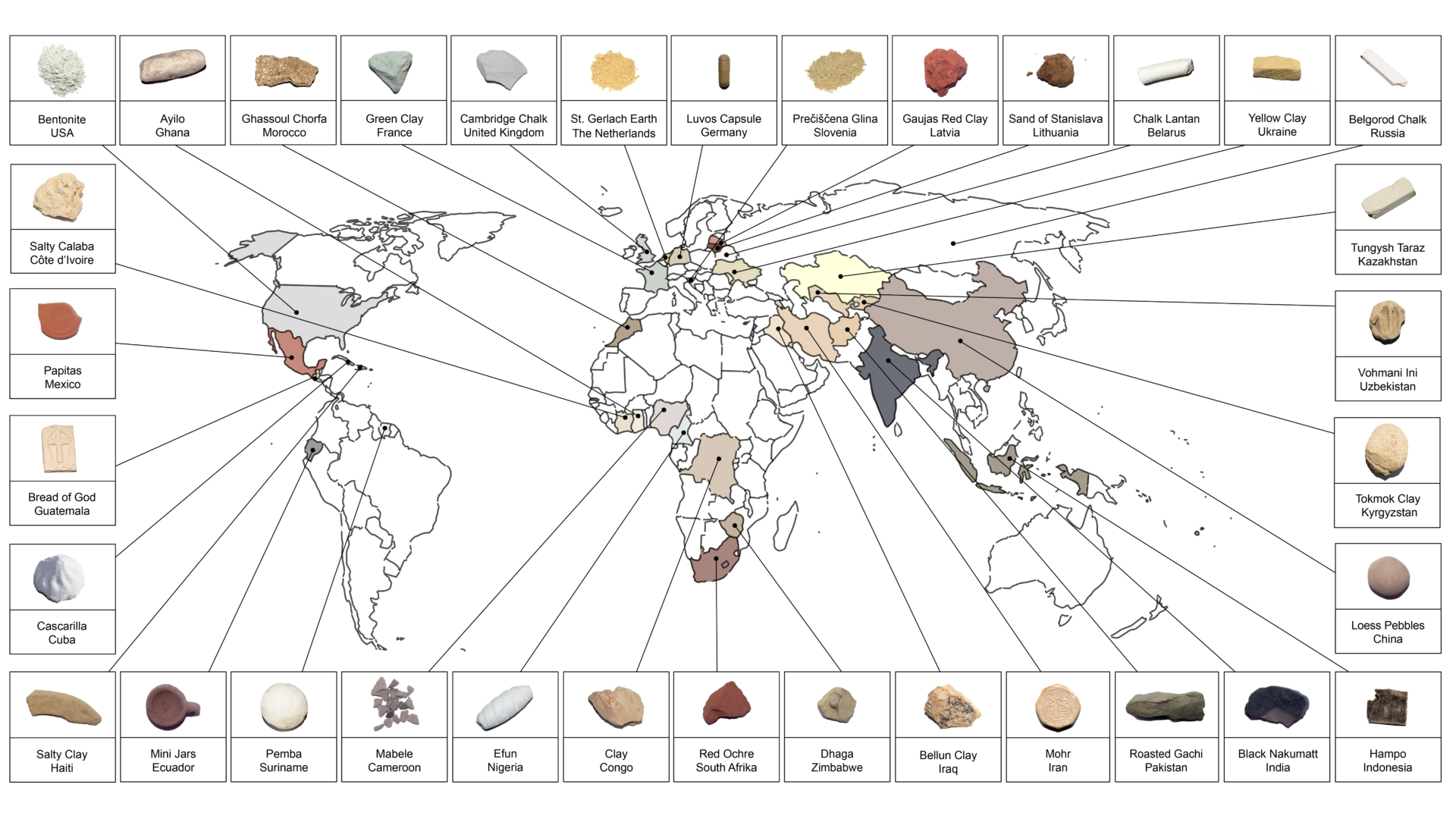
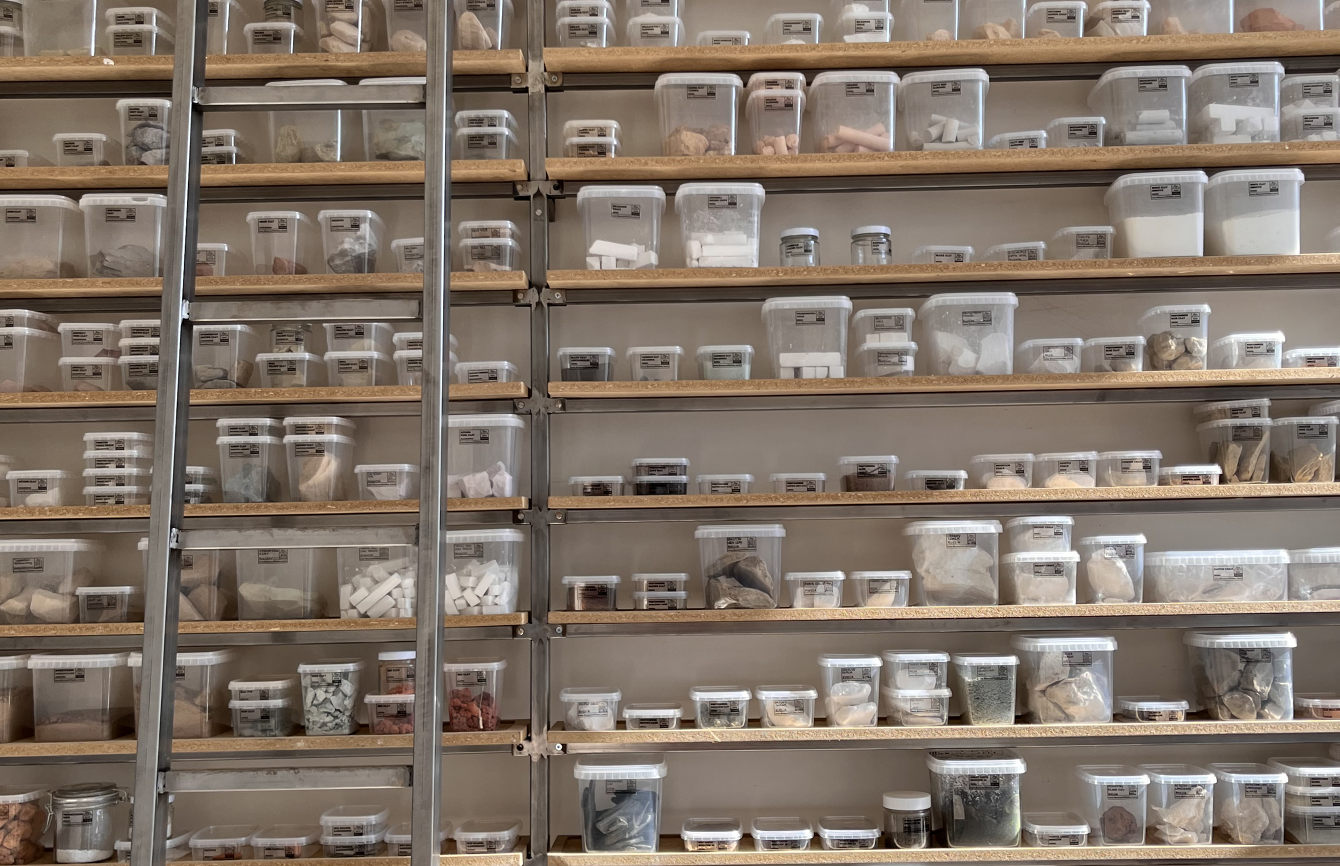
For reference and archival documentation , masharu studio has developed an extensive database of edible soils available on the market. This database, in addition to extensive description of earth samples and their respective background, also collects taste descriptions and experiences shared by visitors. The collection of MEE now consists of more than 600 earth samples. The materials originate from 44 countries: Armenia, Austria, Belarus, Cameroon, China, Congo DR, Côte d’Ivoire, Cuba, Denmark, Ecuador, France, Germany, Ghana, Guatemala, Haiti, Iceland, India, Indonesia, Iran, Iraq, Ireland, Japan, Kazakhstan, Kyrgyzstan, Latvia, Lithuania, Malawi, Mexico, Morocco, the Netherlands, Nigeria, Pakistan, Portugal, Russia, Slovenia, South Africa, Suriname, Switzerland, Thailand, UK, Ukraine, USA, Uzbekistan and Zimbabwe. A vast majority of the samples were gathered during field trips, as well as purchased online and received as presents.
Between 2016 and 2025, The Museum of Edible Earth has travelled to 22 countries, appearing in more than a hundred exhibitions and public events. The nomadic nature of the project, with its respective mobile presentations, field trips and collaboration with local partners, played a vital role in its evolution. Through this time, the collection has been constantly enriched by new materials, narratives and taste impressions.
The website www.museumofedible.earth is both an online database, showcasing a partial selection of the Museum of Edible Earth and as a participatory platform for the audience to share their earth-tasting experience.
Between 2020 and 2025, we gathered more than 600 comments describing tastes, flavours and associations reflecting on more than 140 earth samples. These contributions, along with collected statistics, make the project a participatory and constantly evolving work.
View the Edible Earth interactive map here.
INTERVIEW
JF - When did earth first become something you desired?
Dr. m - I see earth in just about everything. Earth is physically and culturally internal, composing our bodies and social dynamics, just as much as it is external. This realisation first set in very plainly: we rely on earth for food. The urge to eat earth, to eat unconventionally, emerged early on in my childhood in the form of intense cravings. Later on, at university, I would catch myself eyeing the easel board’s chalk and wondering how it would be to eat it– and then I did. It was an eye-opening sensation which encouraged me to break through Western stigmas surrounding earth and instead seek out others similarly drawn to eating the earth. My desire led me to other chalk-eaters, clay-eaters, dry pasta and ice cube eaters… I discovered entire online communities dedicated to the diverse practice of eating earth before I even began uncovering the indigenous cultural roots of geophagy.
The more I delved into my research, the more I became captivated by the various uses and significance of earth consumption in different geographical contexts. Eating earth became a means of feeling the interconnection between our bodies and our landscapes, foodscapes and territories.
But desire has remained at the core of my project across its evolution; at times my own curiosities can appear quite fetish-like. These fetish-like desires, which we often treat as taboos, reveal our man-built rules for edibility. Exploring my own desire allowed me to blur and overcome social confines.
JF - How would you describe the flavour of a place to someone who has never eaten earth?
Dr. m - Creamy, dusty, soft, crunchy, smoky, sour… My project has definitely equipped me with an extensive earth-eating vocabulary. However, taste is socially fabricated. There is no singular flavour when culinary traditions and environmental inheritance are what shape the cultural intricacies of eating. We need to dissect taste as a meshing together of material histories, cultural identities and personal preferences. Different places may hold different flavours, and different people may find different flavours in the same exact place. So while I can’t tell you the exact flavour of a place without knowing who exactly is doing the eating, I can tell you that people from Japan, for instance, have often described the earth’s taste as ‘umami' or soybeans. The earth’s local flavours are often borrowed from their site-specific cuisines. The same can be said for every culture.
In this sense, the flavour profiles delineated are never definitive; their transformative and multiple qualities drive the nomadic ethos of this project.
JF - How far back can the cultural practice of geophagy be traced?
Dr. m - The scientist Sera Young dates geophagy back 2300 years ago in her book “Craving Earth”. It has been a common practice in many cultures where consumption of soil is deeply rooted in tradition and used for its medicinal properties. In some instances it held a ritualistic power or symbolism, as a means of reaching ancestors, while in others it signalled famine or food insecurity.
JF - The Museum of Edible Earth holds over 600 samples documenting place and taste. Where do you find common ground across these associations and customs? Has earth been ingested primarily for nutritional benefit, ritual practice, or pleasure?
Dr. m - When I first started building up a collection of edible soils with the aim of creating a communal space where this practice could be freely explored, I didn’t expect to gather edible earth materials from 44 countries. With such a multi-cultural range of samples, the museum exhibits the diversity in connotations associated with different edible earth materials. A common thread we’ve found across the samples is a medicinal, healing purpose. Stanislava’s Monstvilene’s Earth, a Lithuanian sandy soil sample cultivated by Stanislava, a woman whose 10 year diet of the earth possibly cured her brain tumour. Other samples with healing properties include the Nigerian soft rock Ulo Lagos used as a paste on skin for cosmetic benefits, or St. Gerlach Sacred Earth, a limestone powder from the Dutch province of Limburg that is used as a remedy against disease. The sacredness of the earth can be determined by its direct mineral composition as well as the direct material histories of its cultivation grounds themselves.
Pregnant women also form a common consumer category as geophagy has been historically associated with fertility, and seems to appear in somatic customs surrounding pregnancy as a way of cleansing toxins from the body. This historical myth was echoed in Christianity wherever the mother of Jesus Mary was rumoured to bless the earth. Since the 4th century, there was a movement of people to the Catholic Chapel of the Milk Grotto of Our Lady in Bethlehem, Palestine where legend says a drop of Mary’s milk fell to the ground and transformed the white grotto’s chalk rock into an edible fertility agent. The Surinamese Winti, Pemba creamy clay is another earth recipe often consumed by pregnant women said to aid fertility via its symbolic ties to a life-giving deity.
JF - The taste descriptions range from “wet wool” and “powdery blanket” to suggestions like “good with mustard” or “milkshake ingredient.” What has been the most surprising reflection for you?
Dr. m - It’s surprising to collect reactions like these, which ground geophagy in familiar sensations. Suddenly, eating earth doesn’t seem so strange when it’s regarded as a “milkshake ingredient". This response challenges the Western view that eating non-food is disordered eating named “pica syndrome”. Despite the fact that edible clay is commonly sold as a market snack in many places around the world, Western industrialisation invites a culture of sterilisation that removes the consumer from the earth entirely. I remember how shocked people were to see a white person like myself indulging in edible clays when an artist was showing me around an African store. What I had, for a while, thought was my own fetish was actually the practice of geophagy disguised in taboos.
It’s exciting to see the touring museum inspire these creative and familiarising reactions in visitors trying our samples. It’s a testament to how re-grounding art exploration in community and the Earth defies the isolating contemporary culture and transforms our own individual relationships to the landscape that surrounds us. That’s the true surprise– seeing what our Earth becomes when we dismantle social norms and taboos.
JF - The samples include clay, chalk, and a variety of minerals – what would your preferred soil recipe be composed of?
Dr. m - I enjoy trying all samples, but placing them in conversation with each other makes for an especially interesting exploration of memory and taste. In October and November of 2025 I collaborated with artists and dietians to realise two dinners that used edible earth materials as central ingredients. Our first dinner cooked by Breda Food Coop was soil-inspired, with charcoal bread and clay-covered potatoes. Our second Edible Earth dinner took place at Lola Lieven and focused on the Surinamese Pemba clay, which was infused inside a date then topped off with St. Gerlach’s Sacred Earth, native to the Netherlands. This meal in particular focused on the colonial, environmental, and geopolitical tensions that informs the cross-cultural exchange between the Netherlands and Suriname. The practice of eating could not be neutral at this dinner: the cultural dialogue between the Pemba clay and St. Gerlach’s limestone highlighted the political infrastructures and colonial legacies hidden in our eating rituals.
JF - What does soil remember that we have forgotten?
Dr.m - In such an anthropocentric era, we forget, or ignore, the ecological and material histories that have independently predated our entire existence. Our surrounding environments remember colonial legacies and remember indigenous traditions. In many cases, as demonstrated in geophagy, tracing these ecological and material histories allow us to learn more about our bodies.
Our ability to turn to our environment and surrounding landscapes for answers is faced with a climate crisis that is increasingly polluting our earth. We can no longer eat earth safely. The practice of geophagy is interrupted by concerns of pesticides and pollutants. The issue becomes our own human task of remembering the earth we rely on, which there is only one of.
The Museum of Edible Earth in London at Somerset House until April 26th 2026, and it is ongoing at Kapelica Gallery in Ljubljana, Slovenia until April 30th, as well as in Bengaluru, India at the Science Gallery until the 1st of August 2026.
On top of that, the Museum of Edible Earth / Compost as Superfood will take part in Graceland Festival 2026 for a symposium on Earth, War, and Ecology from August 13-16th.
Image credits:
World Clay Map – Design by Luuk van Veen, Amsterdam, 2021
Archive of the Museum of Edible Earth, installation by Basse Stittgen, Amsterdam, 2023. Photo by Mathias Krogsøe
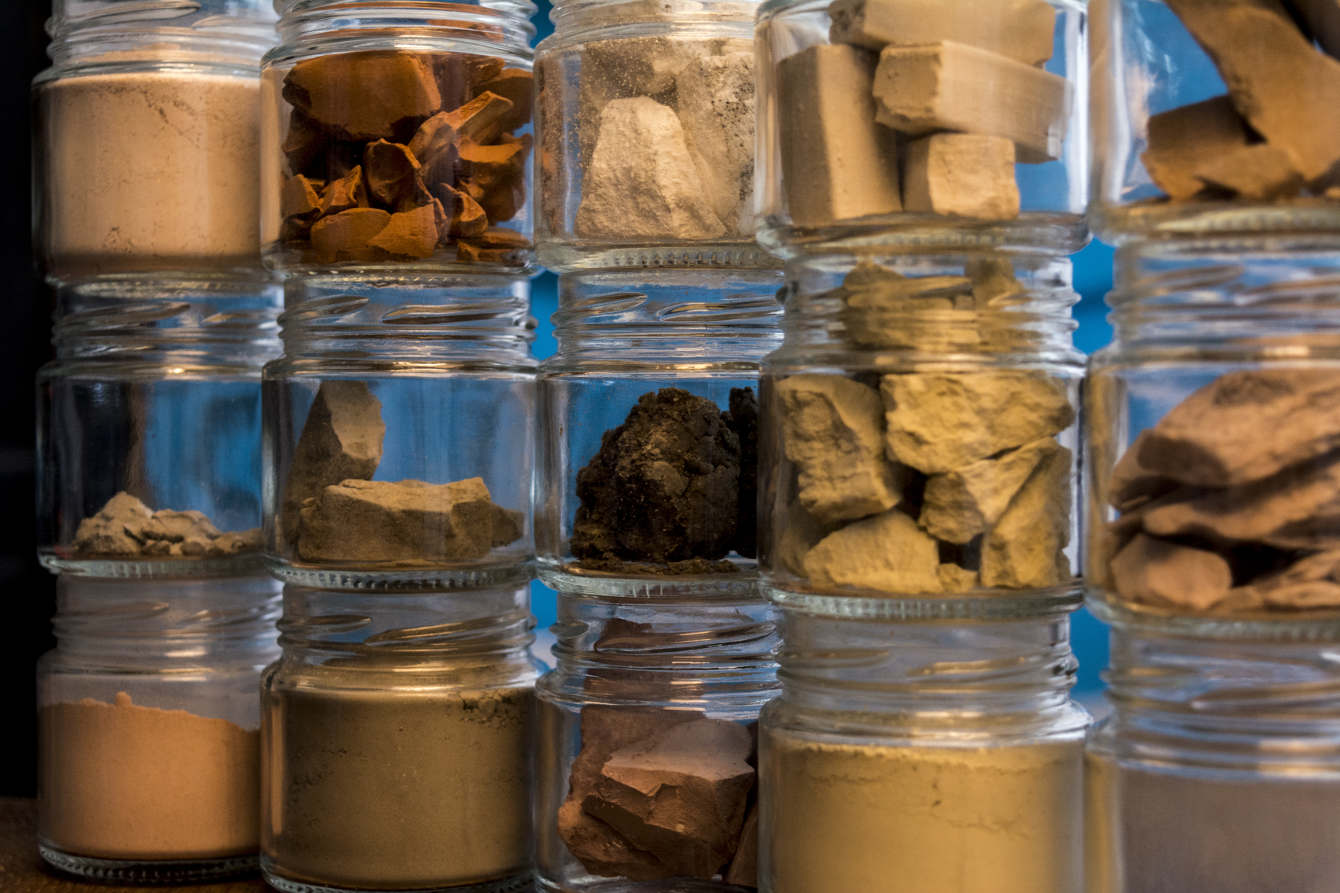
Photo by Jester van Schuylenburch, 2017.
The Museum of Edible Earth (MEE) is a cross-disciplinary project that brings together a global collection of edible soils, inviting the audience to question our relationship with the environment and rethink their understanding of the earth and cultural traditions through creative thinking. The Museum of Edible Earth explores questions such as: How do earth eating traditions differ across cultures? Where does edible earth come from? What are the possible benefits and dangers of eating earth? How do the material properties in earth affect its flavor?
The museum’s mission is to collect an extensive collection of edible soils from as many countries as possible and examine the diversity of their historical contexts and cultural meanings. Through cross-disciplinary partnerships, workshops and collaborations, it aims to reshape our conception of earth consumption, also known as geophagy.
Geophagy is the scientific name for the intentional custom of eating earth, which includes soil and earth-like substances such as clay and chalk. It is an ancient global practice driven by diverse nutritional, cultural and medicinal factors.
For reference and archival documentation , masharu studio has developed an extensive database of edible soils available on the market. This database, in addition to extensive description of earth samples and their respective background, also collects taste descriptions and experiences shared by visitors. The collection of MEE now consists of more than 600 earth samples. The materials originate from 44 countries: Armenia, Austria, Belarus, Cameroon, China, Congo DR, Côte d’Ivoire, Cuba, Denmark, Ecuador, France, Germany, Ghana, Guatemala, Haiti, Iceland, India, Indonesia, Iran, Iraq, Ireland, Japan, Kazakhstan, Kyrgyzstan, Latvia, Lithuania, Malawi, Mexico, Morocco, the Netherlands, Nigeria, Pakistan, Portugal, Russia, Slovenia, South Africa, Suriname, Switzerland, Thailand, UK, Ukraine, USA, Uzbekistan and Zimbabwe. A vast majority of the samples were gathered during field trips, as well as purchased online and received as presents.
Between 2016 and 2025, The Museum of Edible Earth has travelled to 22 countries, appearing in more than a hundred exhibitions and public events. The nomadic nature of the project, with its respective mobile presentations, field trips and collaboration with local partners, played a vital role in its evolution. Through this time, the collection has been constantly enriched by new materials, narratives and taste impressions.
The website www.museumofedible.earth is both an online database, showcasing a partial selection of the Museum of Edible Earth and as a participatory platform for the audience to share their earth-tasting experience.
Between 2020 and 2025, we gathered more than 600 comments describing tastes, flavours and associations reflecting on more than 140 earth samples. These contributions, along with collected statistics, make the project a participatory and constantly evolving work.
View the Edible Earth interactive map here.
INTERVIEW
JF - When did earth first become something you desired?
Dr. m - I see earth in just about everything. Earth is physically and culturally internal, composing our bodies and social dynamics, just as much as it is external. This realisation first set in very plainly: we rely on earth for food. The urge to eat earth, to eat unconventionally, emerged early on in my childhood in the form of intense cravings. Later on, at university, I would catch myself eyeing the easel board’s chalk and wondering how it would be to eat it– and then I did. It was an eye-opening sensation which encouraged me to break through Western stigmas surrounding earth and instead seek out others similarly drawn to eating the earth. My desire led me to other chalk-eaters, clay-eaters, dry pasta and ice cube eaters… I discovered entire online communities dedicated to the diverse practice of eating earth before I even began uncovering the indigenous cultural roots of geophagy.
The more I delved into my research, the more I became captivated by the various uses and significance of earth consumption in different geographical contexts. Eating earth became a means of feeling the interconnection between our bodies and our landscapes, foodscapes and territories.
But desire has remained at the core of my project across its evolution; at times my own curiosities can appear quite fetish-like. These fetish-like desires, which we often treat as taboos, reveal our man-built rules for edibility. Exploring my own desire allowed me to blur and overcome social confines.
JF - How would you describe the flavour of a place to someone who has never eaten earth?
Dr. m - Creamy, dusty, soft, crunchy, smoky, sour… My project has definitely equipped me with an extensive earth-eating vocabulary. However, taste is socially fabricated. There is no singular flavour when culinary traditions and environmental inheritance are what shape the cultural intricacies of eating. We need to dissect taste as a meshing together of material histories, cultural identities and personal preferences. Different places may hold different flavours, and different people may find different flavours in the same exact place. So while I can’t tell you the exact flavour of a place without knowing who exactly is doing the eating, I can tell you that people from Japan, for instance, have often described the earth’s taste as ‘umami' or soybeans. The earth’s local flavours are often borrowed from their site-specific cuisines. The same can be said for every culture.
In this sense, the flavour profiles delineated are never definitive; their transformative and multiple qualities drive the nomadic ethos of this project.
JF - How far back can the cultural practice of geophagy be traced?
Dr. m - The scientist Sera Young dates geophagy back 2300 years ago in her book “Craving Earth”. It has been a common practice in many cultures where consumption of soil is deeply rooted in tradition and used for its medicinal properties. In some instances it held a ritualistic power or symbolism, as a means of reaching ancestors, while in others it signalled famine or food insecurity.
JF - The Museum of Edible Earth holds over 600 samples documenting place and taste. Where do you find common ground across these associations and customs? Has earth been ingested primarily for nutritional benefit, ritual practice, or pleasure?
Dr. m - When I first started building up a collection of edible soils with the aim of creating a communal space where this practice could be freely explored, I didn’t expect to gather edible earth materials from 44 countries. With such a multi-cultural range of samples, the museum exhibits the diversity in connotations associated with different edible earth materials. A common thread we’ve found across the samples is a medicinal, healing purpose. Stanislava’s Monstvilene’s Earth, a Lithuanian sandy soil sample cultivated by Stanislava, a woman whose 10 year diet of the earth possibly cured her brain tumour. Other samples with healing properties include the Nigerian soft rock Ulo Lagos used as a paste on skin for cosmetic benefits, or St. Gerlach Sacred Earth, a limestone powder from the Dutch province of Limburg that is used as a remedy against disease. The sacredness of the earth can be determined by its direct mineral composition as well as the direct material histories of its cultivation grounds themselves.
Pregnant women also form a common consumer category as geophagy has been historically associated with fertility, and seems to appear in somatic customs surrounding pregnancy as a way of cleansing toxins from the body. This historical myth was echoed in Christianity wherever the mother of Jesus Mary was rumoured to bless the earth. Since the 4th century, there was a movement of people to the Catholic Chapel of the Milk Grotto of Our Lady in Bethlehem, Palestine where legend says a drop of Mary’s milk fell to the ground and transformed the white grotto’s chalk rock into an edible fertility agent. The Surinamese Winti, Pemba creamy clay is another earth recipe often consumed by pregnant women said to aid fertility via its symbolic ties to a life-giving deity.
JF - The taste descriptions range from “wet wool” and “powdery blanket” to suggestions like “good with mustard” or “milkshake ingredient.” What has been the most surprising reflection for you?
Dr. m - It’s surprising to collect reactions like these, which ground geophagy in familiar sensations. Suddenly, eating earth doesn’t seem so strange when it’s regarded as a “milkshake ingredient". This response challenges the Western view that eating non-food is disordered eating named “pica syndrome”. Despite the fact that edible clay is commonly sold as a market snack in many places around the world, Western industrialisation invites a culture of sterilisation that removes the consumer from the earth entirely. I remember how shocked people were to see a white person like myself indulging in edible clays when an artist was showing me around an African store. What I had, for a while, thought was my own fetish was actually the practice of geophagy disguised in taboos.
It’s exciting to see the touring museum inspire these creative and familiarising reactions in visitors trying our samples. It’s a testament to how re-grounding art exploration in community and the Earth defies the isolating contemporary culture and transforms our own individual relationships to the landscape that surrounds us. That’s the true surprise– seeing what our Earth becomes when we dismantle social norms and taboos.
JF - The samples include clay, chalk, and a variety of minerals – what would your preferred soil recipe be composed of?
Dr. m - I enjoy trying all samples, but placing them in conversation with each other makes for an especially interesting exploration of memory and taste. In October and November of 2025 I collaborated with artists and dietians to realise two dinners that used edible earth materials as central ingredients. Our first dinner cooked by Breda Food Coop was soil-inspired, with charcoal bread and clay-covered potatoes. Our second Edible Earth dinner took place at Lola Lieven and focused on the Surinamese Pemba clay, which was infused inside a date then topped off with St. Gerlach’s Sacred Earth, native to the Netherlands. This meal in particular focused on the colonial, environmental, and geopolitical tensions that informs the cross-cultural exchange between the Netherlands and Suriname. The practice of eating could not be neutral at this dinner: the cultural dialogue between the Pemba clay and St. Gerlach’s limestone highlighted the political infrastructures and colonial legacies hidden in our eating rituals.
JF - What does soil remember that we have forgotten?
Dr.m - In such an anthropocentric era, we forget, or ignore, the ecological and material histories that have independently predated our entire existence. Our surrounding environments remember colonial legacies and remember indigenous traditions. In many cases, as demonstrated in geophagy, tracing these ecological and material histories allow us to learn more about our bodies.
Our ability to turn to our environment and surrounding landscapes for answers is faced with a climate crisis that is increasingly polluting our earth. We can no longer eat earth safely. The practice of geophagy is interrupted by concerns of pesticides and pollutants. The issue becomes our own human task of remembering the earth we rely on, which there is only one of.
The Museum of Edible Earth in London at Somerset House until April 26th 2026, and it is ongoing at Kapelica Gallery in Ljubljana, Slovenia until April 30th, as well as in Bengaluru, India at the Science Gallery until the 1st of August 2026.
On top of that, the Museum of Edible Earth / Compost as Superfood will take part in Graceland Festival 2026 for a symposium on Earth, War, and Ecology from August 13-16th.
Image credits:
World Clay Map – Design by Luuk van Veen, Amsterdam, 2021
Archive of the Museum of Edible Earth, installation by Basse Stittgen, Amsterdam, 2023. Photo by Mathias Krogsøe
Photo by Jester van Schuylenburch, 2017.
Dr. masharu is an earth eater and an earth lover, a founder of the Museum of Edible Earth. masharu's projects combine scientific research with a personal approach and cultural practices. In 2011 they obtained a PhD in Mathematics and graduated with honours from the Photo Academy Amsterdam. In 2013-2014 they participated in the art-in-residency programme at Rijksakademie van Beeldende Kunst in Amsterdam. In 2018 masharu was an artist fellow at the Netherlands Institute for Advanced Study in the Humanities and Social Sciences (NIAS-KNAW). In 2024 they were an artist-in-residence in Ars Electronica Centre in Linz with the support of the European Media Art Platform. masharu's artistic as well as scientific work has been exhibited, screened and published in more than 30 countries, in such venues as Somerset House in London, silent green in Berlin, Middelheim Museum in Antwerp, World Soil Museum in Wageningen, Ars Electronica Center in Linz, African Artists’ Foundation in Lagos, World Design Event in Eindhoven, Jakarta Contemporary Ceramics Biennale in Jakarta and European Ceramic Workcentre in Oisterwijk. masharu received several awards, such as Award of Distinction at Prix Ars Electronica (Austria) and YouFab Global Creative Awards (Japan). The work of masharu is supported by the Mondriaan Fund.
INTERVIEW WITH DR MASHARU
The Museum of Edible Earth (MEE) is a cross-disciplinary project that brings together a global collection of edible soils, inviting the audience to question our relationship with the environment and rethink their understanding of the earth and cultural traditions through creative thinking. The Museum of Edible Earth explores questions such as: How do earth eating traditions differ across cultures? Where does edible earth come from? What are the possible benefits and dangers of eating earth? How do the material properties in earth affect its flavor?
The museum’s mission is to collect an extensive collection of edible soils from as many countries as possible and examine the diversity of their historical contexts and cultural meanings. Through cross-disciplinary partnerships, workshops and collaborations, it aims to reshape our conception of earth consumption, also known as geophagy.
Geophagy is the scientific name for the intentional custom of eating earth, which includes soil and earth-like substances such as clay and chalk. It is an ancient global practice driven by diverse nutritional, cultural and medicinal factors.
For reference and archival documentation , masharu studio has developed an extensive database of edible soils available on the market. This database, in addition to extensive description of earth samples and their respective background, also collects taste descriptions and experiences shared by visitors. The collection of MEE now consists of more than 600 earth samples. The materials originate from 44 countries: Armenia, Austria, Belarus, Cameroon, China, Congo DR, Côte d’Ivoire, Cuba, Denmark, Ecuador, France, Germany, Ghana, Guatemala, Haiti, Iceland, India, Indonesia, Iran, Iraq, Ireland, Japan, Kazakhstan, Kyrgyzstan, Latvia, Lithuania, Malawi, Mexico, Morocco, the Netherlands, Nigeria, Pakistan, Portugal, Russia, Slovenia, South Africa, Suriname, Switzerland, Thailand, UK, Ukraine, USA, Uzbekistan and Zimbabwe. A vast majority of the samples were gathered during field trips, as well as purchased online and received as presents.
Between 2016 and 2025, The Museum of Edible Earth has travelled to 22 countries, appearing in more than a hundred exhibitions and public events. The nomadic nature of the project, with its respective mobile presentations, field trips and collaboration with local partners, played a vital role in its evolution. Through this time, the collection has been constantly enriched by new materials, narratives and taste impressions.
The website www.museumofedible.earth is both an online database, showcasing a partial selection of the Museum of Edible Earth and as a participatory platform for the audience to share their earth-tasting experience.
Between 2020 and 2025, we gathered more than 600 comments describing tastes, flavours and associations reflecting on more than 140 earth samples. These contributions, along with collected statistics, make the project a participatory and constantly evolving work.
View the Edible Earth interactive map here.
INTERVIEW
JF - When did earth first become something you desired?
Dr. m - I see earth in just about everything. Earth is physically and culturally internal, composing our bodies and social dynamics, just as much as it is external. This realisation first set in very plainly: we rely on earth for food. The urge to eat earth, to eat unconventionally, emerged early on in my childhood in the form of intense cravings. Later on, at university, I would catch myself eyeing the easel board’s chalk and wondering how it would be to eat it– and then I did. It was an eye-opening sensation which encouraged me to break through Western stigmas surrounding earth and instead seek out others similarly drawn to eating the earth. My desire led me to other chalk-eaters, clay-eaters, dry pasta and ice cube eaters… I discovered entire online communities dedicated to the diverse practice of eating earth before I even began uncovering the indigenous cultural roots of geophagy.
The more I delved into my research, the more I became captivated by the various uses and significance of earth consumption in different geographical contexts. Eating earth became a means of feeling the interconnection between our bodies and our landscapes, foodscapes and territories.
But desire has remained at the core of my project across its evolution; at times my own curiosities can appear quite fetish-like. These fetish-like desires, which we often treat as taboos, reveal our man-built rules for edibility. Exploring my own desire allowed me to blur and overcome social confines.
JF - How would you describe the flavour of a place to someone who has never eaten earth?
Dr. m - Creamy, dusty, soft, crunchy, smoky, sour… My project has definitely equipped me with an extensive earth-eating vocabulary. However, taste is socially fabricated. There is no singular flavour when culinary traditions and environmental inheritance are what shape the cultural intricacies of eating. We need to dissect taste as a meshing together of material histories, cultural identities and personal preferences. Different places may hold different flavours, and different people may find different flavours in the same exact place. So while I can’t tell you the exact flavour of a place without knowing who exactly is doing the eating, I can tell you that people from Japan, for instance, have often described the earth’s taste as ‘umami' or soybeans. The earth’s local flavours are often borrowed from their site-specific cuisines. The same can be said for every culture.
In this sense, the flavour profiles delineated are never definitive; their transformative and multiple qualities drive the nomadic ethos of this project.
JF - How far back can the cultural practice of geophagy be traced?
Dr. m - The scientist Sera Young dates geophagy back 2300 years ago in her book “Craving Earth”. It has been a common practice in many cultures where consumption of soil is deeply rooted in tradition and used for its medicinal properties. In some instances it held a ritualistic power or symbolism, as a means of reaching ancestors, while in others it signalled famine or food insecurity.
JF - The Museum of Edible Earth holds over 600 samples documenting place and taste. Where do you find common ground across these associations and customs? Has earth been ingested primarily for nutritional benefit, ritual practice, or pleasure?
Dr. m - When I first started building up a collection of edible soils with the aim of creating a communal space where this practice could be freely explored, I didn’t expect to gather edible earth materials from 44 countries. With such a multi-cultural range of samples, the museum exhibits the diversity in connotations associated with different edible earth materials. A common thread we’ve found across the samples is a medicinal, healing purpose. Stanislava’s Monstvilene’s Earth, a Lithuanian sandy soil sample cultivated by Stanislava, a woman whose 10 year diet of the earth possibly cured her brain tumour. Other samples with healing properties include the Nigerian soft rock Ulo Lagos used as a paste on skin for cosmetic benefits, or St. Gerlach Sacred Earth, a limestone powder from the Dutch province of Limburg that is used as a remedy against disease. The sacredness of the earth can be determined by its direct mineral composition as well as the direct material histories of its cultivation grounds themselves.
Pregnant women also form a common consumer category as geophagy has been historically associated with fertility, and seems to appear in somatic customs surrounding pregnancy as a way of cleansing toxins from the body. This historical myth was echoed in Christianity wherever the mother of Jesus Mary was rumoured to bless the earth. Since the 4th century, there was a movement of people to the Catholic Chapel of the Milk Grotto of Our Lady in Bethlehem, Palestine where legend says a drop of Mary’s milk fell to the ground and transformed the white grotto’s chalk rock into an edible fertility agent. The Surinamese Winti, Pemba creamy clay is another earth recipe often consumed by pregnant women said to aid fertility via its symbolic ties to a life-giving deity.
JF - The taste descriptions range from “wet wool” and “powdery blanket” to suggestions like “good with mustard” or “milkshake ingredient.” What has been the most surprising reflection for you?
Dr. m - It’s surprising to collect reactions like these, which ground geophagy in familiar sensations. Suddenly, eating earth doesn’t seem so strange when it’s regarded as a “milkshake ingredient". This response challenges the Western view that eating non-food is disordered eating named “pica syndrome”. Despite the fact that edible clay is commonly sold as a market snack in many places around the world, Western industrialisation invites a culture of sterilisation that removes the consumer from the earth entirely. I remember how shocked people were to see a white person like myself indulging in edible clays when an artist was showing me around an African store. What I had, for a while, thought was my own fetish was actually the practice of geophagy disguised in taboos.
It’s exciting to see the touring museum inspire these creative and familiarising reactions in visitors trying our samples. It’s a testament to how re-grounding art exploration in community and the Earth defies the isolating contemporary culture and transforms our own individual relationships to the landscape that surrounds us. That’s the true surprise– seeing what our Earth becomes when we dismantle social norms and taboos.
JF - The samples include clay, chalk, and a variety of minerals – what would your preferred soil recipe be composed of?
Dr. m - I enjoy trying all samples, but placing them in conversation with each other makes for an especially interesting exploration of memory and taste. In October and November of 2025 I collaborated with artists and dietians to realise two dinners that used edible earth materials as central ingredients. Our first dinner cooked by Breda Food Coop was soil-inspired, with charcoal bread and clay-covered potatoes. Our second Edible Earth dinner took place at Lola Lieven and focused on the Surinamese Pemba clay, which was infused inside a date then topped off with St. Gerlach’s Sacred Earth, native to the Netherlands. This meal in particular focused on the colonial, environmental, and geopolitical tensions that informs the cross-cultural exchange between the Netherlands and Suriname. The practice of eating could not be neutral at this dinner: the cultural dialogue between the Pemba clay and St. Gerlach’s limestone highlighted the political infrastructures and colonial legacies hidden in our eating rituals.
JF - What does soil remember that we have forgotten?
Dr.m - In such an anthropocentric era, we forget, or ignore, the ecological and material histories that have independently predated our entire existence. Our surrounding environments remember colonial legacies and remember indigenous traditions. In many cases, as demonstrated in geophagy, tracing these ecological and material histories allow us to learn more about our bodies.
Our ability to turn to our environment and surrounding landscapes for answers is faced with a climate crisis that is increasingly polluting our earth. We can no longer eat earth safely. The practice of geophagy is interrupted by concerns of pesticides and pollutants. The issue becomes our own human task of remembering the earth we rely on, which there is only one of.
The Museum of Edible Earth in London at Somerset House until April 26th 2026, and it is ongoing at Kapelica Gallery in Ljubljana, Slovenia until April 30th, as well as in Bengaluru, India at the Science Gallery until the 1st of August 2026.
On top of that, the Museum of Edible Earth / Compost as Superfood will take part in Graceland Festival 2026 for a symposium on Earth, War, and Ecology from August 13-16th.
Image credits:
World Clay Map – Design by Luuk van Veen, Amsterdam, 2021
Archive of the Museum of Edible Earth, installation by Basse Stittgen, Amsterdam, 2023. Photo by Mathias Krogsøe
Photo by Jester van Schuylenburch, 2017.
The Museum of Edible Earth (MEE) is a cross-disciplinary project that brings together a global collection of edible soils, inviting the audience to question our relationship with the environment and rethink their understanding of the earth and cultural traditions through creative thinking. The Museum of Edible Earth explores questions such as: How do earth eating traditions differ across cultures? Where does edible earth come from? What are the possible benefits and dangers of eating earth? How do the material properties in earth affect its flavor?
The museum’s mission is to collect an extensive collection of edible soils from as many countries as possible and examine the diversity of their historical contexts and cultural meanings. Through cross-disciplinary partnerships, workshops and collaborations, it aims to reshape our conception of earth consumption, also known as geophagy.
Geophagy is the scientific name for the intentional custom of eating earth, which includes soil and earth-like substances such as clay and chalk. It is an ancient global practice driven by diverse nutritional, cultural and medicinal factors.
For reference and archival documentation , masharu studio has developed an extensive database of edible soils available on the market. This database, in addition to extensive description of earth samples and their respective background, also collects taste descriptions and experiences shared by visitors. The collection of MEE now consists of more than 600 earth samples. The materials originate from 44 countries: Armenia, Austria, Belarus, Cameroon, China, Congo DR, Côte d’Ivoire, Cuba, Denmark, Ecuador, France, Germany, Ghana, Guatemala, Haiti, Iceland, India, Indonesia, Iran, Iraq, Ireland, Japan, Kazakhstan, Kyrgyzstan, Latvia, Lithuania, Malawi, Mexico, Morocco, the Netherlands, Nigeria, Pakistan, Portugal, Russia, Slovenia, South Africa, Suriname, Switzerland, Thailand, UK, Ukraine, USA, Uzbekistan and Zimbabwe. A vast majority of the samples were gathered during field trips, as well as purchased online and received as presents.
Between 2016 and 2025, The Museum of Edible Earth has travelled to 22 countries, appearing in more than a hundred exhibitions and public events. The nomadic nature of the project, with its respective mobile presentations, field trips and collaboration with local partners, played a vital role in its evolution. Through this time, the collection has been constantly enriched by new materials, narratives and taste impressions.
The website www.museumofedible.earth is both an online database, showcasing a partial selection of the Museum of Edible Earth and as a participatory platform for the audience to share their earth-tasting experience.
Between 2020 and 2025, we gathered more than 600 comments describing tastes, flavours and associations reflecting on more than 140 earth samples. These contributions, along with collected statistics, make the project a participatory and constantly evolving work.
View the Edible Earth interactive map here.
INTERVIEW
JF - When did earth first become something you desired?
Dr. m - I see earth in just about everything. Earth is physically and culturally internal, composing our bodies and social dynamics, just as much as it is external. This realisation first set in very plainly: we rely on earth for food. The urge to eat earth, to eat unconventionally, emerged early on in my childhood in the form of intense cravings. Later on, at university, I would catch myself eyeing the easel board’s chalk and wondering how it would be to eat it– and then I did. It was an eye-opening sensation which encouraged me to break through Western stigmas surrounding earth and instead seek out others similarly drawn to eating the earth. My desire led me to other chalk-eaters, clay-eaters, dry pasta and ice cube eaters… I discovered entire online communities dedicated to the diverse practice of eating earth before I even began uncovering the indigenous cultural roots of geophagy.
The more I delved into my research, the more I became captivated by the various uses and significance of earth consumption in different geographical contexts. Eating earth became a means of feeling the interconnection between our bodies and our landscapes, foodscapes and territories.
But desire has remained at the core of my project across its evolution; at times my own curiosities can appear quite fetish-like. These fetish-like desires, which we often treat as taboos, reveal our man-built rules for edibility. Exploring my own desire allowed me to blur and overcome social confines.
JF - How would you describe the flavour of a place to someone who has never eaten earth?
Dr. m - Creamy, dusty, soft, crunchy, smoky, sour… My project has definitely equipped me with an extensive earth-eating vocabulary. However, taste is socially fabricated. There is no singular flavour when culinary traditions and environmental inheritance are what shape the cultural intricacies of eating. We need to dissect taste as a meshing together of material histories, cultural identities and personal preferences. Different places may hold different flavours, and different people may find different flavours in the same exact place. So while I can’t tell you the exact flavour of a place without knowing who exactly is doing the eating, I can tell you that people from Japan, for instance, have often described the earth’s taste as ‘umami' or soybeans. The earth’s local flavours are often borrowed from their site-specific cuisines. The same can be said for every culture.
In this sense, the flavour profiles delineated are never definitive; their transformative and multiple qualities drive the nomadic ethos of this project.
JF - How far back can the cultural practice of geophagy be traced?
Dr. m - The scientist Sera Young dates geophagy back 2300 years ago in her book “Craving Earth”. It has been a common practice in many cultures where consumption of soil is deeply rooted in tradition and used for its medicinal properties. In some instances it held a ritualistic power or symbolism, as a means of reaching ancestors, while in others it signalled famine or food insecurity.
JF - The Museum of Edible Earth holds over 600 samples documenting place and taste. Where do you find common ground across these associations and customs? Has earth been ingested primarily for nutritional benefit, ritual practice, or pleasure?
Dr. m - When I first started building up a collection of edible soils with the aim of creating a communal space where this practice could be freely explored, I didn’t expect to gather edible earth materials from 44 countries. With such a multi-cultural range of samples, the museum exhibits the diversity in connotations associated with different edible earth materials. A common thread we’ve found across the samples is a medicinal, healing purpose. Stanislava’s Monstvilene’s Earth, a Lithuanian sandy soil sample cultivated by Stanislava, a woman whose 10 year diet of the earth possibly cured her brain tumour. Other samples with healing properties include the Nigerian soft rock Ulo Lagos used as a paste on skin for cosmetic benefits, or St. Gerlach Sacred Earth, a limestone powder from the Dutch province of Limburg that is used as a remedy against disease. The sacredness of the earth can be determined by its direct mineral composition as well as the direct material histories of its cultivation grounds themselves.
Pregnant women also form a common consumer category as geophagy has been historically associated with fertility, and seems to appear in somatic customs surrounding pregnancy as a way of cleansing toxins from the body. This historical myth was echoed in Christianity wherever the mother of Jesus Mary was rumoured to bless the earth. Since the 4th century, there was a movement of people to the Catholic Chapel of the Milk Grotto of Our Lady in Bethlehem, Palestine where legend says a drop of Mary’s milk fell to the ground and transformed the white grotto’s chalk rock into an edible fertility agent. The Surinamese Winti, Pemba creamy clay is another earth recipe often consumed by pregnant women said to aid fertility via its symbolic ties to a life-giving deity.
JF - The taste descriptions range from “wet wool” and “powdery blanket” to suggestions like “good with mustard” or “milkshake ingredient.” What has been the most surprising reflection for you?
Dr. m - It’s surprising to collect reactions like these, which ground geophagy in familiar sensations. Suddenly, eating earth doesn’t seem so strange when it’s regarded as a “milkshake ingredient". This response challenges the Western view that eating non-food is disordered eating named “pica syndrome”. Despite the fact that edible clay is commonly sold as a market snack in many places around the world, Western industrialisation invites a culture of sterilisation that removes the consumer from the earth entirely. I remember how shocked people were to see a white person like myself indulging in edible clays when an artist was showing me around an African store. What I had, for a while, thought was my own fetish was actually the practice of geophagy disguised in taboos.
It’s exciting to see the touring museum inspire these creative and familiarising reactions in visitors trying our samples. It’s a testament to how re-grounding art exploration in community and the Earth defies the isolating contemporary culture and transforms our own individual relationships to the landscape that surrounds us. That’s the true surprise– seeing what our Earth becomes when we dismantle social norms and taboos.
JF - The samples include clay, chalk, and a variety of minerals – what would your preferred soil recipe be composed of?
Dr. m - I enjoy trying all samples, but placing them in conversation with each other makes for an especially interesting exploration of memory and taste. In October and November of 2025 I collaborated with artists and dietians to realise two dinners that used edible earth materials as central ingredients. Our first dinner cooked by Breda Food Coop was soil-inspired, with charcoal bread and clay-covered potatoes. Our second Edible Earth dinner took place at Lola Lieven and focused on the Surinamese Pemba clay, which was infused inside a date then topped off with St. Gerlach’s Sacred Earth, native to the Netherlands. This meal in particular focused on the colonial, environmental, and geopolitical tensions that informs the cross-cultural exchange between the Netherlands and Suriname. The practice of eating could not be neutral at this dinner: the cultural dialogue between the Pemba clay and St. Gerlach’s limestone highlighted the political infrastructures and colonial legacies hidden in our eating rituals.
JF - What does soil remember that we have forgotten?
Dr.m - In such an anthropocentric era, we forget, or ignore, the ecological and material histories that have independently predated our entire existence. Our surrounding environments remember colonial legacies and remember indigenous traditions. In many cases, as demonstrated in geophagy, tracing these ecological and material histories allow us to learn more about our bodies.
Our ability to turn to our environment and surrounding landscapes for answers is faced with a climate crisis that is increasingly polluting our earth. We can no longer eat earth safely. The practice of geophagy is interrupted by concerns of pesticides and pollutants. The issue becomes our own human task of remembering the earth we rely on, which there is only one of.
The Museum of Edible Earth in London at Somerset House until April 26th 2026, and it is ongoing at Kapelica Gallery in Ljubljana, Slovenia until April 30th, as well as in Bengaluru, India at the Science Gallery until the 1st of August 2026.
On top of that, the Museum of Edible Earth / Compost as Superfood will take part in Graceland Festival 2026 for a symposium on Earth, War, and Ecology from August 13-16th.
Image credits:
World Clay Map – Design by Luuk van Veen, Amsterdam, 2021
Archive of the Museum of Edible Earth, installation by Basse Stittgen, Amsterdam, 2023. Photo by Mathias Krogsøe
Photo by Jester van Schuylenburch, 2017.
Dr. masharu is an earth eater and an earth lover, a founder of the Museum of Edible Earth. masharu's projects combine scientific research with a personal approach and cultural practices. In 2011 they obtained a PhD in Mathematics and graduated with honours from the Photo Academy Amsterdam. In 2013-2014 they participated in the art-in-residency programme at Rijksakademie van Beeldende Kunst in Amsterdam. In 2018 masharu was an artist fellow at the Netherlands Institute for Advanced Study in the Humanities and Social Sciences (NIAS-KNAW). In 2024 they were an artist-in-residence in Ars Electronica Centre in Linz with the support of the European Media Art Platform. masharu's artistic as well as scientific work has been exhibited, screened and published in more than 30 countries, in such venues as Somerset House in London, silent green in Berlin, Middelheim Museum in Antwerp, World Soil Museum in Wageningen, Ars Electronica Center in Linz, African Artists’ Foundation in Lagos, World Design Event in Eindhoven, Jakarta Contemporary Ceramics Biennale in Jakarta and European Ceramic Workcentre in Oisterwijk. masharu received several awards, such as Award of Distinction at Prix Ars Electronica (Austria) and YouFab Global Creative Awards (Japan). The work of masharu is supported by the Mondriaan Fund.
INTERVIEW WITH DR MASHARU
The Museum of Edible Earth (MEE) is a cross-disciplinary project that brings together a global collection of edible soils, inviting the audience to question our relationship with the environment and rethink their understanding of the earth and cultural traditions through creative thinking. The Museum of Edible Earth explores questions such as: How do earth eating traditions differ across cultures? Where does edible earth come from? What are the possible benefits and dangers of eating earth? How do the material properties in earth affect its flavor?
The museum’s mission is to collect an extensive collection of edible soils from as many countries as possible and examine the diversity of their historical contexts and cultural meanings. Through cross-disciplinary partnerships, workshops and collaborations, it aims to reshape our conception of earth consumption, also known as geophagy.
Geophagy is the scientific name for the intentional custom of eating earth, which includes soil and earth-like substances such as clay and chalk. It is an ancient global practice driven by diverse nutritional, cultural and medicinal factors.
For reference and archival documentation , masharu studio has developed an extensive database of edible soils available on the market. This database, in addition to extensive description of earth samples and their respective background, also collects taste descriptions and experiences shared by visitors. The collection of MEE now consists of more than 600 earth samples. The materials originate from 44 countries: Armenia, Austria, Belarus, Cameroon, China, Congo DR, Côte d’Ivoire, Cuba, Denmark, Ecuador, France, Germany, Ghana, Guatemala, Haiti, Iceland, India, Indonesia, Iran, Iraq, Ireland, Japan, Kazakhstan, Kyrgyzstan, Latvia, Lithuania, Malawi, Mexico, Morocco, the Netherlands, Nigeria, Pakistan, Portugal, Russia, Slovenia, South Africa, Suriname, Switzerland, Thailand, UK, Ukraine, USA, Uzbekistan and Zimbabwe. A vast majority of the samples were gathered during field trips, as well as purchased online and received as presents.
Between 2016 and 2025, The Museum of Edible Earth has travelled to 22 countries, appearing in more than a hundred exhibitions and public events. The nomadic nature of the project, with its respective mobile presentations, field trips and collaboration with local partners, played a vital role in its evolution. Through this time, the collection has been constantly enriched by new materials, narratives and taste impressions.
The website www.museumofedible.earth is both an online database, showcasing a partial selection of the Museum of Edible Earth and as a participatory platform for the audience to share their earth-tasting experience.
Between 2020 and 2025, we gathered more than 600 comments describing tastes, flavours and associations reflecting on more than 140 earth samples. These contributions, along with collected statistics, make the project a participatory and constantly evolving work.
View the Edible Earth interactive map here.
INTERVIEW
JF - When did earth first become something you desired?
Dr. m - I see earth in just about everything. Earth is physically and culturally internal, composing our bodies and social dynamics, just as much as it is external. This realisation first set in very plainly: we rely on earth for food. The urge to eat earth, to eat unconventionally, emerged early on in my childhood in the form of intense cravings. Later on, at university, I would catch myself eyeing the easel board’s chalk and wondering how it would be to eat it– and then I did. It was an eye-opening sensation which encouraged me to break through Western stigmas surrounding earth and instead seek out others similarly drawn to eating the earth. My desire led me to other chalk-eaters, clay-eaters, dry pasta and ice cube eaters… I discovered entire online communities dedicated to the diverse practice of eating earth before I even began uncovering the indigenous cultural roots of geophagy.
The more I delved into my research, the more I became captivated by the various uses and significance of earth consumption in different geographical contexts. Eating earth became a means of feeling the interconnection between our bodies and our landscapes, foodscapes and territories.
But desire has remained at the core of my project across its evolution; at times my own curiosities can appear quite fetish-like. These fetish-like desires, which we often treat as taboos, reveal our man-built rules for edibility. Exploring my own desire allowed me to blur and overcome social confines.
JF - How would you describe the flavour of a place to someone who has never eaten earth?
Dr. m - Creamy, dusty, soft, crunchy, smoky, sour… My project has definitely equipped me with an extensive earth-eating vocabulary. However, taste is socially fabricated. There is no singular flavour when culinary traditions and environmental inheritance are what shape the cultural intricacies of eating. We need to dissect taste as a meshing together of material histories, cultural identities and personal preferences. Different places may hold different flavours, and different people may find different flavours in the same exact place. So while I can’t tell you the exact flavour of a place without knowing who exactly is doing the eating, I can tell you that people from Japan, for instance, have often described the earth’s taste as ‘umami' or soybeans. The earth’s local flavours are often borrowed from their site-specific cuisines. The same can be said for every culture.
In this sense, the flavour profiles delineated are never definitive; their transformative and multiple qualities drive the nomadic ethos of this project.
JF - How far back can the cultural practice of geophagy be traced?
Dr. m - The scientist Sera Young dates geophagy back 2300 years ago in her book “Craving Earth”. It has been a common practice in many cultures where consumption of soil is deeply rooted in tradition and used for its medicinal properties. In some instances it held a ritualistic power or symbolism, as a means of reaching ancestors, while in others it signalled famine or food insecurity.
JF - The Museum of Edible Earth holds over 600 samples documenting place and taste. Where do you find common ground across these associations and customs? Has earth been ingested primarily for nutritional benefit, ritual practice, or pleasure?
Dr. m - When I first started building up a collection of edible soils with the aim of creating a communal space where this practice could be freely explored, I didn’t expect to gather edible earth materials from 44 countries. With such a multi-cultural range of samples, the museum exhibits the diversity in connotations associated with different edible earth materials. A common thread we’ve found across the samples is a medicinal, healing purpose. Stanislava’s Monstvilene’s Earth, a Lithuanian sandy soil sample cultivated by Stanislava, a woman whose 10 year diet of the earth possibly cured her brain tumour. Other samples with healing properties include the Nigerian soft rock Ulo Lagos used as a paste on skin for cosmetic benefits, or St. Gerlach Sacred Earth, a limestone powder from the Dutch province of Limburg that is used as a remedy against disease. The sacredness of the earth can be determined by its direct mineral composition as well as the direct material histories of its cultivation grounds themselves.
Pregnant women also form a common consumer category as geophagy has been historically associated with fertility, and seems to appear in somatic customs surrounding pregnancy as a way of cleansing toxins from the body. This historical myth was echoed in Christianity wherever the mother of Jesus Mary was rumoured to bless the earth. Since the 4th century, there was a movement of people to the Catholic Chapel of the Milk Grotto of Our Lady in Bethlehem, Palestine where legend says a drop of Mary’s milk fell to the ground and transformed the white grotto’s chalk rock into an edible fertility agent. The Surinamese Winti, Pemba creamy clay is another earth recipe often consumed by pregnant women said to aid fertility via its symbolic ties to a life-giving deity.
JF - The taste descriptions range from “wet wool” and “powdery blanket” to suggestions like “good with mustard” or “milkshake ingredient.” What has been the most surprising reflection for you?
Dr. m - It’s surprising to collect reactions like these, which ground geophagy in familiar sensations. Suddenly, eating earth doesn’t seem so strange when it’s regarded as a “milkshake ingredient". This response challenges the Western view that eating non-food is disordered eating named “pica syndrome”. Despite the fact that edible clay is commonly sold as a market snack in many places around the world, Western industrialisation invites a culture of sterilisation that removes the consumer from the earth entirely. I remember how shocked people were to see a white person like myself indulging in edible clays when an artist was showing me around an African store. What I had, for a while, thought was my own fetish was actually the practice of geophagy disguised in taboos.
It’s exciting to see the touring museum inspire these creative and familiarising reactions in visitors trying our samples. It’s a testament to how re-grounding art exploration in community and the Earth defies the isolating contemporary culture and transforms our own individual relationships to the landscape that surrounds us. That’s the true surprise– seeing what our Earth becomes when we dismantle social norms and taboos.
JF - The samples include clay, chalk, and a variety of minerals – what would your preferred soil recipe be composed of?
Dr. m - I enjoy trying all samples, but placing them in conversation with each other makes for an especially interesting exploration of memory and taste. In October and November of 2025 I collaborated with artists and dietians to realise two dinners that used edible earth materials as central ingredients. Our first dinner cooked by Breda Food Coop was soil-inspired, with charcoal bread and clay-covered potatoes. Our second Edible Earth dinner took place at Lola Lieven and focused on the Surinamese Pemba clay, which was infused inside a date then topped off with St. Gerlach’s Sacred Earth, native to the Netherlands. This meal in particular focused on the colonial, environmental, and geopolitical tensions that informs the cross-cultural exchange between the Netherlands and Suriname. The practice of eating could not be neutral at this dinner: the cultural dialogue between the Pemba clay and St. Gerlach’s limestone highlighted the political infrastructures and colonial legacies hidden in our eating rituals.
JF - What does soil remember that we have forgotten?
Dr.m - In such an anthropocentric era, we forget, or ignore, the ecological and material histories that have independently predated our entire existence. Our surrounding environments remember colonial legacies and remember indigenous traditions. In many cases, as demonstrated in geophagy, tracing these ecological and material histories allow us to learn more about our bodies.
Our ability to turn to our environment and surrounding landscapes for answers is faced with a climate crisis that is increasingly polluting our earth. We can no longer eat earth safely. The practice of geophagy is interrupted by concerns of pesticides and pollutants. The issue becomes our own human task of remembering the earth we rely on, which there is only one of.
The Museum of Edible Earth in London at Somerset House until April 26th 2026, and it is ongoing at Kapelica Gallery in Ljubljana, Slovenia until April 30th, as well as in Bengaluru, India at the Science Gallery until the 1st of August 2026.
On top of that, the Museum of Edible Earth / Compost as Superfood will take part in Graceland Festival 2026 for a symposium on Earth, War, and Ecology from August 13-16th.
Image credits:
World Clay Map – Design by Luuk van Veen, Amsterdam, 2021
Archive of the Museum of Edible Earth, installation by Basse Stittgen, Amsterdam, 2023. Photo by Mathias Krogsøe
Photo by Jester van Schuylenburch, 2017.
The Museum of Edible Earth (MEE) is a cross-disciplinary project that brings together a global collection of edible soils, inviting the audience to question our relationship with the environment and rethink their understanding of the earth and cultural traditions through creative thinking. The Museum of Edible Earth explores questions such as: How do earth eating traditions differ across cultures? Where does edible earth come from? What are the possible benefits and dangers of eating earth? How do the material properties in earth affect its flavor?
The museum’s mission is to collect an extensive collection of edible soils from as many countries as possible and examine the diversity of their historical contexts and cultural meanings. Through cross-disciplinary partnerships, workshops and collaborations, it aims to reshape our conception of earth consumption, also known as geophagy.
Geophagy is the scientific name for the intentional custom of eating earth, which includes soil and earth-like substances such as clay and chalk. It is an ancient global practice driven by diverse nutritional, cultural and medicinal factors.
For reference and archival documentation , masharu studio has developed an extensive database of edible soils available on the market. This database, in addition to extensive description of earth samples and their respective background, also collects taste descriptions and experiences shared by visitors. The collection of MEE now consists of more than 600 earth samples. The materials originate from 44 countries: Armenia, Austria, Belarus, Cameroon, China, Congo DR, Côte d’Ivoire, Cuba, Denmark, Ecuador, France, Germany, Ghana, Guatemala, Haiti, Iceland, India, Indonesia, Iran, Iraq, Ireland, Japan, Kazakhstan, Kyrgyzstan, Latvia, Lithuania, Malawi, Mexico, Morocco, the Netherlands, Nigeria, Pakistan, Portugal, Russia, Slovenia, South Africa, Suriname, Switzerland, Thailand, UK, Ukraine, USA, Uzbekistan and Zimbabwe. A vast majority of the samples were gathered during field trips, as well as purchased online and received as presents.
Between 2016 and 2025, The Museum of Edible Earth has travelled to 22 countries, appearing in more than a hundred exhibitions and public events. The nomadic nature of the project, with its respective mobile presentations, field trips and collaboration with local partners, played a vital role in its evolution. Through this time, the collection has been constantly enriched by new materials, narratives and taste impressions.
The website www.museumofedible.earth is both an online database, showcasing a partial selection of the Museum of Edible Earth and as a participatory platform for the audience to share their earth-tasting experience.
Between 2020 and 2025, we gathered more than 600 comments describing tastes, flavours and associations reflecting on more than 140 earth samples. These contributions, along with collected statistics, make the project a participatory and constantly evolving work.
View the Edible Earth interactive map here.
INTERVIEW
JF - When did earth first become something you desired?
Dr. m - I see earth in just about everything. Earth is physically and culturally internal, composing our bodies and social dynamics, just as much as it is external. This realisation first set in very plainly: we rely on earth for food. The urge to eat earth, to eat unconventionally, emerged early on in my childhood in the form of intense cravings. Later on, at university, I would catch myself eyeing the easel board’s chalk and wondering how it would be to eat it– and then I did. It was an eye-opening sensation which encouraged me to break through Western stigmas surrounding earth and instead seek out others similarly drawn to eating the earth. My desire led me to other chalk-eaters, clay-eaters, dry pasta and ice cube eaters… I discovered entire online communities dedicated to the diverse practice of eating earth before I even began uncovering the indigenous cultural roots of geophagy.
The more I delved into my research, the more I became captivated by the various uses and significance of earth consumption in different geographical contexts. Eating earth became a means of feeling the interconnection between our bodies and our landscapes, foodscapes and territories.
But desire has remained at the core of my project across its evolution; at times my own curiosities can appear quite fetish-like. These fetish-like desires, which we often treat as taboos, reveal our man-built rules for edibility. Exploring my own desire allowed me to blur and overcome social confines.
JF - How would you describe the flavour of a place to someone who has never eaten earth?
Dr. m - Creamy, dusty, soft, crunchy, smoky, sour… My project has definitely equipped me with an extensive earth-eating vocabulary. However, taste is socially fabricated. There is no singular flavour when culinary traditions and environmental inheritance are what shape the cultural intricacies of eating. We need to dissect taste as a meshing together of material histories, cultural identities and personal preferences. Different places may hold different flavours, and different people may find different flavours in the same exact place. So while I can’t tell you the exact flavour of a place without knowing who exactly is doing the eating, I can tell you that people from Japan, for instance, have often described the earth’s taste as ‘umami' or soybeans. The earth’s local flavours are often borrowed from their site-specific cuisines. The same can be said for every culture.
In this sense, the flavour profiles delineated are never definitive; their transformative and multiple qualities drive the nomadic ethos of this project.
JF - How far back can the cultural practice of geophagy be traced?
Dr. m - The scientist Sera Young dates geophagy back 2300 years ago in her book “Craving Earth”. It has been a common practice in many cultures where consumption of soil is deeply rooted in tradition and used for its medicinal properties. In some instances it held a ritualistic power or symbolism, as a means of reaching ancestors, while in others it signalled famine or food insecurity.
JF - The Museum of Edible Earth holds over 600 samples documenting place and taste. Where do you find common ground across these associations and customs? Has earth been ingested primarily for nutritional benefit, ritual practice, or pleasure?
Dr. m - When I first started building up a collection of edible soils with the aim of creating a communal space where this practice could be freely explored, I didn’t expect to gather edible earth materials from 44 countries. With such a multi-cultural range of samples, the museum exhibits the diversity in connotations associated with different edible earth materials. A common thread we’ve found across the samples is a medicinal, healing purpose. Stanislava’s Monstvilene’s Earth, a Lithuanian sandy soil sample cultivated by Stanislava, a woman whose 10 year diet of the earth possibly cured her brain tumour. Other samples with healing properties include the Nigerian soft rock Ulo Lagos used as a paste on skin for cosmetic benefits, or St. Gerlach Sacred Earth, a limestone powder from the Dutch province of Limburg that is used as a remedy against disease. The sacredness of the earth can be determined by its direct mineral composition as well as the direct material histories of its cultivation grounds themselves.
Pregnant women also form a common consumer category as geophagy has been historically associated with fertility, and seems to appear in somatic customs surrounding pregnancy as a way of cleansing toxins from the body. This historical myth was echoed in Christianity wherever the mother of Jesus Mary was rumoured to bless the earth. Since the 4th century, there was a movement of people to the Catholic Chapel of the Milk Grotto of Our Lady in Bethlehem, Palestine where legend says a drop of Mary’s milk fell to the ground and transformed the white grotto’s chalk rock into an edible fertility agent. The Surinamese Winti, Pemba creamy clay is another earth recipe often consumed by pregnant women said to aid fertility via its symbolic ties to a life-giving deity.
JF - The taste descriptions range from “wet wool” and “powdery blanket” to suggestions like “good with mustard” or “milkshake ingredient.” What has been the most surprising reflection for you?
Dr. m - It’s surprising to collect reactions like these, which ground geophagy in familiar sensations. Suddenly, eating earth doesn’t seem so strange when it’s regarded as a “milkshake ingredient". This response challenges the Western view that eating non-food is disordered eating named “pica syndrome”. Despite the fact that edible clay is commonly sold as a market snack in many places around the world, Western industrialisation invites a culture of sterilisation that removes the consumer from the earth entirely. I remember how shocked people were to see a white person like myself indulging in edible clays when an artist was showing me around an African store. What I had, for a while, thought was my own fetish was actually the practice of geophagy disguised in taboos.
It’s exciting to see the touring museum inspire these creative and familiarising reactions in visitors trying our samples. It’s a testament to how re-grounding art exploration in community and the Earth defies the isolating contemporary culture and transforms our own individual relationships to the landscape that surrounds us. That’s the true surprise– seeing what our Earth becomes when we dismantle social norms and taboos.
JF - The samples include clay, chalk, and a variety of minerals – what would your preferred soil recipe be composed of?
Dr. m - I enjoy trying all samples, but placing them in conversation with each other makes for an especially interesting exploration of memory and taste. In October and November of 2025 I collaborated with artists and dietians to realise two dinners that used edible earth materials as central ingredients. Our first dinner cooked by Breda Food Coop was soil-inspired, with charcoal bread and clay-covered potatoes. Our second Edible Earth dinner took place at Lola Lieven and focused on the Surinamese Pemba clay, which was infused inside a date then topped off with St. Gerlach’s Sacred Earth, native to the Netherlands. This meal in particular focused on the colonial, environmental, and geopolitical tensions that informs the cross-cultural exchange between the Netherlands and Suriname. The practice of eating could not be neutral at this dinner: the cultural dialogue between the Pemba clay and St. Gerlach’s limestone highlighted the political infrastructures and colonial legacies hidden in our eating rituals.
JF - What does soil remember that we have forgotten?
Dr.m - In such an anthropocentric era, we forget, or ignore, the ecological and material histories that have independently predated our entire existence. Our surrounding environments remember colonial legacies and remember indigenous traditions. In many cases, as demonstrated in geophagy, tracing these ecological and material histories allow us to learn more about our bodies.
Our ability to turn to our environment and surrounding landscapes for answers is faced with a climate crisis that is increasingly polluting our earth. We can no longer eat earth safely. The practice of geophagy is interrupted by concerns of pesticides and pollutants. The issue becomes our own human task of remembering the earth we rely on, which there is only one of.
The Museum of Edible Earth in London at Somerset House until April 26th 2026, and it is ongoing at Kapelica Gallery in Ljubljana, Slovenia until April 30th, as well as in Bengaluru, India at the Science Gallery until the 1st of August 2026.
On top of that, the Museum of Edible Earth / Compost as Superfood will take part in Graceland Festival 2026 for a symposium on Earth, War, and Ecology from August 13-16th.
Image credits:
World Clay Map – Design by Luuk van Veen, Amsterdam, 2021
Archive of the Museum of Edible Earth, installation by Basse Stittgen, Amsterdam, 2023. Photo by Mathias Krogsøe
Photo by Jester van Schuylenburch, 2017.
Dr. masharu is an earth eater and an earth lover, a founder of the Museum of Edible Earth. masharu's projects combine scientific research with a personal approach and cultural practices. In 2011 they obtained a PhD in Mathematics and graduated with honours from the Photo Academy Amsterdam. In 2013-2014 they participated in the art-in-residency programme at Rijksakademie van Beeldende Kunst in Amsterdam. In 2018 masharu was an artist fellow at the Netherlands Institute for Advanced Study in the Humanities and Social Sciences (NIAS-KNAW). In 2024 they were an artist-in-residence in Ars Electronica Centre in Linz with the support of the European Media Art Platform. masharu's artistic as well as scientific work has been exhibited, screened and published in more than 30 countries, in such venues as Somerset House in London, silent green in Berlin, Middelheim Museum in Antwerp, World Soil Museum in Wageningen, Ars Electronica Center in Linz, African Artists’ Foundation in Lagos, World Design Event in Eindhoven, Jakarta Contemporary Ceramics Biennale in Jakarta and European Ceramic Workcentre in Oisterwijk. masharu received several awards, such as Award of Distinction at Prix Ars Electronica (Austria) and YouFab Global Creative Awards (Japan). The work of masharu is supported by the Mondriaan Fund.
INTERVIEW WITH DR MASHARU
The Museum of Edible Earth (MEE) is a cross-disciplinary project that brings together a global collection of edible soils, inviting the audience to question our relationship with the environment and rethink their understanding of the earth and cultural traditions through creative thinking. The Museum of Edible Earth explores questions such as: How do earth eating traditions differ across cultures? Where does edible earth come from? What are the possible benefits and dangers of eating earth? How do the material properties in earth affect its flavor?
The museum’s mission is to collect an extensive collection of edible soils from as many countries as possible and examine the diversity of their historical contexts and cultural meanings. Through cross-disciplinary partnerships, workshops and collaborations, it aims to reshape our conception of earth consumption, also known as geophagy.
Geophagy is the scientific name for the intentional custom of eating earth, which includes soil and earth-like substances such as clay and chalk. It is an ancient global practice driven by diverse nutritional, cultural and medicinal factors.
For reference and archival documentation , masharu studio has developed an extensive database of edible soils available on the market. This database, in addition to extensive description of earth samples and their respective background, also collects taste descriptions and experiences shared by visitors. The collection of MEE now consists of more than 600 earth samples. The materials originate from 44 countries: Armenia, Austria, Belarus, Cameroon, China, Congo DR, Côte d’Ivoire, Cuba, Denmark, Ecuador, France, Germany, Ghana, Guatemala, Haiti, Iceland, India, Indonesia, Iran, Iraq, Ireland, Japan, Kazakhstan, Kyrgyzstan, Latvia, Lithuania, Malawi, Mexico, Morocco, the Netherlands, Nigeria, Pakistan, Portugal, Russia, Slovenia, South Africa, Suriname, Switzerland, Thailand, UK, Ukraine, USA, Uzbekistan and Zimbabwe. A vast majority of the samples were gathered during field trips, as well as purchased online and received as presents.
Between 2016 and 2025, The Museum of Edible Earth has travelled to 22 countries, appearing in more than a hundred exhibitions and public events. The nomadic nature of the project, with its respective mobile presentations, field trips and collaboration with local partners, played a vital role in its evolution. Through this time, the collection has been constantly enriched by new materials, narratives and taste impressions.
The website www.museumofedible.earth is both an online database, showcasing a partial selection of the Museum of Edible Earth and as a participatory platform for the audience to share their earth-tasting experience.
Between 2020 and 2025, we gathered more than 600 comments describing tastes, flavours and associations reflecting on more than 140 earth samples. These contributions, along with collected statistics, make the project a participatory and constantly evolving work.
View the Edible Earth interactive map here.
INTERVIEW
JF - When did earth first become something you desired?
Dr. m - I see earth in just about everything. Earth is physically and culturally internal, composing our bodies and social dynamics, just as much as it is external. This realisation first set in very plainly: we rely on earth for food. The urge to eat earth, to eat unconventionally, emerged early on in my childhood in the form of intense cravings. Later on, at university, I would catch myself eyeing the easel board’s chalk and wondering how it would be to eat it– and then I did. It was an eye-opening sensation which encouraged me to break through Western stigmas surrounding earth and instead seek out others similarly drawn to eating the earth. My desire led me to other chalk-eaters, clay-eaters, dry pasta and ice cube eaters… I discovered entire online communities dedicated to the diverse practice of eating earth before I even began uncovering the indigenous cultural roots of geophagy.
The more I delved into my research, the more I became captivated by the various uses and significance of earth consumption in different geographical contexts. Eating earth became a means of feeling the interconnection between our bodies and our landscapes, foodscapes and territories.
But desire has remained at the core of my project across its evolution; at times my own curiosities can appear quite fetish-like. These fetish-like desires, which we often treat as taboos, reveal our man-built rules for edibility. Exploring my own desire allowed me to blur and overcome social confines.
JF - How would you describe the flavour of a place to someone who has never eaten earth?
Dr. m - Creamy, dusty, soft, crunchy, smoky, sour… My project has definitely equipped me with an extensive earth-eating vocabulary. However, taste is socially fabricated. There is no singular flavour when culinary traditions and environmental inheritance are what shape the cultural intricacies of eating. We need to dissect taste as a meshing together of material histories, cultural identities and personal preferences. Different places may hold different flavours, and different people may find different flavours in the same exact place. So while I can’t tell you the exact flavour of a place without knowing who exactly is doing the eating, I can tell you that people from Japan, for instance, have often described the earth’s taste as ‘umami' or soybeans. The earth’s local flavours are often borrowed from their site-specific cuisines. The same can be said for every culture.
In this sense, the flavour profiles delineated are never definitive; their transformative and multiple qualities drive the nomadic ethos of this project.
JF - How far back can the cultural practice of geophagy be traced?
Dr. m - The scientist Sera Young dates geophagy back 2300 years ago in her book “Craving Earth”. It has been a common practice in many cultures where consumption of soil is deeply rooted in tradition and used for its medicinal properties. In some instances it held a ritualistic power or symbolism, as a means of reaching ancestors, while in others it signalled famine or food insecurity.
JF - The Museum of Edible Earth holds over 600 samples documenting place and taste. Where do you find common ground across these associations and customs? Has earth been ingested primarily for nutritional benefit, ritual practice, or pleasure?
Dr. m - When I first started building up a collection of edible soils with the aim of creating a communal space where this practice could be freely explored, I didn’t expect to gather edible earth materials from 44 countries. With such a multi-cultural range of samples, the museum exhibits the diversity in connotations associated with different edible earth materials. A common thread we’ve found across the samples is a medicinal, healing purpose. Stanislava’s Monstvilene’s Earth, a Lithuanian sandy soil sample cultivated by Stanislava, a woman whose 10 year diet of the earth possibly cured her brain tumour. Other samples with healing properties include the Nigerian soft rock Ulo Lagos used as a paste on skin for cosmetic benefits, or St. Gerlach Sacred Earth, a limestone powder from the Dutch province of Limburg that is used as a remedy against disease. The sacredness of the earth can be determined by its direct mineral composition as well as the direct material histories of its cultivation grounds themselves.
Pregnant women also form a common consumer category as geophagy has been historically associated with fertility, and seems to appear in somatic customs surrounding pregnancy as a way of cleansing toxins from the body. This historical myth was echoed in Christianity wherever the mother of Jesus Mary was rumoured to bless the earth. Since the 4th century, there was a movement of people to the Catholic Chapel of the Milk Grotto of Our Lady in Bethlehem, Palestine where legend says a drop of Mary’s milk fell to the ground and transformed the white grotto’s chalk rock into an edible fertility agent. The Surinamese Winti, Pemba creamy clay is another earth recipe often consumed by pregnant women said to aid fertility via its symbolic ties to a life-giving deity.
JF - The taste descriptions range from “wet wool” and “powdery blanket” to suggestions like “good with mustard” or “milkshake ingredient.” What has been the most surprising reflection for you?
Dr. m - It’s surprising to collect reactions like these, which ground geophagy in familiar sensations. Suddenly, eating earth doesn’t seem so strange when it’s regarded as a “milkshake ingredient". This response challenges the Western view that eating non-food is disordered eating named “pica syndrome”. Despite the fact that edible clay is commonly sold as a market snack in many places around the world, Western industrialisation invites a culture of sterilisation that removes the consumer from the earth entirely. I remember how shocked people were to see a white person like myself indulging in edible clays when an artist was showing me around an African store. What I had, for a while, thought was my own fetish was actually the practice of geophagy disguised in taboos.
It’s exciting to see the touring museum inspire these creative and familiarising reactions in visitors trying our samples. It’s a testament to how re-grounding art exploration in community and the Earth defies the isolating contemporary culture and transforms our own individual relationships to the landscape that surrounds us. That’s the true surprise– seeing what our Earth becomes when we dismantle social norms and taboos.
JF - The samples include clay, chalk, and a variety of minerals – what would your preferred soil recipe be composed of?
Dr. m - I enjoy trying all samples, but placing them in conversation with each other makes for an especially interesting exploration of memory and taste. In October and November of 2025 I collaborated with artists and dietians to realise two dinners that used edible earth materials as central ingredients. Our first dinner cooked by Breda Food Coop was soil-inspired, with charcoal bread and clay-covered potatoes. Our second Edible Earth dinner took place at Lola Lieven and focused on the Surinamese Pemba clay, which was infused inside a date then topped off with St. Gerlach’s Sacred Earth, native to the Netherlands. This meal in particular focused on the colonial, environmental, and geopolitical tensions that informs the cross-cultural exchange between the Netherlands and Suriname. The practice of eating could not be neutral at this dinner: the cultural dialogue between the Pemba clay and St. Gerlach’s limestone highlighted the political infrastructures and colonial legacies hidden in our eating rituals.
JF - What does soil remember that we have forgotten?
Dr.m - In such an anthropocentric era, we forget, or ignore, the ecological and material histories that have independently predated our entire existence. Our surrounding environments remember colonial legacies and remember indigenous traditions. In many cases, as demonstrated in geophagy, tracing these ecological and material histories allow us to learn more about our bodies.
Our ability to turn to our environment and surrounding landscapes for answers is faced with a climate crisis that is increasingly polluting our earth. We can no longer eat earth safely. The practice of geophagy is interrupted by concerns of pesticides and pollutants. The issue becomes our own human task of remembering the earth we rely on, which there is only one of.
The Museum of Edible Earth in London at Somerset House until April 26th 2026, and it is ongoing at Kapelica Gallery in Ljubljana, Slovenia until April 30th, as well as in Bengaluru, India at the Science Gallery until the 1st of August 2026.
On top of that, the Museum of Edible Earth / Compost as Superfood will take part in Graceland Festival 2026 for a symposium on Earth, War, and Ecology from August 13-16th.
Image credits:
World Clay Map – Design by Luuk van Veen, Amsterdam, 2021
Archive of the Museum of Edible Earth, installation by Basse Stittgen, Amsterdam, 2023. Photo by Mathias Krogsøe
Photo by Jester van Schuylenburch, 2017.
The Museum of Edible Earth (MEE) is a cross-disciplinary project that brings together a global collection of edible soils, inviting the audience to question our relationship with the environment and rethink their understanding of the earth and cultural traditions through creative thinking. The Museum of Edible Earth explores questions such as: How do earth eating traditions differ across cultures? Where does edible earth come from? What are the possible benefits and dangers of eating earth? How do the material properties in earth affect its flavor?
The museum’s mission is to collect an extensive collection of edible soils from as many countries as possible and examine the diversity of their historical contexts and cultural meanings. Through cross-disciplinary partnerships, workshops and collaborations, it aims to reshape our conception of earth consumption, also known as geophagy.
Geophagy is the scientific name for the intentional custom of eating earth, which includes soil and earth-like substances such as clay and chalk. It is an ancient global practice driven by diverse nutritional, cultural and medicinal factors.
For reference and archival documentation , masharu studio has developed an extensive database of edible soils available on the market. This database, in addition to extensive description of earth samples and their respective background, also collects taste descriptions and experiences shared by visitors. The collection of MEE now consists of more than 600 earth samples. The materials originate from 44 countries: Armenia, Austria, Belarus, Cameroon, China, Congo DR, Côte d’Ivoire, Cuba, Denmark, Ecuador, France, Germany, Ghana, Guatemala, Haiti, Iceland, India, Indonesia, Iran, Iraq, Ireland, Japan, Kazakhstan, Kyrgyzstan, Latvia, Lithuania, Malawi, Mexico, Morocco, the Netherlands, Nigeria, Pakistan, Portugal, Russia, Slovenia, South Africa, Suriname, Switzerland, Thailand, UK, Ukraine, USA, Uzbekistan and Zimbabwe. A vast majority of the samples were gathered during field trips, as well as purchased online and received as presents.
Between 2016 and 2025, The Museum of Edible Earth has travelled to 22 countries, appearing in more than a hundred exhibitions and public events. The nomadic nature of the project, with its respective mobile presentations, field trips and collaboration with local partners, played a vital role in its evolution. Through this time, the collection has been constantly enriched by new materials, narratives and taste impressions.
The website www.museumofedible.earth is both an online database, showcasing a partial selection of the Museum of Edible Earth and as a participatory platform for the audience to share their earth-tasting experience.
Between 2020 and 2025, we gathered more than 600 comments describing tastes, flavours and associations reflecting on more than 140 earth samples. These contributions, along with collected statistics, make the project a participatory and constantly evolving work.
View the Edible Earth interactive map here.
INTERVIEW
JF - When did earth first become something you desired?
Dr. m - I see earth in just about everything. Earth is physically and culturally internal, composing our bodies and social dynamics, just as much as it is external. This realisation first set in very plainly: we rely on earth for food. The urge to eat earth, to eat unconventionally, emerged early on in my childhood in the form of intense cravings. Later on, at university, I would catch myself eyeing the easel board’s chalk and wondering how it would be to eat it– and then I did. It was an eye-opening sensation which encouraged me to break through Western stigmas surrounding earth and instead seek out others similarly drawn to eating the earth. My desire led me to other chalk-eaters, clay-eaters, dry pasta and ice cube eaters… I discovered entire online communities dedicated to the diverse practice of eating earth before I even began uncovering the indigenous cultural roots of geophagy.
The more I delved into my research, the more I became captivated by the various uses and significance of earth consumption in different geographical contexts. Eating earth became a means of feeling the interconnection between our bodies and our landscapes, foodscapes and territories.
But desire has remained at the core of my project across its evolution; at times my own curiosities can appear quite fetish-like. These fetish-like desires, which we often treat as taboos, reveal our man-built rules for edibility. Exploring my own desire allowed me to blur and overcome social confines.
JF - How would you describe the flavour of a place to someone who has never eaten earth?
Dr. m - Creamy, dusty, soft, crunchy, smoky, sour… My project has definitely equipped me with an extensive earth-eating vocabulary. However, taste is socially fabricated. There is no singular flavour when culinary traditions and environmental inheritance are what shape the cultural intricacies of eating. We need to dissect taste as a meshing together of material histories, cultural identities and personal preferences. Different places may hold different flavours, and different people may find different flavours in the same exact place. So while I can’t tell you the exact flavour of a place without knowing who exactly is doing the eating, I can tell you that people from Japan, for instance, have often described the earth’s taste as ‘umami' or soybeans. The earth’s local flavours are often borrowed from their site-specific cuisines. The same can be said for every culture.
In this sense, the flavour profiles delineated are never definitive; their transformative and multiple qualities drive the nomadic ethos of this project.
JF - How far back can the cultural practice of geophagy be traced?
Dr. m - The scientist Sera Young dates geophagy back 2300 years ago in her book “Craving Earth”. It has been a common practice in many cultures where consumption of soil is deeply rooted in tradition and used for its medicinal properties. In some instances it held a ritualistic power or symbolism, as a means of reaching ancestors, while in others it signalled famine or food insecurity.
JF - The Museum of Edible Earth holds over 600 samples documenting place and taste. Where do you find common ground across these associations and customs? Has earth been ingested primarily for nutritional benefit, ritual practice, or pleasure?
Dr. m - When I first started building up a collection of edible soils with the aim of creating a communal space where this practice could be freely explored, I didn’t expect to gather edible earth materials from 44 countries. With such a multi-cultural range of samples, the museum exhibits the diversity in connotations associated with different edible earth materials. A common thread we’ve found across the samples is a medicinal, healing purpose. Stanislava’s Monstvilene’s Earth, a Lithuanian sandy soil sample cultivated by Stanislava, a woman whose 10 year diet of the earth possibly cured her brain tumour. Other samples with healing properties include the Nigerian soft rock Ulo Lagos used as a paste on skin for cosmetic benefits, or St. Gerlach Sacred Earth, a limestone powder from the Dutch province of Limburg that is used as a remedy against disease. The sacredness of the earth can be determined by its direct mineral composition as well as the direct material histories of its cultivation grounds themselves.
Pregnant women also form a common consumer category as geophagy has been historically associated with fertility, and seems to appear in somatic customs surrounding pregnancy as a way of cleansing toxins from the body. This historical myth was echoed in Christianity wherever the mother of Jesus Mary was rumoured to bless the earth. Since the 4th century, there was a movement of people to the Catholic Chapel of the Milk Grotto of Our Lady in Bethlehem, Palestine where legend says a drop of Mary’s milk fell to the ground and transformed the white grotto’s chalk rock into an edible fertility agent. The Surinamese Winti, Pemba creamy clay is another earth recipe often consumed by pregnant women said to aid fertility via its symbolic ties to a life-giving deity.
JF - The taste descriptions range from “wet wool” and “powdery blanket” to suggestions like “good with mustard” or “milkshake ingredient.” What has been the most surprising reflection for you?
Dr. m - It’s surprising to collect reactions like these, which ground geophagy in familiar sensations. Suddenly, eating earth doesn’t seem so strange when it’s regarded as a “milkshake ingredient". This response challenges the Western view that eating non-food is disordered eating named “pica syndrome”. Despite the fact that edible clay is commonly sold as a market snack in many places around the world, Western industrialisation invites a culture of sterilisation that removes the consumer from the earth entirely. I remember how shocked people were to see a white person like myself indulging in edible clays when an artist was showing me around an African store. What I had, for a while, thought was my own fetish was actually the practice of geophagy disguised in taboos.
It’s exciting to see the touring museum inspire these creative and familiarising reactions in visitors trying our samples. It’s a testament to how re-grounding art exploration in community and the Earth defies the isolating contemporary culture and transforms our own individual relationships to the landscape that surrounds us. That’s the true surprise– seeing what our Earth becomes when we dismantle social norms and taboos.
JF - The samples include clay, chalk, and a variety of minerals – what would your preferred soil recipe be composed of?
Dr. m - I enjoy trying all samples, but placing them in conversation with each other makes for an especially interesting exploration of memory and taste. In October and November of 2025 I collaborated with artists and dietians to realise two dinners that used edible earth materials as central ingredients. Our first dinner cooked by Breda Food Coop was soil-inspired, with charcoal bread and clay-covered potatoes. Our second Edible Earth dinner took place at Lola Lieven and focused on the Surinamese Pemba clay, which was infused inside a date then topped off with St. Gerlach’s Sacred Earth, native to the Netherlands. This meal in particular focused on the colonial, environmental, and geopolitical tensions that informs the cross-cultural exchange between the Netherlands and Suriname. The practice of eating could not be neutral at this dinner: the cultural dialogue between the Pemba clay and St. Gerlach’s limestone highlighted the political infrastructures and colonial legacies hidden in our eating rituals.
JF - What does soil remember that we have forgotten?
Dr.m - In such an anthropocentric era, we forget, or ignore, the ecological and material histories that have independently predated our entire existence. Our surrounding environments remember colonial legacies and remember indigenous traditions. In many cases, as demonstrated in geophagy, tracing these ecological and material histories allow us to learn more about our bodies.
Our ability to turn to our environment and surrounding landscapes for answers is faced with a climate crisis that is increasingly polluting our earth. We can no longer eat earth safely. The practice of geophagy is interrupted by concerns of pesticides and pollutants. The issue becomes our own human task of remembering the earth we rely on, which there is only one of.
The Museum of Edible Earth in London at Somerset House until April 26th 2026, and it is ongoing at Kapelica Gallery in Ljubljana, Slovenia until April 30th, as well as in Bengaluru, India at the Science Gallery until the 1st of August 2026.
On top of that, the Museum of Edible Earth / Compost as Superfood will take part in Graceland Festival 2026 for a symposium on Earth, War, and Ecology from August 13-16th.
Image credits:
World Clay Map – Design by Luuk van Veen, Amsterdam, 2021
Archive of the Museum of Edible Earth, installation by Basse Stittgen, Amsterdam, 2023. Photo by Mathias Krogsøe
Photo by Jester van Schuylenburch, 2017.
Dr. masharu is an earth eater and an earth lover, a founder of the Museum of Edible Earth. masharu's projects combine scientific research with a personal approach and cultural practices. In 2011 they obtained a PhD in Mathematics and graduated with honours from the Photo Academy Amsterdam. In 2013-2014 they participated in the art-in-residency programme at Rijksakademie van Beeldende Kunst in Amsterdam. In 2018 masharu was an artist fellow at the Netherlands Institute for Advanced Study in the Humanities and Social Sciences (NIAS-KNAW). In 2024 they were an artist-in-residence in Ars Electronica Centre in Linz with the support of the European Media Art Platform. masharu's artistic as well as scientific work has been exhibited, screened and published in more than 30 countries, in such venues as Somerset House in London, silent green in Berlin, Middelheim Museum in Antwerp, World Soil Museum in Wageningen, Ars Electronica Center in Linz, African Artists’ Foundation in Lagos, World Design Event in Eindhoven, Jakarta Contemporary Ceramics Biennale in Jakarta and European Ceramic Workcentre in Oisterwijk. masharu received several awards, such as Award of Distinction at Prix Ars Electronica (Austria) and YouFab Global Creative Awards (Japan). The work of masharu is supported by the Mondriaan Fund.