By Institution(ing)s
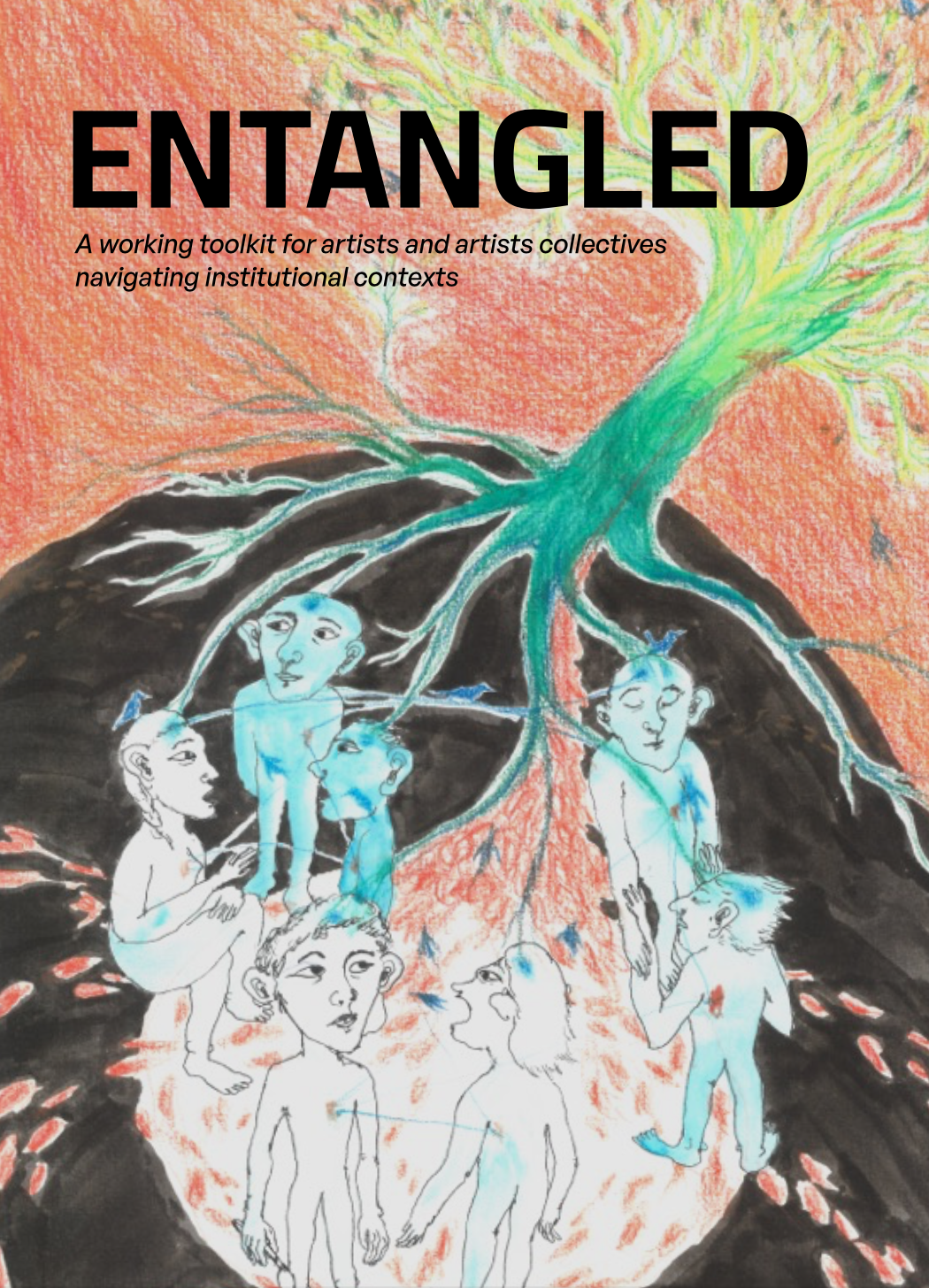
A working toolkit for artists and artists collectives navigating institutional contexts
ENTANGLED is designed to support artist collectives in navigating institutional contexts.
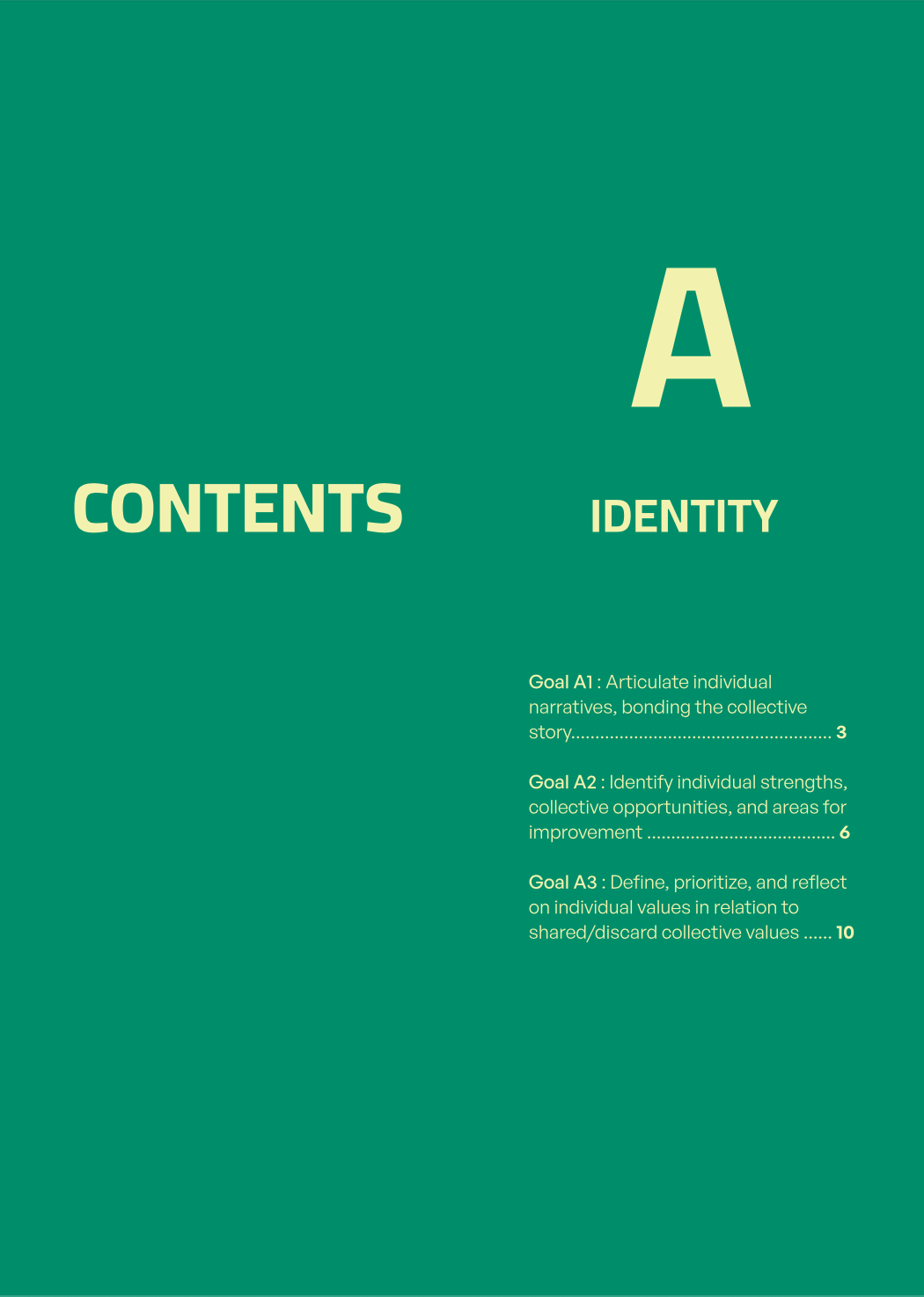
Rather than functioning as a linear manual, it operates as a flexible system of exercises, reflections, and collaborative tools that help communities:
- define their identity
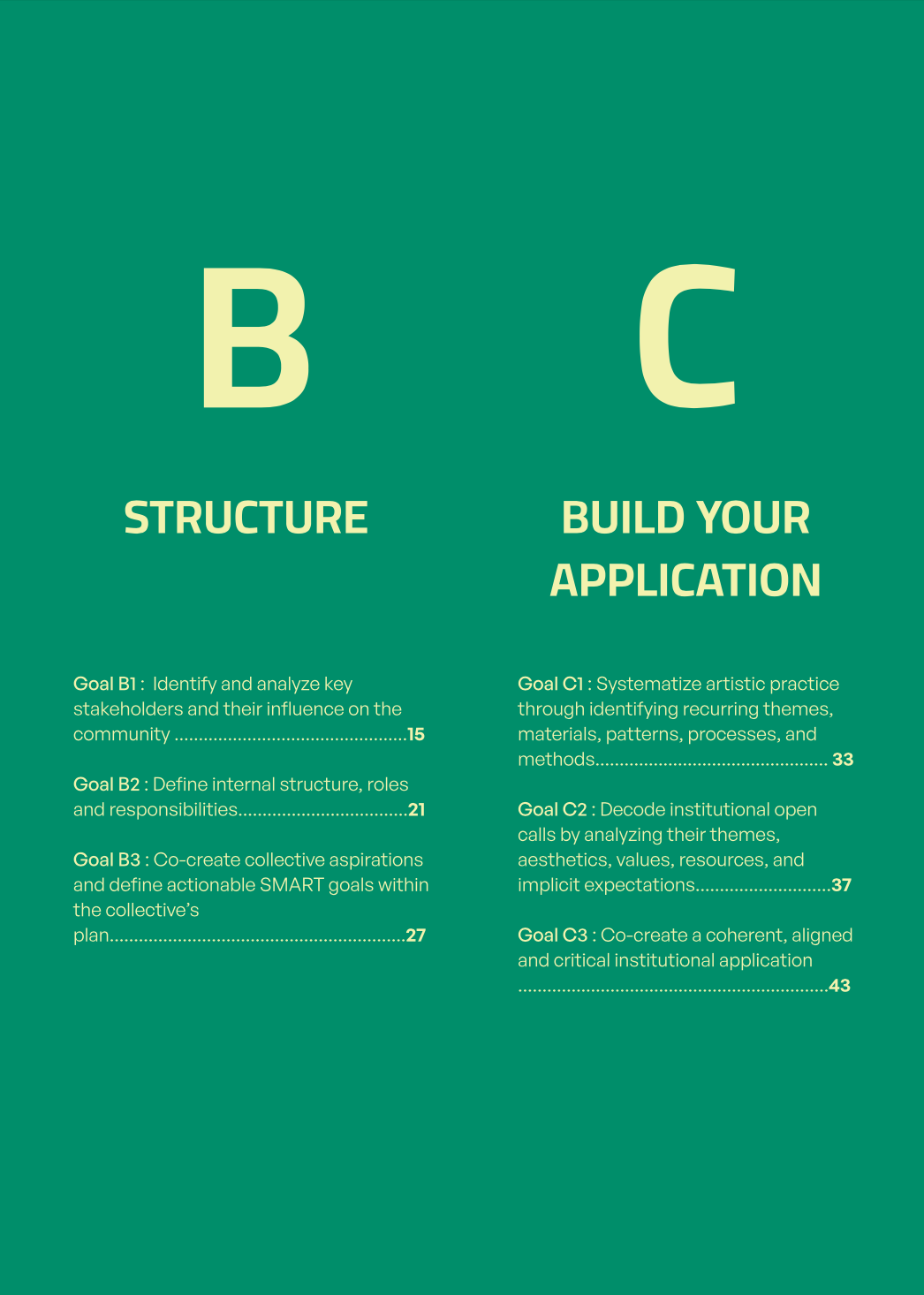
- strengthen internal structure
- develop clearer forms of institutional communication.
ENTANGLED was developed through design thinking approaches, interviews, and field research conducted with artists, collectives, and cultural institutions in Lisbon.
Our research shows artistic practice and institutional structures operate through different logics.
While artistic processes are frequently shaped by experimentation, intuition, and open-ended exploration; institutions rely on timelines, evaluation systems, funding structures, and formal communication. This creates a recurring tension in which artists are often expected to translate complex practices into formats they werenever taught how to navigate.
What is an artist collective?
An artist collective is a group of practitioners who share tools, processes, and decision-making structures in order to support both individual and shared artistic development. Its defining feature is not collaboration on outcomes, but the construction of a shared working infrastructure that enables participatory practice over time. Although this booklet can be used individually— as a tool for practice, self definition, and independent application processes— its primary scope is within artist communities and collective contexts supported by a facilitator or leader.
Who is a facilitator?
The facilitator guides the group through the process, ensuring clarity, coherence, and progression across the exercises.Their role is not to produce outcomes, but to support the conditions for the framework to be activated and understood collectively.
A tip on note-keeping
It is strongly recommended to assign a note-keeper within the group. This role documents key discussions and emerging patterns, ensuring continuity across sessions and turning individual contributions into a shared collective archive. The note-keeper can participate in all activities.
Download the full toolkit below
A working toolkit for artists and artists collectives navigating institutional contexts
ENTANGLED is designed to support artist collectives in navigating institutional contexts.
Rather than functioning as a linear manual, it operates as a flexible system of exercises, reflections, and collaborative tools that help communities:
- define their identity
- strengthen internal structure
- develop clearer forms of institutional communication.
ENTANGLED was developed through design thinking approaches, interviews, and field research conducted with artists, collectives, and cultural institutions in Lisbon.
Our research shows artistic practice and institutional structures operate through different logics.
While artistic processes are frequently shaped by experimentation, intuition, and open-ended exploration; institutions rely on timelines, evaluation systems, funding structures, and formal communication. This creates a recurring tension in which artists are often expected to translate complex practices into formats they werenever taught how to navigate.
What is an artist collective?
An artist collective is a group of practitioners who share tools, processes, and decision-making structures in order to support both individual and shared artistic development. Its defining feature is not collaboration on outcomes, but the construction of a shared working infrastructure that enables participatory practice over time. Although this booklet can be used individually— as a tool for practice, self definition, and independent application processes— its primary scope is within artist communities and collective contexts supported by a facilitator or leader.
Who is a facilitator?
The facilitator guides the group through the process, ensuring clarity, coherence, and progression across the exercises.Their role is not to produce outcomes, but to support the conditions for the framework to be activated and understood collectively.
A tip on note-keeping
It is strongly recommended to assign a note-keeper within the group. This role documents key discussions and emerging patterns, ensuring continuity across sessions and turning individual contributions into a shared collective archive. The note-keeper can participate in all activities.
Download the full toolkit below
ENTANGLED: A working toolkit for artists and artists collectives navigating institutional contexts is one of the toolkits of Institution(ing)s, developed as a prototype during the residency conducted by three groups of MA students in Design for Sustainability of the Faculty of Fine Arts @fbaul, University of Lisbon, at CAM - Centro de Arte Moderna Gulbenkian @camgulbenkian in March 2026, under the coordination of Professors Ana Thudichum Vasconcelos @ana.thudichum, Carla Paoliello, @carlapaoliello and researcher José Oliveira @ze.ppo. Designed to help artist collectives navigate institutional contexts, the toolkit developed by Andrea Vigil @psy.conscious Mei Lin @wazokong, Santiago Sanchez @santiagomuyuna, and Sara Oppido @fuo.ricentro draws on design thinking approaches, interviews, and field research with artists, collectives, and cultural institutions in Lisbon.
By Institution(ing)s
A working toolkit for artists and artists collectives navigating institutional contexts
ENTANGLED is designed to support artist collectives in navigating institutional contexts.
Rather than functioning as a linear manual, it operates as a flexible system of exercises, reflections, and collaborative tools that help communities:
- define their identity
- strengthen internal structure
- develop clearer forms of institutional communication.
ENTANGLED was developed through design thinking approaches, interviews, and field research conducted with artists, collectives, and cultural institutions in Lisbon.
Our research shows artistic practice and institutional structures operate through different logics.
While artistic processes are frequently shaped by experimentation, intuition, and open-ended exploration; institutions rely on timelines, evaluation systems, funding structures, and formal communication. This creates a recurring tension in which artists are often expected to translate complex practices into formats they werenever taught how to navigate.
What is an artist collective?
An artist collective is a group of practitioners who share tools, processes, and decision-making structures in order to support both individual and shared artistic development. Its defining feature is not collaboration on outcomes, but the construction of a shared working infrastructure that enables participatory practice over time. Although this booklet can be used individually— as a tool for practice, self definition, and independent application processes— its primary scope is within artist communities and collective contexts supported by a facilitator or leader.
Who is a facilitator?
The facilitator guides the group through the process, ensuring clarity, coherence, and progression across the exercises.Their role is not to produce outcomes, but to support the conditions for the framework to be activated and understood collectively.
A tip on note-keeping
It is strongly recommended to assign a note-keeper within the group. This role documents key discussions and emerging patterns, ensuring continuity across sessions and turning individual contributions into a shared collective archive. The note-keeper can participate in all activities.
Download the full toolkit below
A working toolkit for artists and artists collectives navigating institutional contexts
ENTANGLED is designed to support artist collectives in navigating institutional contexts.
Rather than functioning as a linear manual, it operates as a flexible system of exercises, reflections, and collaborative tools that help communities:
- define their identity
- strengthen internal structure
- develop clearer forms of institutional communication.
ENTANGLED was developed through design thinking approaches, interviews, and field research conducted with artists, collectives, and cultural institutions in Lisbon.
Our research shows artistic practice and institutional structures operate through different logics.
While artistic processes are frequently shaped by experimentation, intuition, and open-ended exploration; institutions rely on timelines, evaluation systems, funding structures, and formal communication. This creates a recurring tension in which artists are often expected to translate complex practices into formats they werenever taught how to navigate.
What is an artist collective?
An artist collective is a group of practitioners who share tools, processes, and decision-making structures in order to support both individual and shared artistic development. Its defining feature is not collaboration on outcomes, but the construction of a shared working infrastructure that enables participatory practice over time. Although this booklet can be used individually— as a tool for practice, self definition, and independent application processes— its primary scope is within artist communities and collective contexts supported by a facilitator or leader.
Who is a facilitator?
The facilitator guides the group through the process, ensuring clarity, coherence, and progression across the exercises.Their role is not to produce outcomes, but to support the conditions for the framework to be activated and understood collectively.
A tip on note-keeping
It is strongly recommended to assign a note-keeper within the group. This role documents key discussions and emerging patterns, ensuring continuity across sessions and turning individual contributions into a shared collective archive. The note-keeper can participate in all activities.
Download the full toolkit below
ENTANGLED: A working toolkit for artists and artists collectives navigating institutional contexts is one of the toolkits of Institution(ing)s, developed as a prototype during the residency conducted by three groups of MA students in Design for Sustainability of the Faculty of Fine Arts @fbaul, University of Lisbon, at CAM - Centro de Arte Moderna Gulbenkian @camgulbenkian in March 2026, under the coordination of Professors Ana Thudichum Vasconcelos @ana.thudichum, Carla Paoliello, @carlapaoliello and researcher José Oliveira @ze.ppo. Designed to help artist collectives navigate institutional contexts, the toolkit developed by Andrea Vigil @psy.conscious Mei Lin @wazokong, Santiago Sanchez @santiagomuyuna, and Sara Oppido @fuo.ricentro draws on design thinking approaches, interviews, and field research with artists, collectives, and cultural institutions in Lisbon.
By Institution(ing)s
A working toolkit for artists and artists collectives navigating institutional contexts
ENTANGLED is designed to support artist collectives in navigating institutional contexts.
Rather than functioning as a linear manual, it operates as a flexible system of exercises, reflections, and collaborative tools that help communities:
- define their identity
- strengthen internal structure
- develop clearer forms of institutional communication.
ENTANGLED was developed through design thinking approaches, interviews, and field research conducted with artists, collectives, and cultural institutions in Lisbon.
Our research shows artistic practice and institutional structures operate through different logics.
While artistic processes are frequently shaped by experimentation, intuition, and open-ended exploration; institutions rely on timelines, evaluation systems, funding structures, and formal communication. This creates a recurring tension in which artists are often expected to translate complex practices into formats they werenever taught how to navigate.
What is an artist collective?
An artist collective is a group of practitioners who share tools, processes, and decision-making structures in order to support both individual and shared artistic development. Its defining feature is not collaboration on outcomes, but the construction of a shared working infrastructure that enables participatory practice over time. Although this booklet can be used individually— as a tool for practice, self definition, and independent application processes— its primary scope is within artist communities and collective contexts supported by a facilitator or leader.
Who is a facilitator?
The facilitator guides the group through the process, ensuring clarity, coherence, and progression across the exercises.Their role is not to produce outcomes, but to support the conditions for the framework to be activated and understood collectively.
A tip on note-keeping
It is strongly recommended to assign a note-keeper within the group. This role documents key discussions and emerging patterns, ensuring continuity across sessions and turning individual contributions into a shared collective archive. The note-keeper can participate in all activities.
Download the full toolkit below
A working toolkit for artists and artists collectives navigating institutional contexts
ENTANGLED is designed to support artist collectives in navigating institutional contexts.
Rather than functioning as a linear manual, it operates as a flexible system of exercises, reflections, and collaborative tools that help communities:
- define their identity
- strengthen internal structure
- develop clearer forms of institutional communication.
ENTANGLED was developed through design thinking approaches, interviews, and field research conducted with artists, collectives, and cultural institutions in Lisbon.
Our research shows artistic practice and institutional structures operate through different logics.
While artistic processes are frequently shaped by experimentation, intuition, and open-ended exploration; institutions rely on timelines, evaluation systems, funding structures, and formal communication. This creates a recurring tension in which artists are often expected to translate complex practices into formats they werenever taught how to navigate.
What is an artist collective?
An artist collective is a group of practitioners who share tools, processes, and decision-making structures in order to support both individual and shared artistic development. Its defining feature is not collaboration on outcomes, but the construction of a shared working infrastructure that enables participatory practice over time. Although this booklet can be used individually— as a tool for practice, self definition, and independent application processes— its primary scope is within artist communities and collective contexts supported by a facilitator or leader.
Who is a facilitator?
The facilitator guides the group through the process, ensuring clarity, coherence, and progression across the exercises.Their role is not to produce outcomes, but to support the conditions for the framework to be activated and understood collectively.
A tip on note-keeping
It is strongly recommended to assign a note-keeper within the group. This role documents key discussions and emerging patterns, ensuring continuity across sessions and turning individual contributions into a shared collective archive. The note-keeper can participate in all activities.
Download the full toolkit below
ENTANGLED: A working toolkit for artists and artists collectives navigating institutional contexts is one of the toolkits of Institution(ing)s, developed as a prototype during the residency conducted by three groups of MA students in Design for Sustainability of the Faculty of Fine Arts @fbaul, University of Lisbon, at CAM - Centro de Arte Moderna Gulbenkian @camgulbenkian in March 2026, under the coordination of Professors Ana Thudichum Vasconcelos @ana.thudichum, Carla Paoliello, @carlapaoliello and researcher José Oliveira @ze.ppo. Designed to help artist collectives navigate institutional contexts, the toolkit developed by Andrea Vigil @psy.conscious Mei Lin @wazokong, Santiago Sanchez @santiagomuyuna, and Sara Oppido @fuo.ricentro draws on design thinking approaches, interviews, and field research with artists, collectives, and cultural institutions in Lisbon.
By Institution(ing)s
A working toolkit for artists and artists collectives navigating institutional contexts
ENTANGLED is designed to support artist collectives in navigating institutional contexts.
Rather than functioning as a linear manual, it operates as a flexible system of exercises, reflections, and collaborative tools that help communities:
- define their identity
- strengthen internal structure
- develop clearer forms of institutional communication.
ENTANGLED was developed through design thinking approaches, interviews, and field research conducted with artists, collectives, and cultural institutions in Lisbon.
Our research shows artistic practice and institutional structures operate through different logics.
While artistic processes are frequently shaped by experimentation, intuition, and open-ended exploration; institutions rely on timelines, evaluation systems, funding structures, and formal communication. This creates a recurring tension in which artists are often expected to translate complex practices into formats they werenever taught how to navigate.
What is an artist collective?
An artist collective is a group of practitioners who share tools, processes, and decision-making structures in order to support both individual and shared artistic development. Its defining feature is not collaboration on outcomes, but the construction of a shared working infrastructure that enables participatory practice over time. Although this booklet can be used individually— as a tool for practice, self definition, and independent application processes— its primary scope is within artist communities and collective contexts supported by a facilitator or leader.
Who is a facilitator?
The facilitator guides the group through the process, ensuring clarity, coherence, and progression across the exercises.Their role is not to produce outcomes, but to support the conditions for the framework to be activated and understood collectively.
A tip on note-keeping
It is strongly recommended to assign a note-keeper within the group. This role documents key discussions and emerging patterns, ensuring continuity across sessions and turning individual contributions into a shared collective archive. The note-keeper can participate in all activities.
Download the full toolkit below
A working toolkit for artists and artists collectives navigating institutional contexts
ENTANGLED is designed to support artist collectives in navigating institutional contexts.
Rather than functioning as a linear manual, it operates as a flexible system of exercises, reflections, and collaborative tools that help communities:
- define their identity
- strengthen internal structure
- develop clearer forms of institutional communication.
ENTANGLED was developed through design thinking approaches, interviews, and field research conducted with artists, collectives, and cultural institutions in Lisbon.
Our research shows artistic practice and institutional structures operate through different logics.
While artistic processes are frequently shaped by experimentation, intuition, and open-ended exploration; institutions rely on timelines, evaluation systems, funding structures, and formal communication. This creates a recurring tension in which artists are often expected to translate complex practices into formats they werenever taught how to navigate.
What is an artist collective?
An artist collective is a group of practitioners who share tools, processes, and decision-making structures in order to support both individual and shared artistic development. Its defining feature is not collaboration on outcomes, but the construction of a shared working infrastructure that enables participatory practice over time. Although this booklet can be used individually— as a tool for practice, self definition, and independent application processes— its primary scope is within artist communities and collective contexts supported by a facilitator or leader.
Who is a facilitator?
The facilitator guides the group through the process, ensuring clarity, coherence, and progression across the exercises.Their role is not to produce outcomes, but to support the conditions for the framework to be activated and understood collectively.
A tip on note-keeping
It is strongly recommended to assign a note-keeper within the group. This role documents key discussions and emerging patterns, ensuring continuity across sessions and turning individual contributions into a shared collective archive. The note-keeper can participate in all activities.
Download the full toolkit below
ENTANGLED: A working toolkit for artists and artists collectives navigating institutional contexts is one of the toolkits of Institution(ing)s, developed as a prototype during the residency conducted by three groups of MA students in Design for Sustainability of the Faculty of Fine Arts @fbaul, University of Lisbon, at CAM - Centro de Arte Moderna Gulbenkian @camgulbenkian in March 2026, under the coordination of Professors Ana Thudichum Vasconcelos @ana.thudichum, Carla Paoliello, @carlapaoliello and researcher José Oliveira @ze.ppo. Designed to help artist collectives navigate institutional contexts, the toolkit developed by Andrea Vigil @psy.conscious Mei Lin @wazokong, Santiago Sanchez @santiagomuyuna, and Sara Oppido @fuo.ricentro draws on design thinking approaches, interviews, and field research with artists, collectives, and cultural institutions in Lisbon.